

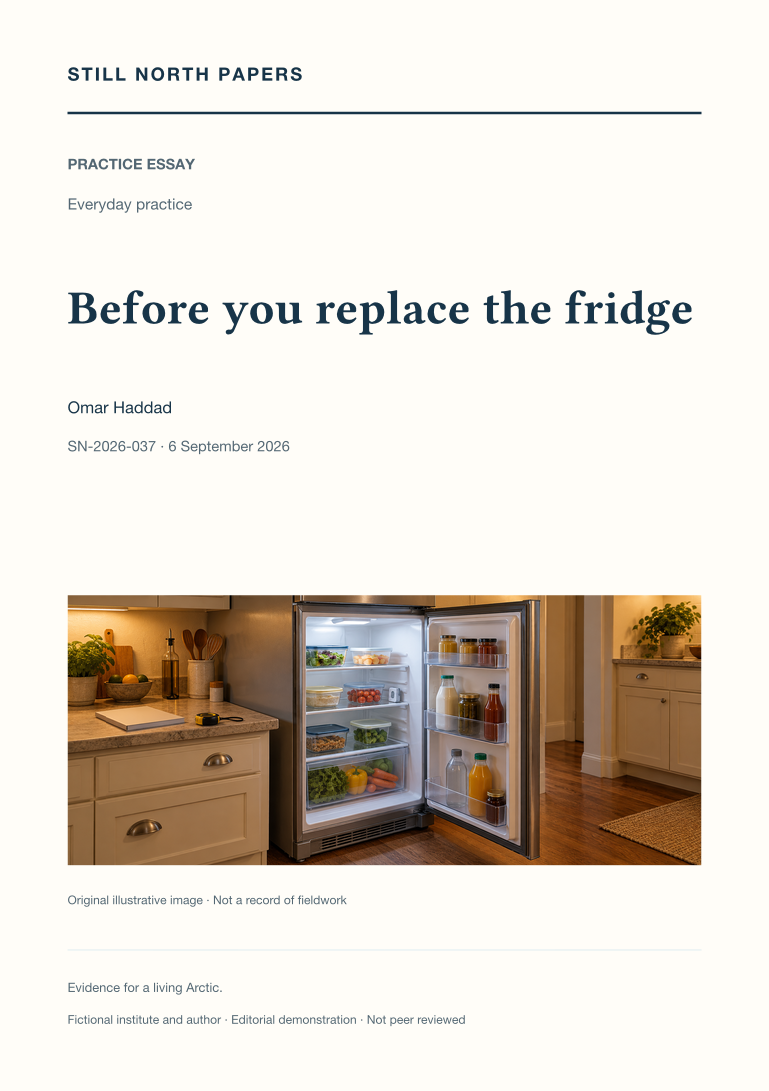
Before you replace the fridge
A refrigerator replacement decision should begin with safe, dependable cold storage rather than a new efficiency label. This practice essay separates diagnosis, household requirements, running costs, and life-cycle evidence. It uses official food-safety guidance to anchor the immediate need, then considers usable capacity, accessibility, installation space, and support for repairs. Energy labels are useful only when their schemes and test bases are comparable, while a short meter reading and a standard annual figure carry different limitations. The discussion brings delivery, finance, servicing, and disposal into the comparison without claiming a universal environmental replacement age. Keeping, servicing, and replacing can each be reasonable outcomes. Ownership and permission also matter, especially where a tenant must seek action from the responsible appliance owner.
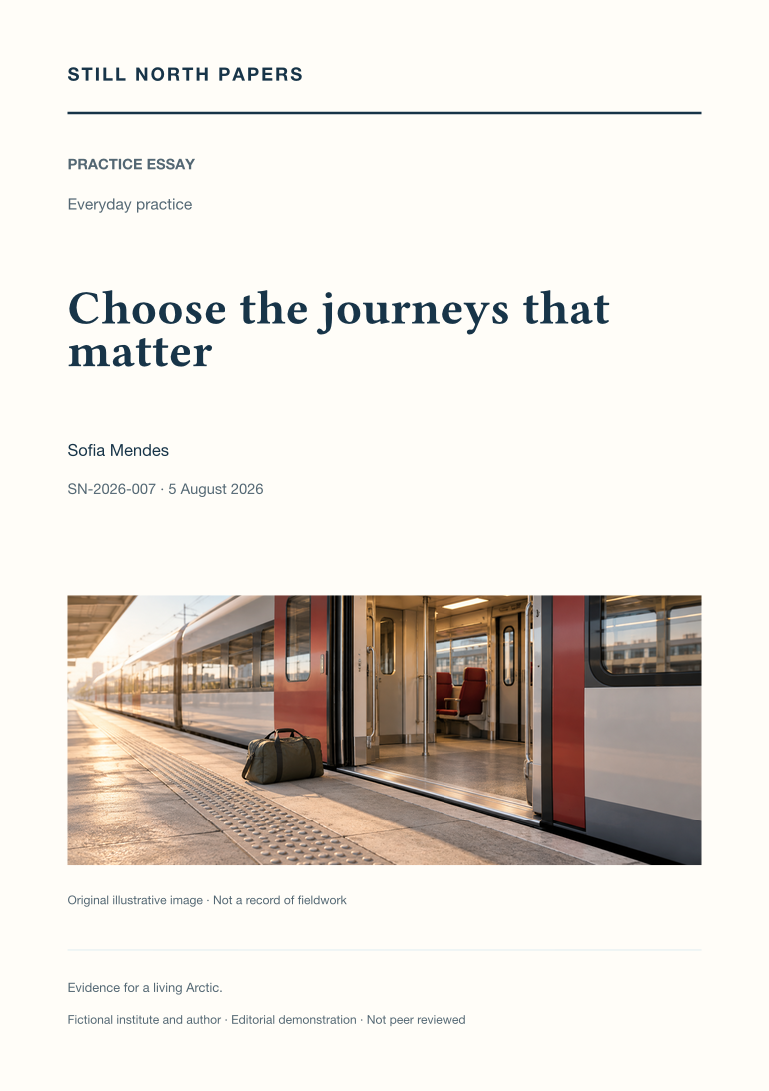
Choose the journeys that matter
The avoid, shift, and improve sequence is applied to the purpose of a journey rather than to a competition between transport identities. Drawing on the cited IPCC demand-side assessment, this practice essay considers when remote participation, combined errands, rail, public transport, walking, cycling, or shared vehicles can genuinely meet a need. Its comparison keeps disability, care, safety, price, equipment, and timetable constraints visible. Planning lead time and workplace policy emerge as conditions that shape several travellers' choices, not merely individual booking preferences. Where travel remains necessary, the essay favours reducing avoidable legs and poor coordination without claiming that offsets cancel consequences. It closes with a route-specific decision process and a request to record institutional barriers that could be changed before the next trip.
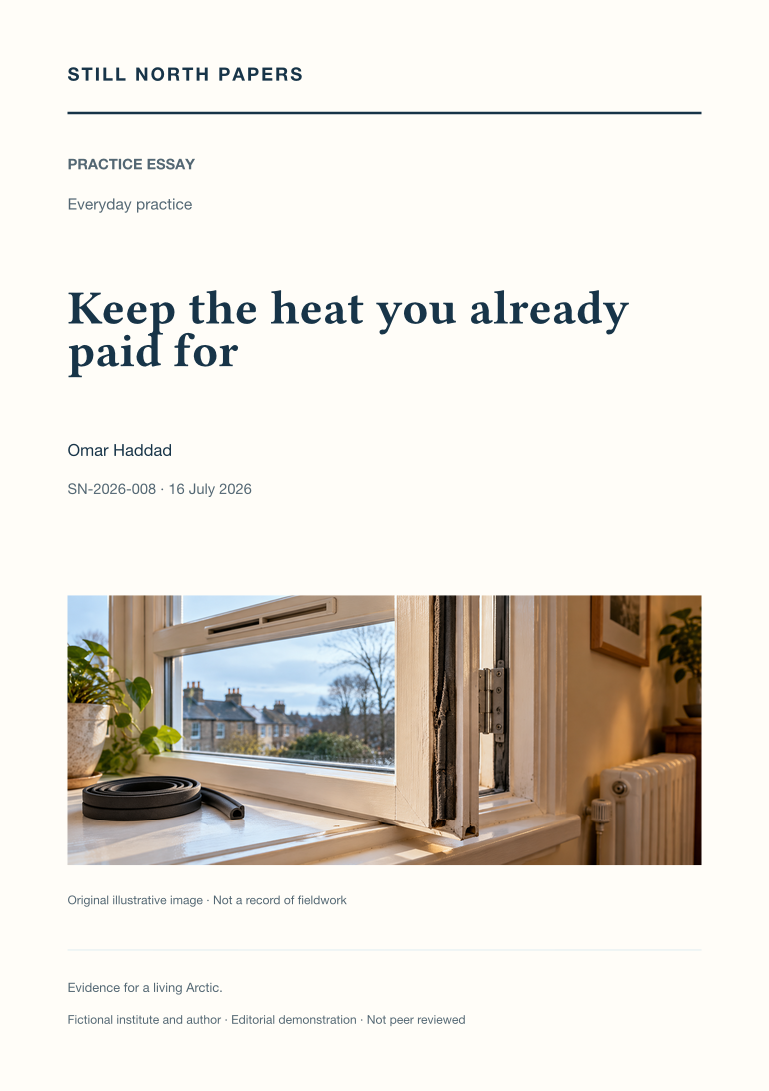
Keep the heat you already paid for
Comfort, health, and indoor air quality frame this practice essay on reducing avoidable household heat loss. It distinguishes safe checks of controls, blocked radiators, and failed seals from work requiring qualified advice, and warns against obstructing designed ventilation or combustion-air routes. Temporary draught measures are considered alongside insulation, maintenance, moisture, and the sequencing of larger building improvements. Renters' documentation and requests for dated responses remain distinct from an owner's responsibility for the fabric and systems. The cited IPCC assessment connects household options with standards, finance, skilled installation, and public support. Simple readings can help assess comfort under comparable conditions, but one day cannot justify a savings claim. The practical outcome is one safe immediate check paired with one structural request.
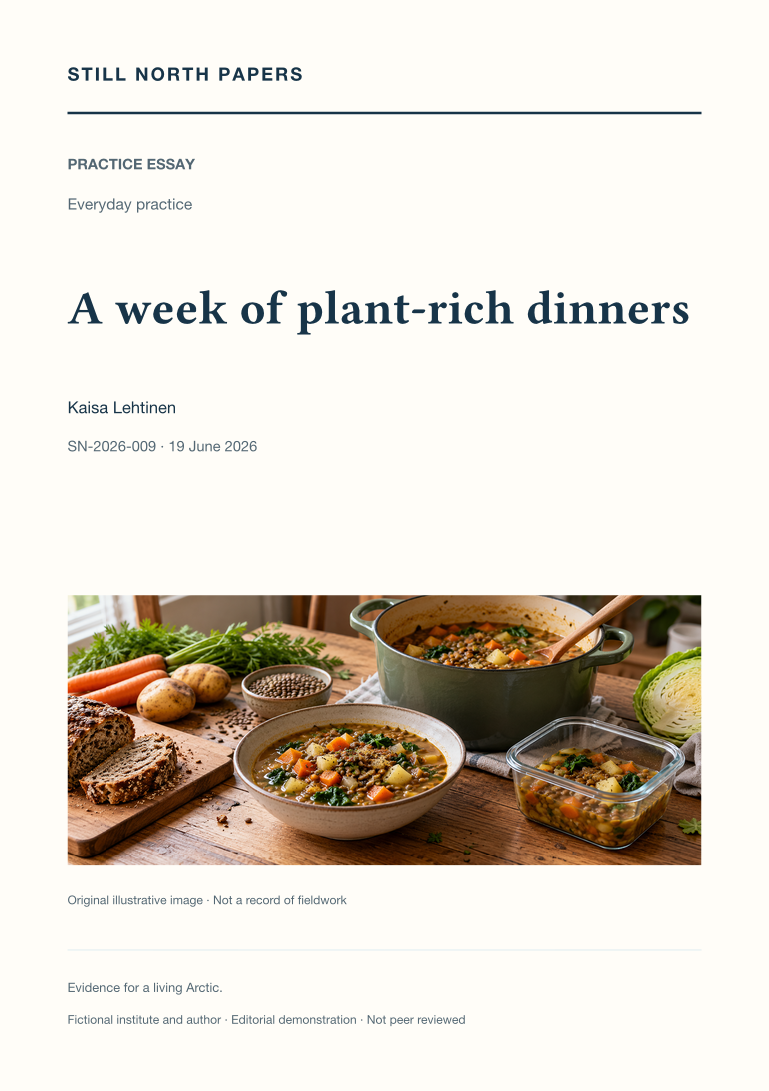
A week of plant-rich dinners
Seven flexible dinners illustrate how plant-rich eating can begin with familiar foods, available equipment, and a realistic household schedule. The essay follows cupboard checks, adaptable staples, leftovers, storage, and food-safety decisions rather than prescribing a perfect diet or estimating a measured climate benefit. It explains why usable food, preparation time, dietary needs, culture, and access matter alongside shelf price, including the practical value of canned, frozen, or prepared ingredients. Preventing edible waste takes priority over disposing of scraps, while shared meals require attention to who plans, cooks, and cleans. The cited IPCC demand-side assessment supplies wider context for food services and infrastructure. A useful outcome is a small set of affordable, satisfying meals that can be repeated, plus clearer requests of public and workplace catering.
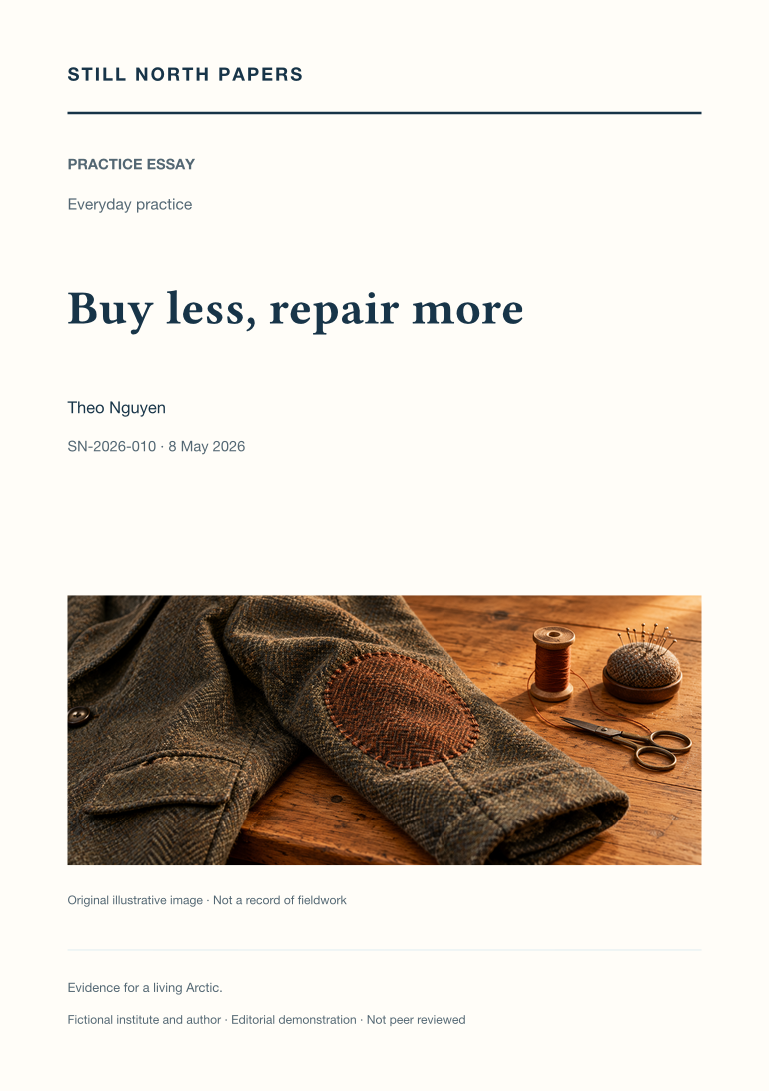
Buy less, repair more
Keeping a product useful begins with identifying the function required, not assuming that every fault demands a purchase. This practice essay compares care, repair, borrowing, sharing, and justified replacement through a checklist covering safety, warranty, recalls, parts, skills, time, and likely continued service. Textile mending offers a lower-risk example, while electrical, structural, and other safety-critical work retains a clear boundary for trained help. The discussion examines rebound consumption, inaccessible product design, procurement, and the institutional conditions that permit repair at scale, using the cited IPCC demand-side assessment as context. Responsible end-of-life handling includes personal data, hazardous components, and whether a donated item is genuinely usable and wanted. No repair is presented as automatically safe, economical, or environmentally preferable in every case.
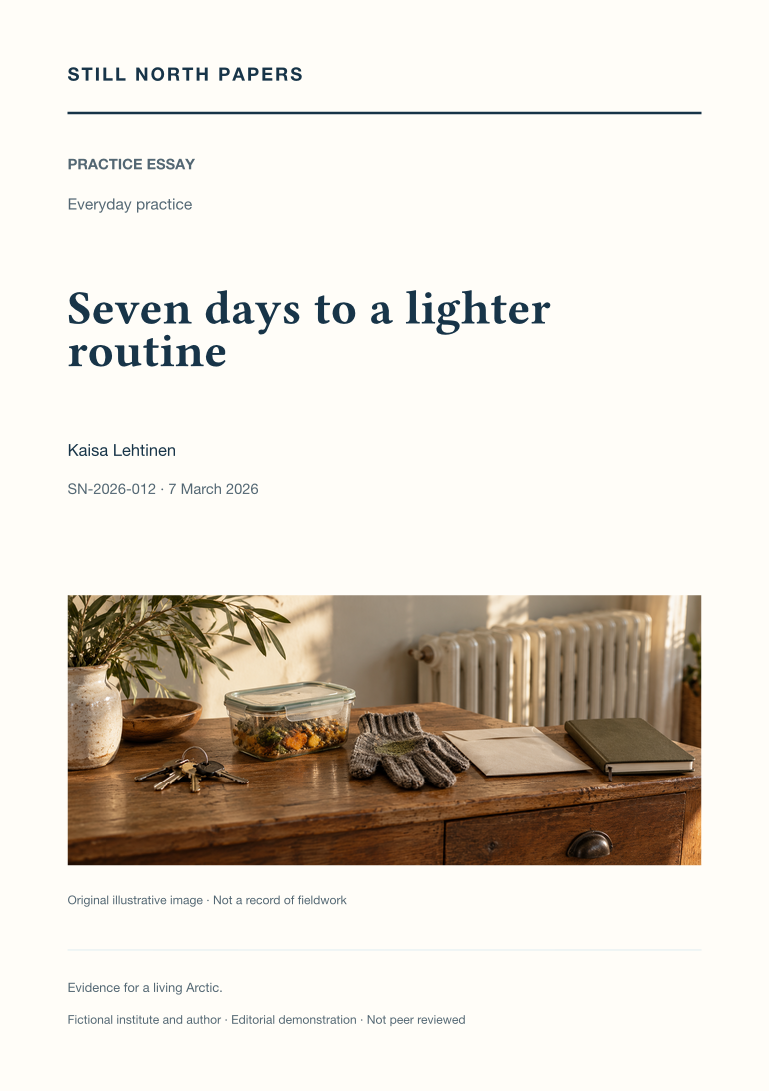
Seven days to a lighter routine
A seven-day household experiment is offered as a way to discover practical friction, not calculate a footprint or rank personal virtue. The sequence maps existing constraints, changes one journey, checks useful heat, plans a plant-rich meal, maintains a low-risk item, contacts an institution, and reviews what worked. Each step keeps health, access, care, affordability, safety, and available equipment within the decision. The cited IPCC demand-side assessment connects those observations with the services and infrastructure around a routine. The essay explicitly rejects invented emissions scores and unnecessary records of other people's movements, health, or spending. Its intended outcome is a repeatable action, a revised action, and a documented structural barrier, with participation offered as a menu rather than a household policing exercise.