

After the click: testing whether evidence was understood
Clicks and reading time describe exposure but do not establish comprehension, retention, or transfer. This methods note develops an evaluation for two hypothetical, accurate versions of a climate-evidence explainer. It draws on van der Bles and colleagues’ uncertainty-communication experiments, Karpicke and Blunt’s learning experiments, and the Magenta Book. Proposed tasks examine baselines, aggregate scale, and uncertainty while keeping trust, confidence, and policy agreement separate from learning. The analysis addresses audience selection, attrition, assessment-induced learning, delayed follow-up, accessible questions, and proportionate privacy. No reader data or communication effects are reported. Its practical implication is to choose evidence measures that test a defined capability and preserve disagreement over values, rather than treating platform engagement as proof that public understanding improved.
A cleaner portfolio is not yet a financing effect
Lower attributed portfolio emissions do not by themselves demonstrate lower emissions caused by investor action. This methods note separates accounting exposure, investee operations, new financing, and investor contribution using PCAF’s financed-emissions standard, GHG Protocol guidance, and Pástor and colleagues’ original equilibrium model. A fully fictional corporate-bond example shows how a valuation denominator can change reported attribution while stipulated physical emissions remain constant. The analysis also distinguishes secondary trading, additional finance, engagement activity, and causal evidence, and keeps avoided emissions separate from inventories. It offers no fund recommendation, investment-performance claim, or real-world saving. Its practical contribution is a due-diligence sequence connecting a reported improvement to its accounting drivers, proposed mechanism, counterfactual, and evidential limits.
Substitute the meal, not just the ingredient
Food substitutions change recipes, yields, preparation, and the service diners receive, not simply the mass of an ingredient purchased. This methods note develops a complete-meal comparison for a fictional community kitchen using Poore and Nemecek’s harmonised food assessment, FAO and WHO diet principles, and the GHG Protocol Product Standard. It examines raw and cooked units, nutritional constraints, retail boundaries, kitchen energy, losses, coproduct allocation, and the difference between average inventories and marginal consequences. A hypothetical stew comparison identifies missing observations without inventing acceptance results or footprints. No savings or dietary prescription are offered. The practical implication is to assess suitable eating occasions under consistent boundaries while retaining food safety, affordability, cultural acceptability, and access as independent requirements.
A seat is not a journey: comparing transport on the same unit
Transport comparisons can fail when vehicle-kilometres, passenger-kilometres, seating capacity, and complete journeys are treated as interchangeable. This methods note develops an event-travel comparison using the UK government’s conversion-factor methodology and GHG Protocol product and policy-accounting standards. A fictional twelve-person case illustrates occupancy, detours, positioning, and the risk of rewarding unnecessary distance through a denominator. The analysis distinguishes factors that already contain occupancy assumptions, aligned operating boundaries, average allocation, and marginal consequences. Accessibility and a feasible return journey define the service rather than appearing as optional extras. No real emissions or modal savings are calculated. The resulting record supports comparison of complete, usable journeys while retaining uncertainty about vehicles, routes, factors, and displaced alternatives.
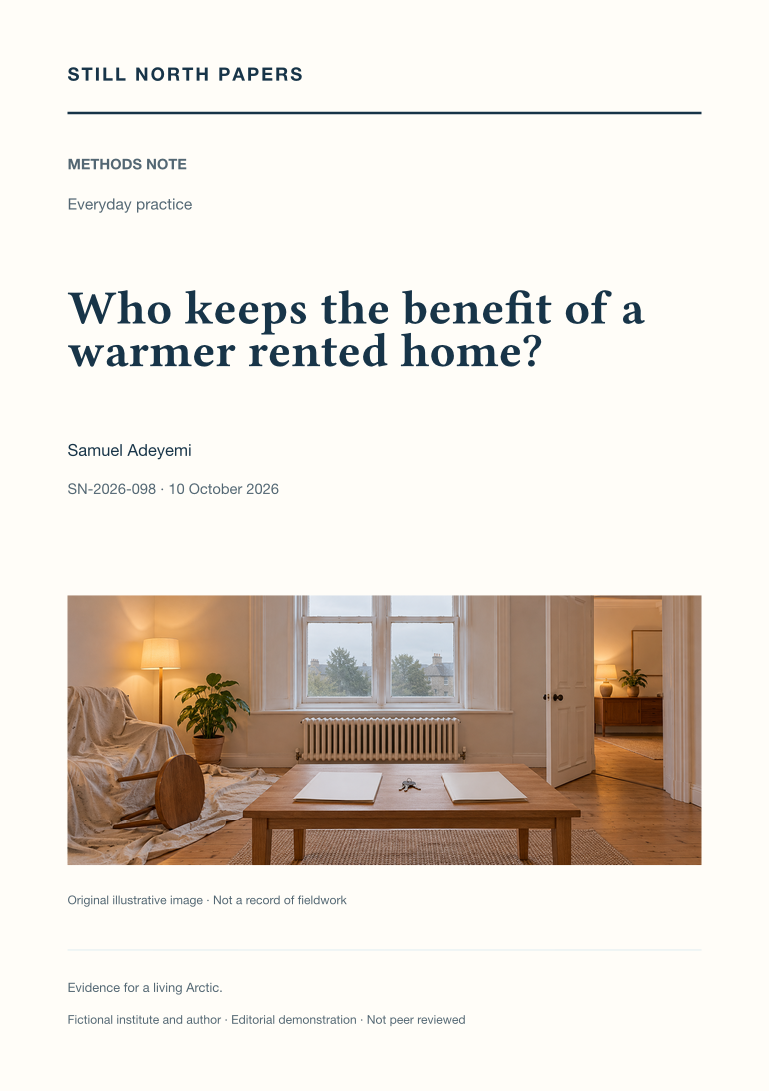
Who keeps the benefit of a warmer rented home?
A retrofit can improve a building without distributing its benefits fairly among current tenants, owners, future occupants, and public funders. This methods note develops a distributional account using Davis’s original appliance-adoption analysis, Fowlie and colleagues’ weatherisation evaluation, and the Magenta Book. A fictional rent-and-bill example distinguishes lower energy expenditure from lower total occupancy costs, while an underheated household illustrates the difference between reduced consumption and improved comfort. The analysis maps authority, payments, disruption, maintenance, and benefit timing, and separates participant transfers from societal resource costs. No housing performance or savings are estimated. Its practical implication is that credible retrofit offers need transparent charging, protection, operational responsibility, and evaluation of who actually receives the intended housing outcomes.
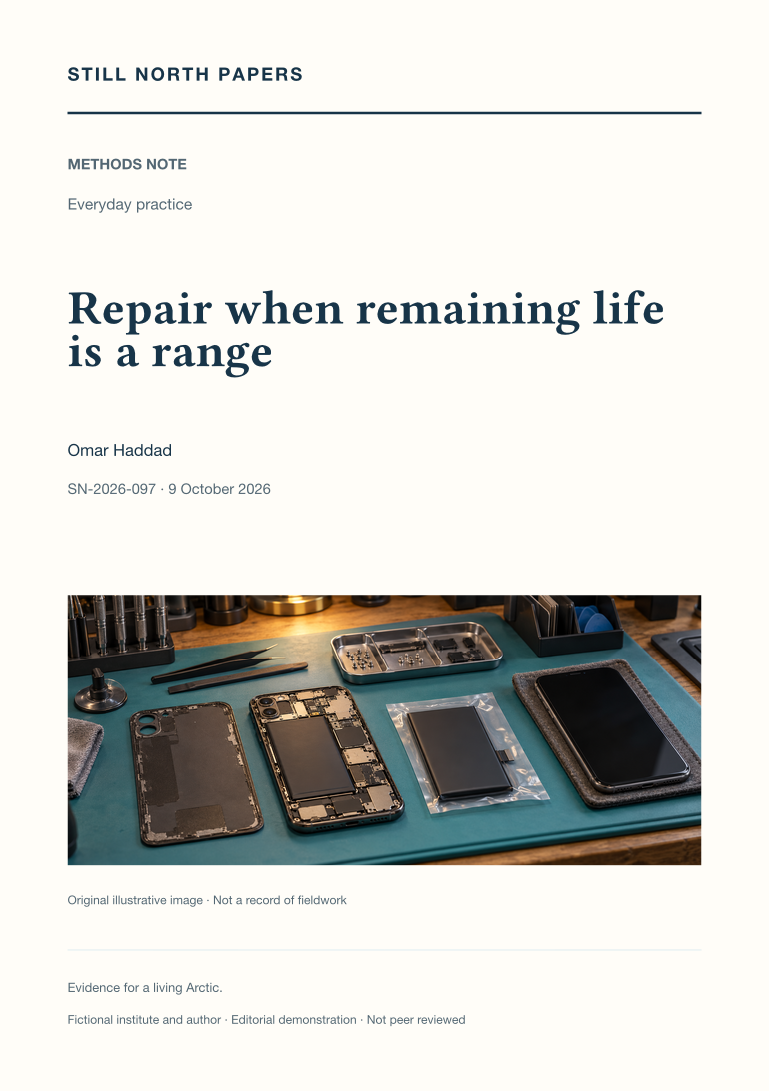
Repair when remaining life is a range
Repair decisions combine a visible quote with uncertainty about restoration, subsequent failure, software support, and the consequences of downtime. This methods note separates those questions through a fictional smartphone case with explicitly invented prices, probabilities, and service periods. European Commission smartphone requirements and repair-policy guidance establish relevant institutional conditions, while the GHG Protocol Product Standard informs the environmental boundary. The analysis explains why expected months are not guaranteed service, why cost per expected month is incomplete, and why deferred replacement must not be counted automatically as permanent avoidance. Financial vulnerability and access needs remain independent constraints. No model-specific reliability or climate benefit is estimated. The proposed conversation connects diagnosis, a defined service horizon, enforceable support, and responsibility for adverse outcomes.

A break-even point with blanks left in
A replacement product’s operating efficiency does not establish when its additional manufacturing emissions will be repaid. This methods note constructs a conditional break-even model for a working desk light while leaving unsupported parameters explicitly unknown. The GHG Protocol Product Standard, European Commission energy-label guidance, and UK conversion-factor methodology inform the treatment of service equivalence, electricity boundaries, and comparison limits. A hypothetical contrast between two operating schedules illustrates sensitivity without assigning a real footprint. The analysis then considers changing electricity supply, remaining product life, later replacement, and unmatched service at the horizon. No numerical break-even date or saving is claimed. The practical outcome is a decision record that distinguishes useful conditional arithmetic from an environmental conclusion requiring product-specific evidence.
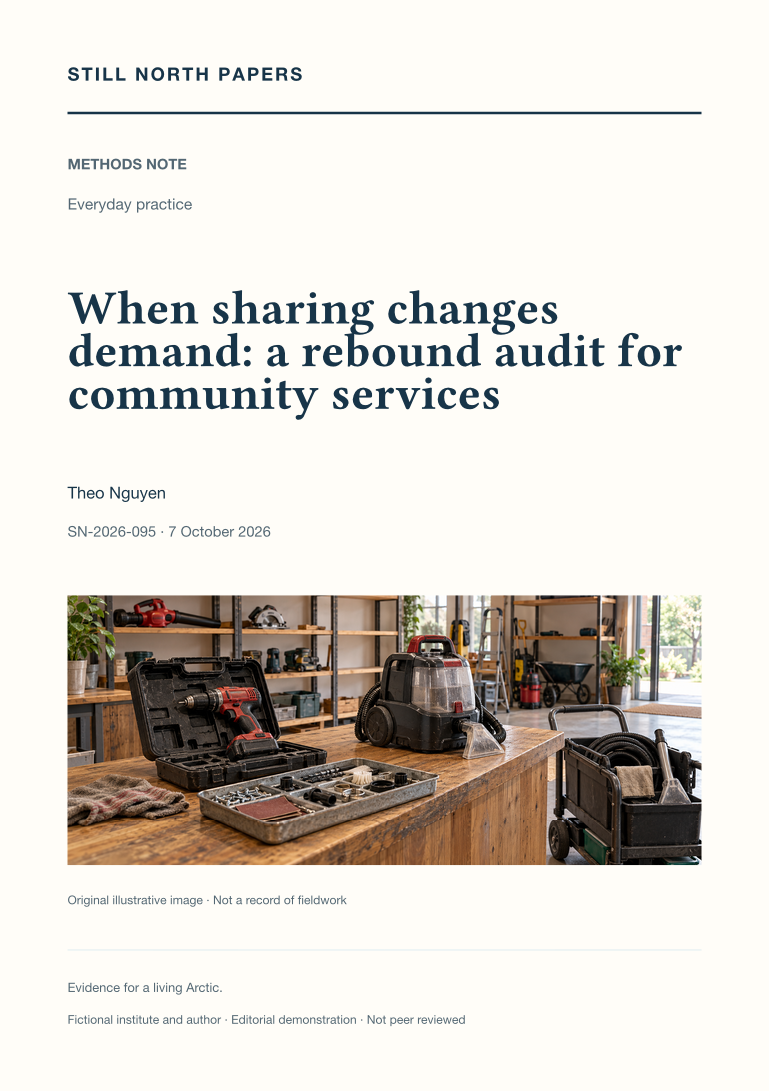
When sharing changes demand: a rebound audit for community services
Shared ownership can change demand as well as the resources required for a fixed service. This methods note uses a fictional equipment library to examine purchase substitution, newly enabled activity, collection journeys, indirect spending, and organisational expansion. Its selective synthesis draws on Martin and Shaheen’s original carsharing survey, the GHG Protocol Policy and Action Standard, and the IPCC demand-side assessment. It distinguishes household purchasing decisions from individual loans and explains why membership cannot carry an identical avoided-production credit. Improved access remains an independent public objective rather than an accounting failure. No rebound percentage or climate saving is estimated. The resulting evaluation approach prioritises credible alternatives, follow-up evidence, and transparent limits instead of assuming that all sharing either succeeds or fails environmentally.
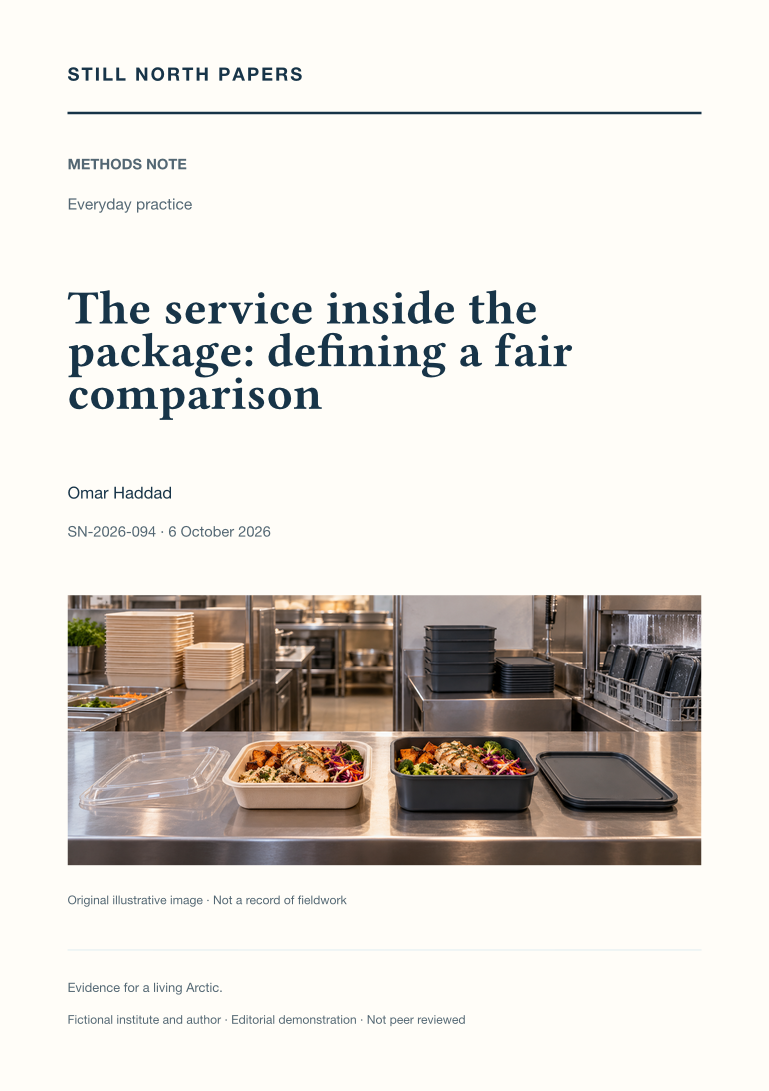
The service inside the package: defining a fair comparison
Packaging comparisons become misleading when they count empty objects rather than equivalent deliveries. This methods note develops a functional-unit procedure for a small food service, drawing on the GHG Protocol Product Standard, the European Commission’s Environmental Footprint recommendation, and the Environment Agency’s original carrier-bag assessment. A hypothetical returnable-container case distinguishes completed meals, realised reuse, delayed returns, washing, replacement lids, collection journeys, and food loss. The analysis explains why consistent boundaries and evidence of displacement matter before environmental rankings are attempted. It also keeps accessibility and food safety outside any simplistic carbon score. No packaging footprints or savings are estimated. The proposed decision record identifies which operational observations and supplier information would be needed to support a defensible local comparison.
A consultation response someone can act on
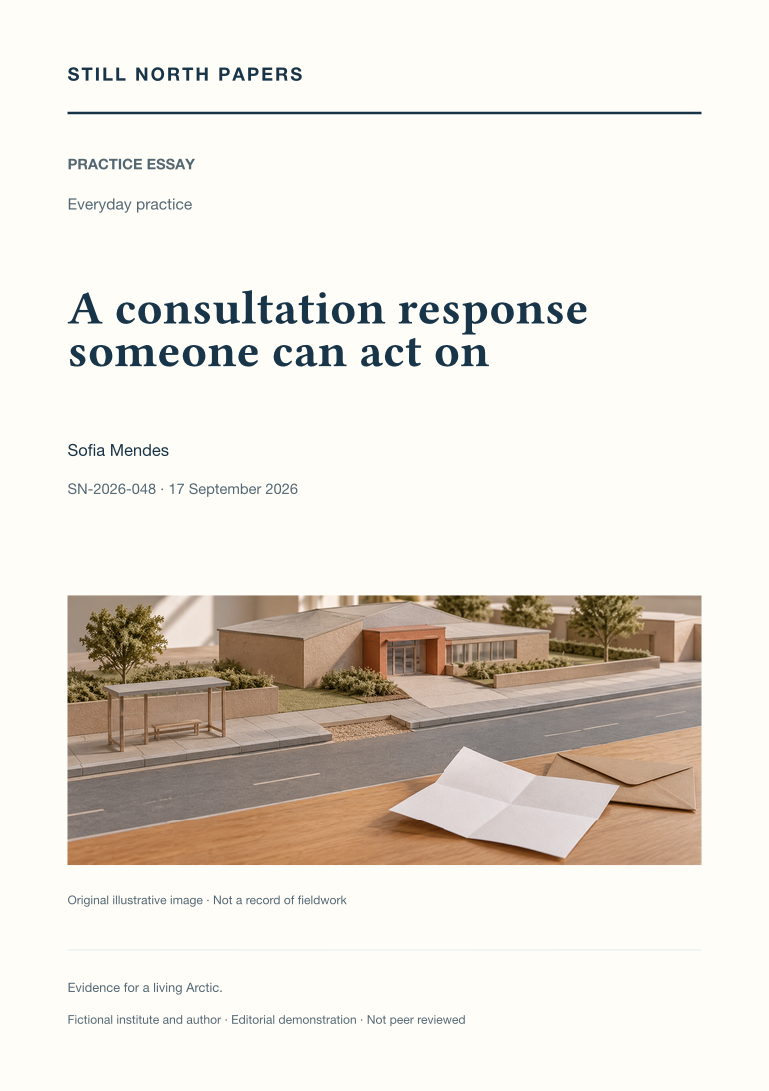
A useful consultation response connects relevant knowledge to a decision that remains open. This practice essay explains how to locate the proposal version, responsible body, submission rules, and actual scope before concentrating on the part that affects the respondent. A hypothetical community-building entrance illustrates how a point can identify a drawing, describe an effect, state its evidential basis, and request a specific assessment or amendment. Cabinet Office principles provide context, not a universal rulebook for local processes. The discussion also covers authorised representation, publication notices, privacy, accessible submission routes, and honest treatment of group disagreement. Keeping the final response and acknowledgement enables later comparison with the decision record. The aim is an answerable request, not an invented expert identity or a claim that consultation necessarily operates as a vote.
Keep the question small when you disagree
Climate disagreements become more tractable when observations, explanations, and proposed responses are treated as distinct questions. This practice essay offers a source-reading approach rather than a promise of persuasion. It recommends agreeing a narrow claim, checking original chart definitions, and comparing geographical coverage, periods, units, and baselines before treating two graphics as contradictory. Royal Society material supplies the distinction between established physical understanding and remaining questions about regional effects, feedbacks, and future emissions. Personal experience can illuminate local impacts without measuring a global trend, while global evidence cannot resolve every access concern. The discussion keeps fairness and policy trade-offs visible, acknowledges boundaries around unsafe exchanges, and concludes that a careful shared question can improve one decision without requiring agreement on everything.
Why the default is not a personal choice
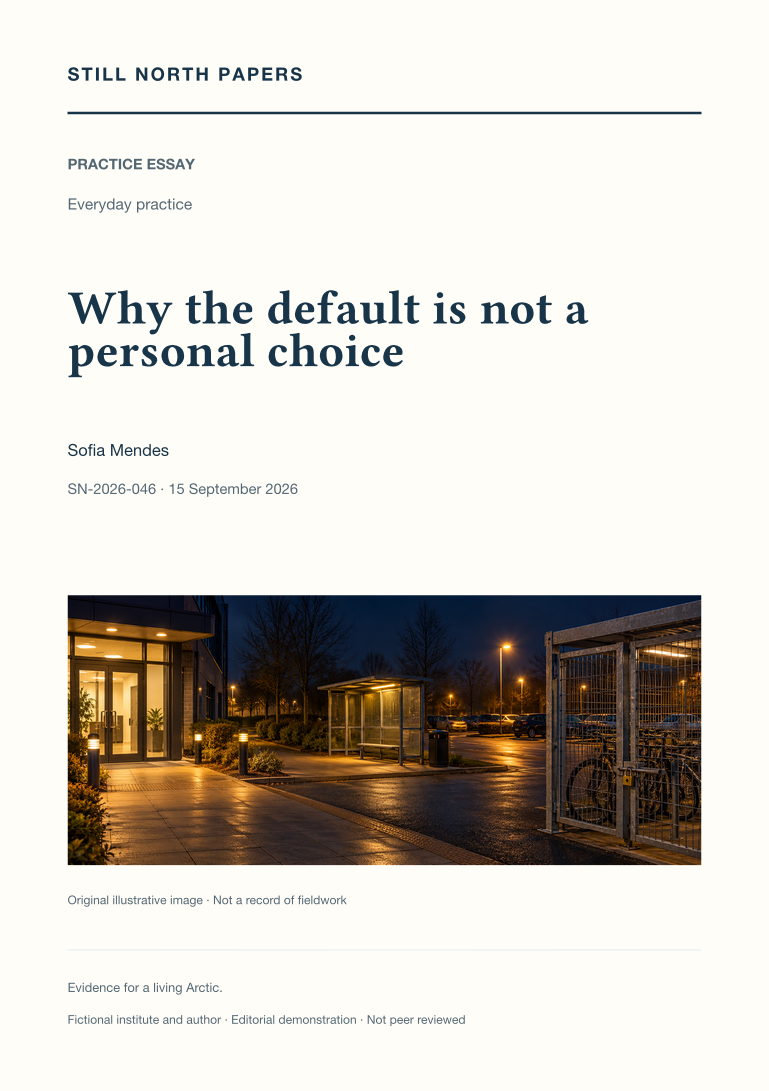
A lower-impact option is not a genuine choice if its surrounding services make it unusable. Beginning with two hypothetical late-shift journeys, this practice essay uses the IPCC's service-based account of demand to distinguish a need from the object or fuel currently meeting it. Schedules, infrastructure, expenses rules, and access arrangements can establish a default before an individual acts. A short friction map identifies the need, available options, obstacle, and institution able to change it. The discussion stresses private exception routes and attention to who bears extra time or cost. It also separates service uptake from demonstrated emissions reductions. Its conclusion places individual experience and institutional change together, directing requests towards the specific arrangements that responsible organisations can actually alter.
Enough food for the room
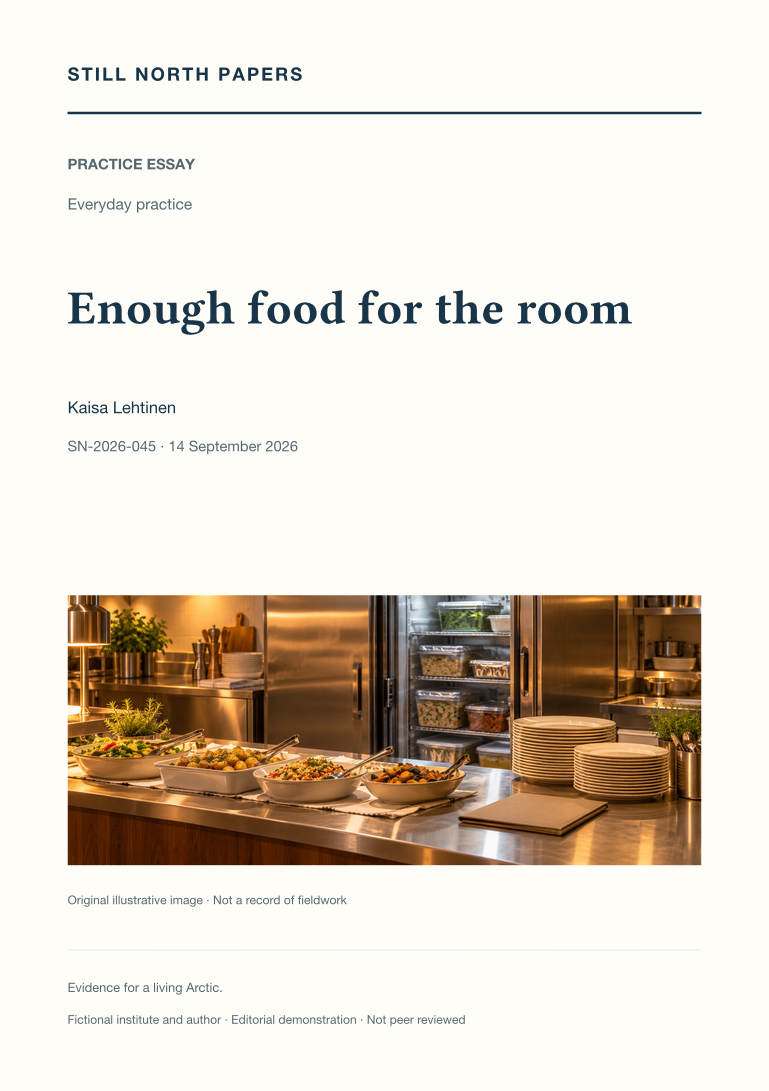
Community catering can provide enough food without treating an overflowing display as the measure of generosity. This practice essay begins with a hypothetical workshop to distinguish a promised meal from refreshments and an attendance range from a single forecast. It connects dietary information, flexible portions, refrigeration, competent helpers, and available equipment before proposing a menu. Official community-event guidance anchors safety and allergen responsibilities while leaving jurisdiction-specific advice to the relevant authority. Planned reserves and controlled replenishment differ from food left on display, and surplus categories need different handling at the end. The discussion concludes that quantities, safe redistribution, record-keeping, and clearing-up labour should be planned together. Avoiding waste cannot justify uncertain food, inadequate portions, or an unsafe workload for volunteers.
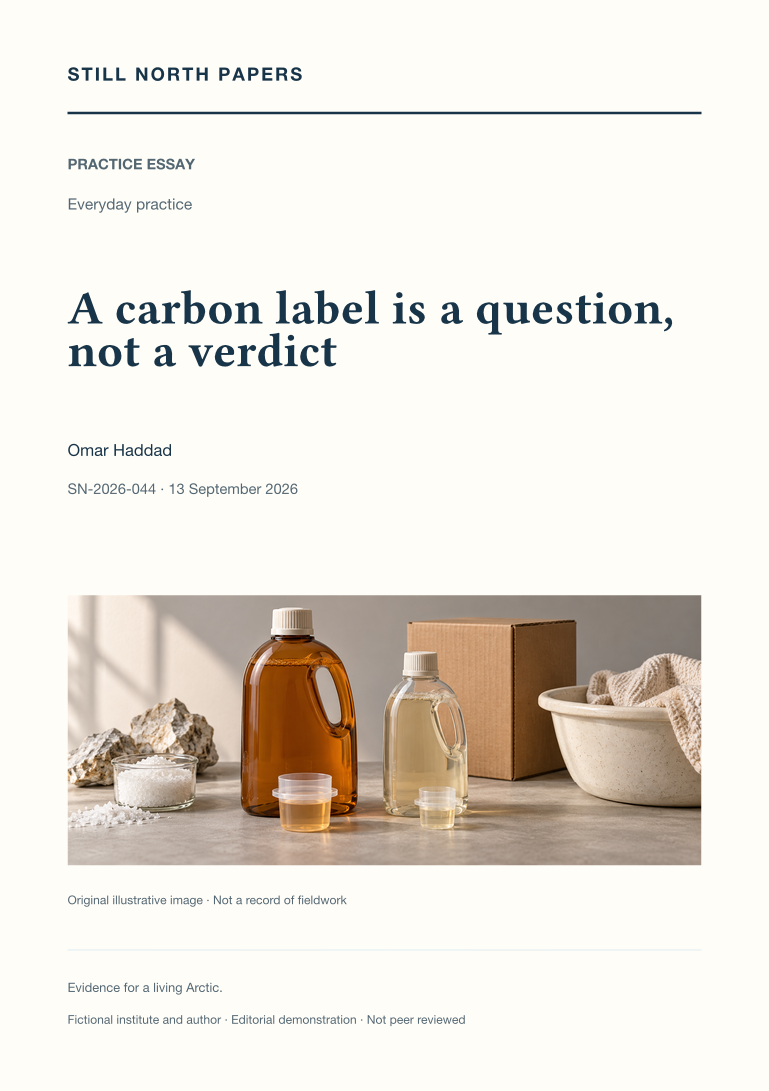
A carbon label is a question, not a verdict
A product carbon number becomes useful only when its unit, function, boundary, and assumptions are understood. This practice essay draws on the GHG Protocol Product Standard and the Green Claims Code to explain why superficially similar labels may not support a fair numerical ranking. It examines use-stage scenarios, named comparators, assessment dates, evidence links, and the distinction between emissions and claimed compensation. A general standard alone does not guarantee product-specific comparability. For workplace purchasing, the discussion recommends seeking matching documentation rather than forcing uncertain estimates into a precise league table. Carbon remains one consideration alongside suitability, repair access, cost, and other impacts. The conclusion supports proportionate decisions with visible unknowns, not personal verdicts or an expectation that shoppers audit entire supply chains.

Read the care label before laundry day
Garment usefulness depends on care requirements as well as fabric condition. This practice essay uses GINETEX guidance to distinguish washing temperature, mechanical action, drying, and professional treatment, explaining why a fibre name or a cooler normal cycle cannot replace the full label. It matches cleaning to the item's use while retaining hygiene, workplace, and chemical-safety limits. Drying space, ventilation, mobility, shared machines, and household schedules affect what care is achievable; a rule suited to one home may be impossible in another. The discussion also treats cleaning demands as part of purchasing and uniform provision, rather than unpaid labour that can be assumed. Simple shared records can preserve instructions and prevent avoidable damage, without promising indefinite garment life or one universal laundry routine.
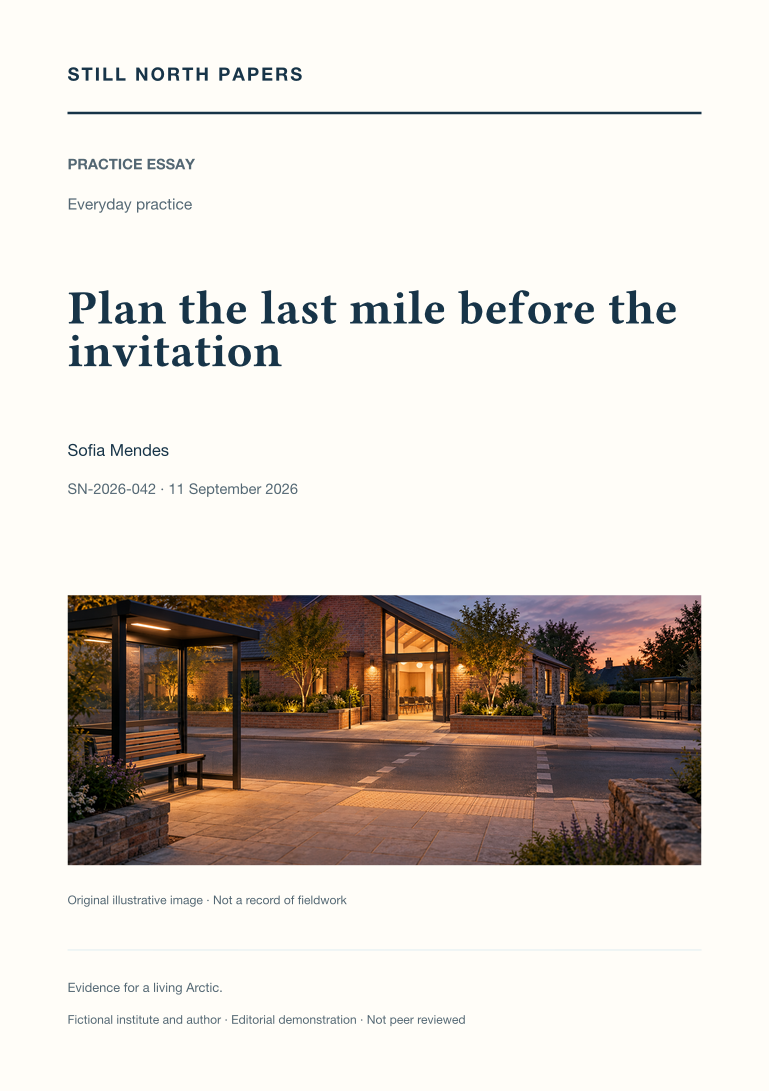
Plan the last mile before the invitation
An event's location and timetable shape who can attend and whether lower-impact travel is genuinely usable. This practice essay evaluates complete arrival and return chains rather than proximity to a station alone. It draws on event-planning guidance to connect access features, programme timing, communication support, and travel budgets. A hypothetical late finish shows why an earlier schedule, different venue, funded transport, or another participation format may matter more than a journey-planning link. Specific access information must identify both confirmed features and limitations, with arrangements for updates and private support requests. The discussion rejects guarantees about changing transport infrastructure and public judgements of attendees' travel modes. Its practical conclusion is to build access into venue selection, staffing, and funding before invitations fix the choices.
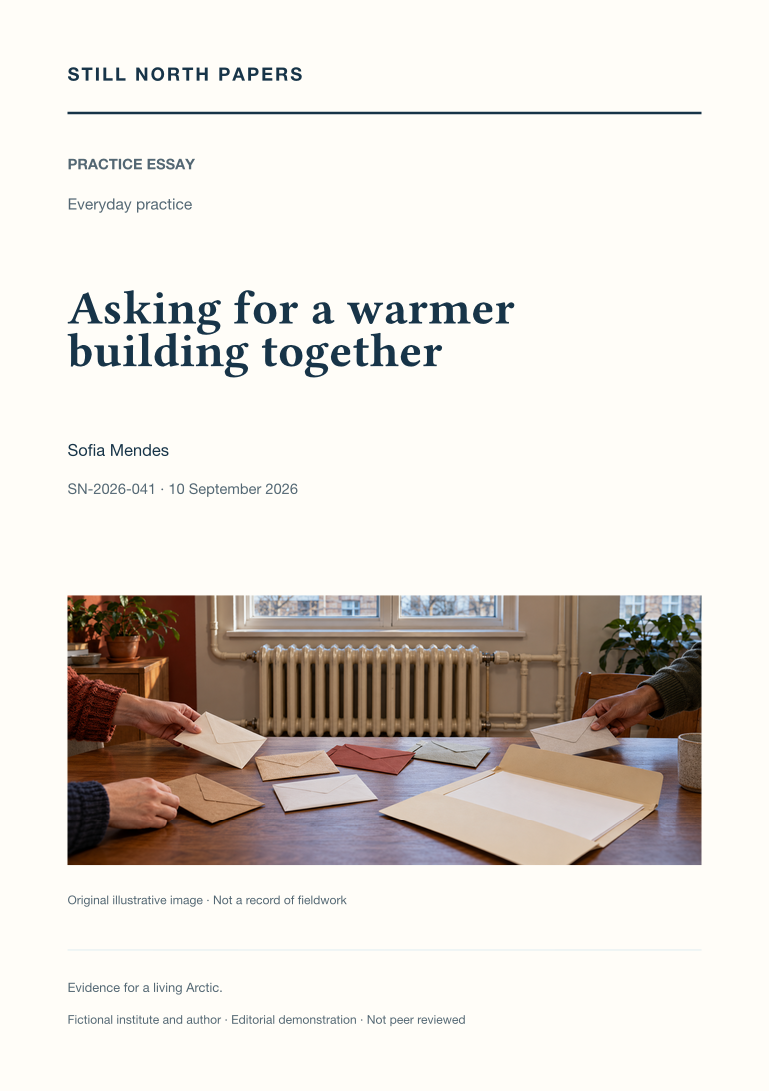
Asking for a warmer building together
Repeated heating complaints can describe a building-wide problem while remaining fragmented across separate repair reports. This practice essay explains how residents can assemble a voluntary collective request without delaying urgent repairs or exposing sensitive personal information. It distinguishes observations from diagnoses, noting the limits of household thermometers and comparisons between energy bills. A useful request names the responsible decision-maker, asks for professional investigation, and separates immediate safe service from longer-term improvements to the building. Official renting guidance provides jurisdiction-sensitive context rather than a universal legal deadline. Accessible updates, manageable coordination, and checks after promised work help sustain participation. The intended outcome is an accountable response to residents' specific problems, not a demand that tenants collect perfect evidence or personally compensate for failing infrastructure.
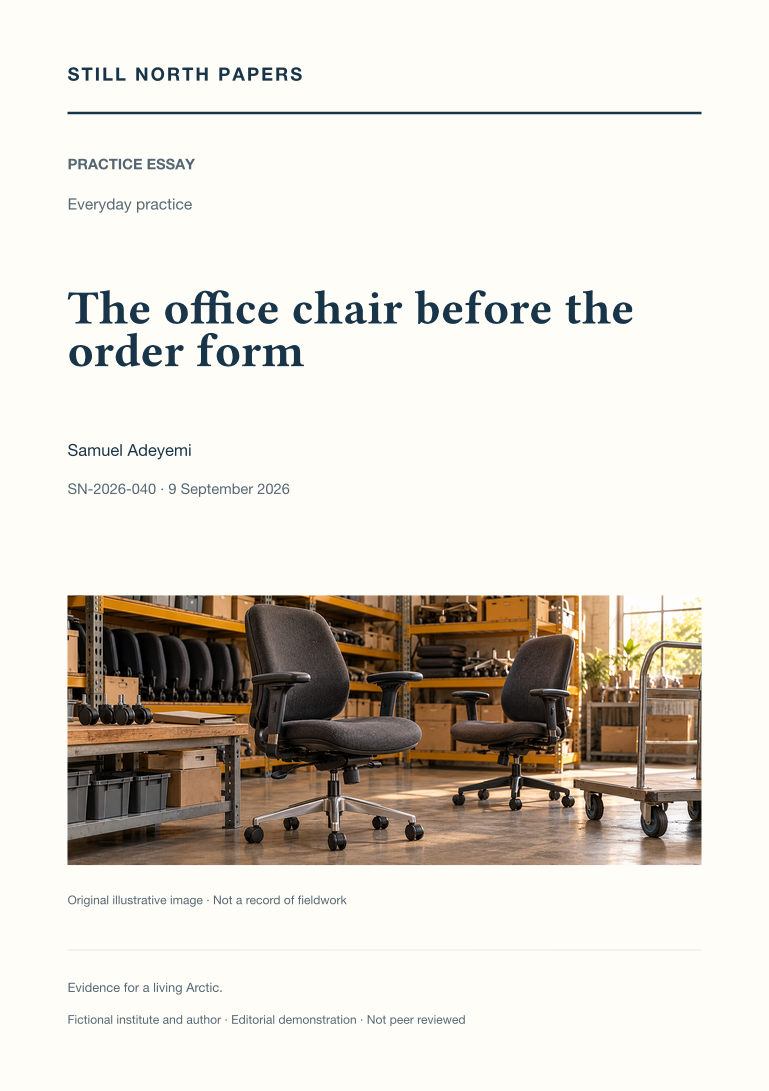
The office chair before the order form
An office-chair order offers a concrete way to connect purchasing with accessibility, existing stock, maintenance, and eventual disposal. This practice essay starts with users' requirements and competent assessment of stored furniture rather than a blanket preference for either reuse or new products. Government procurement guidance informs a shift from vague sustainability language to proportionate requirements for replaceable parts, documented materials, support, and take-back arrangements. Purchase price is considered alongside delivery, setup, servicing, and collection over a stated period, with service-life assumptions left visible. The discussion also addresses privacy, formal approval routes, and responsibility after delivery. Its practical conclusion is that supported refurbishment and suitable stock should enter the decision before approval, while safe, usable seating remains the non-negotiable service.
What the food bin can tell you
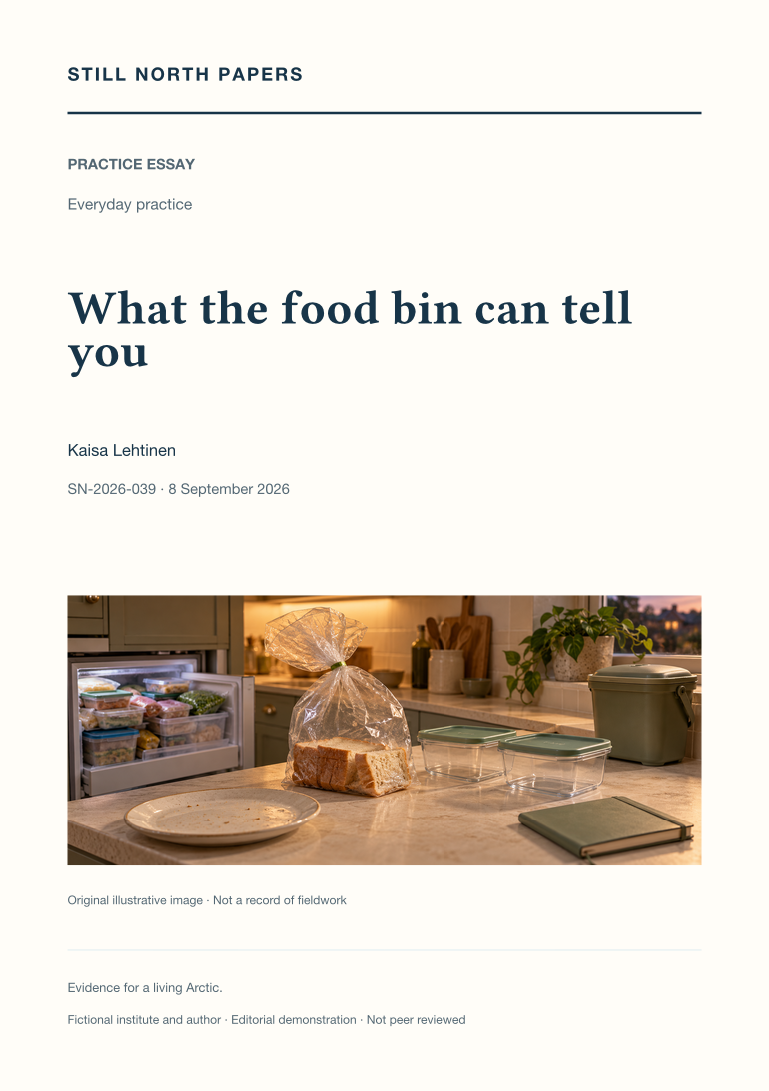
A small household food audit can reveal practical causes of waste without becoming a judgement of the people producing it. This practice essay distinguishes a discarded item from an explanation for its loss, using familiar cases involving pack size, disrupted plans, unidentified leftovers, and serving portions. It places any adjustment within food-safety limits, drawing on official guidance for date labels, storage, cooling, and leftovers. Accessibility, fatigue, freezer space, shopping opportunities, and usable packaging can change which response is feasible. The proposed method is deliberately modest: record enough during ordinary clearing up to identify a recurring obstacle, try an adjustment, and stop when the pattern is useful. Rough household notes are not representative climate accounting, and prevention must not override safe handling.
A library of things needs a return desk
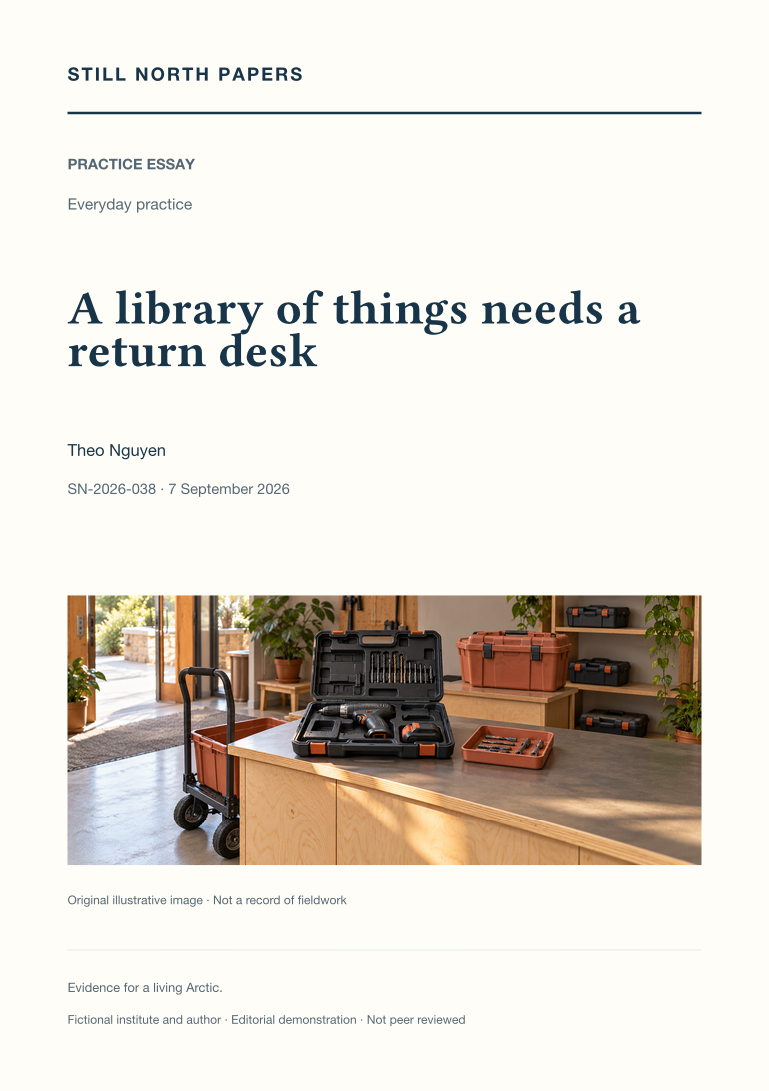
An equipment library succeeds through dependable access, not the size of its donated stock. This practice essay follows the service from choosing useful items to accessible collection, competent handover, inspection, maintenance, and return. It explains why deposits, opening hours, digital-only booking, and transport can prevent a nominally available object from meeting a real need. Safety guidance informs the discussion but is not presented as a complete legal framework for community lending. Scheduling gaps, fault reporting, damage rules, privacy, and operating budgets make reliability a design responsibility. The essay also distinguishes completed loans from avoided purchases: borrowers might otherwise hire or borrow elsewhere. Modest records of use, maintenance, and barriers can improve the service without supporting an invented carbon-saving claim.