

About Still North
Better questions.
Longer perspectives.
Evidence for a living Arctic.
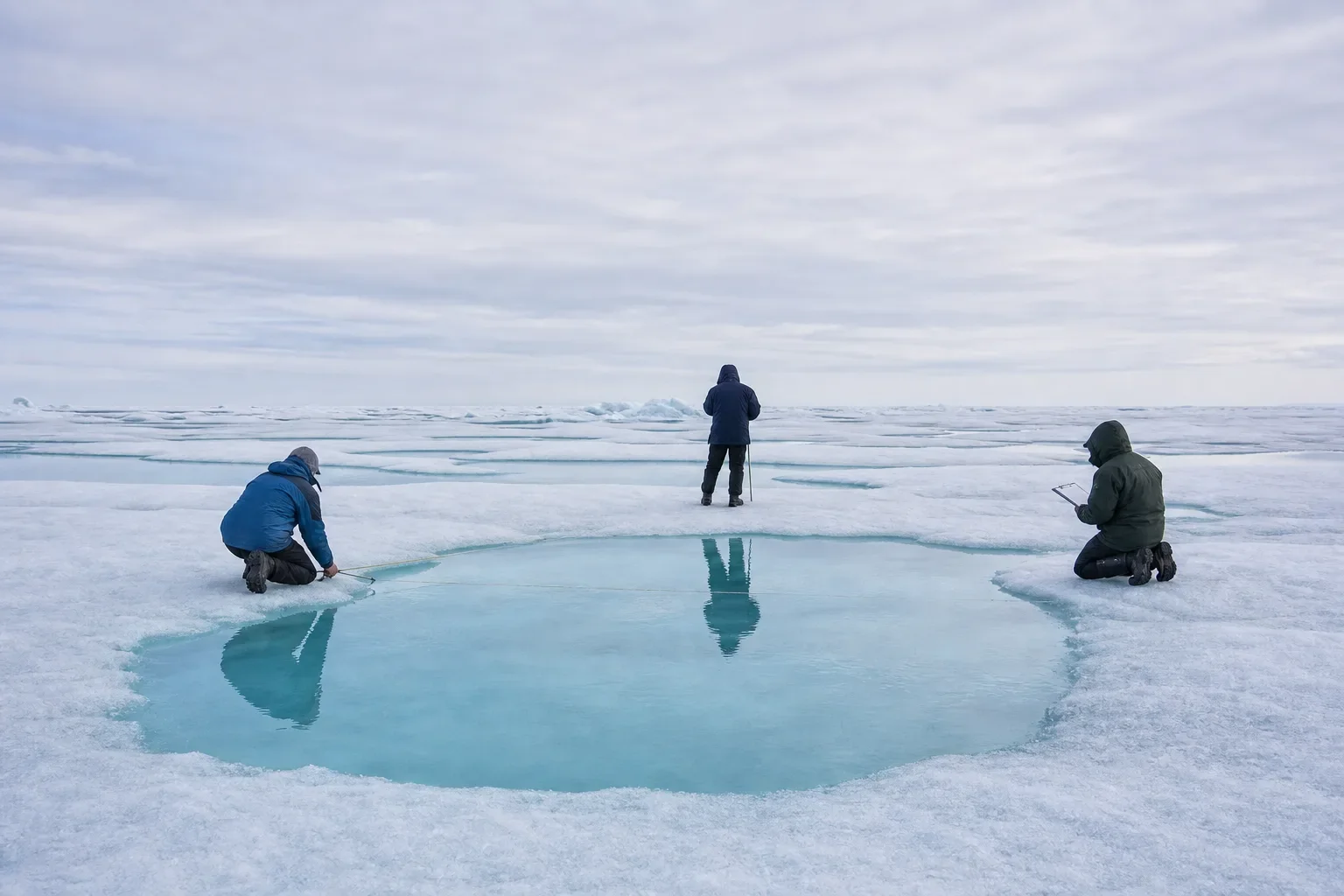
Still North connects Arctic evidence with the decisions that travel beyond the ice edge. Its five programme areas bring sea ice, wildlife, freshwater, communities, and observation methods into the same conversation, without pretending that one measurement can explain them all.
This is a fictional institute, created as a realistic demonstration of Monocle Search. The twenty-one people, institutional biographies, field scenes, and products are illustrative. They are not records of research carried out by an actual employer. Factual Arctic claims link to the named public sources that support them.
What evidence asks of us
A useful result carries its context with it. A temperature anomaly needs a reference period. An ice measurement needs a place, a method, and a season. A photograph can show a scene without establishing a trend. We try to keep those distinctions visible, especially when a concise headline would be easier.
That approach leaves room for curiosity rather than paralysis. You can ask what a record measures, which uncertainty matters to a decision, or what would change an interpretation. Understanding the limit of an observation is part of learning how to use it.
Five programmes, connected questions
Sea ice considers extent, thickness, age, drift, and the scale between a field point and a regional record. Wildlife and food webs follows habitat, timing, observation, and species relationships. Permafrost and freshwater asks how thaw, water, minerals, and living systems meet.
Communities and livelihoods keeps authority, consent, and responsibility within the research question, not outside it. Open observations follows the quieter work of calibration, metadata, maintenance, and stewardship. A record is only useful tomorrow if somebody can still understand it.
People, not a wall of job titles
The team directory includes researchers, educators, engineers, partnership leads, and the people who keep an institution working. Their biographies explain how they approach a problem, not just where they sit in a chart. Eleven of those voices also appear as journal authors.
A demonstration with something to discover
The site brings together a sixty-article journal, a 104-paper research library, practical guides, and a native product catalogue. The same fictional institute appears on the SearchCue WordPress demo. Different platforms, one coherent body of content.
The research PDFs are evidence essays, methods notes, and practice essays, not peer-reviewed studies. They do not invent results, journal credentials, or DOIs. Original scenes and portraits were generated for the demonstration; the research covers combine that imagery with a consistent editorial design.
Start with one question, follow a source, and notice what becomes clearer. Read Sources and methods for the evidence standard and Frequently asked questions for the boundaries of the demonstration.