

Substitute the meal, not just the ingredient
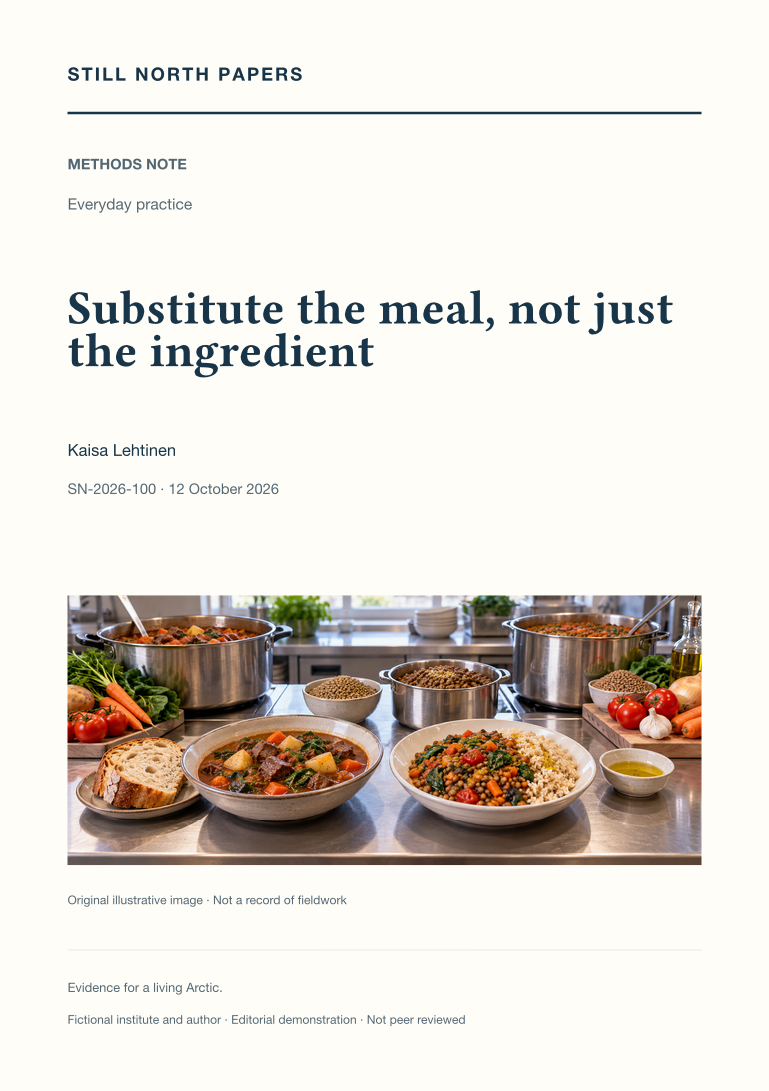
Food substitutions change recipes, yields, preparation, and the service diners receive, not simply the mass of an ingredient purchased. This methods note develops a complete-meal comparison for a fictional community kitchen using Poore and Nemecek’s harmonised food assessment, FAO and WHO diet principles, and the GHG Protocol Product Standard. It examines raw and cooked units, nutritional constraints, retail boundaries, kitchen energy, losses, coproduct allocation, and the difference between average inventories and marginal consequences. A hypothetical stew comparison identifies missing observations without inventing acceptance results or footprints. No savings or dietary prescription are offered. The practical implication is to assess suitable eating occasions under consistent boundaries while retaining food safety, affordability, cultural acceptability, and access as independent requirements.