

A library of things needs a return desk
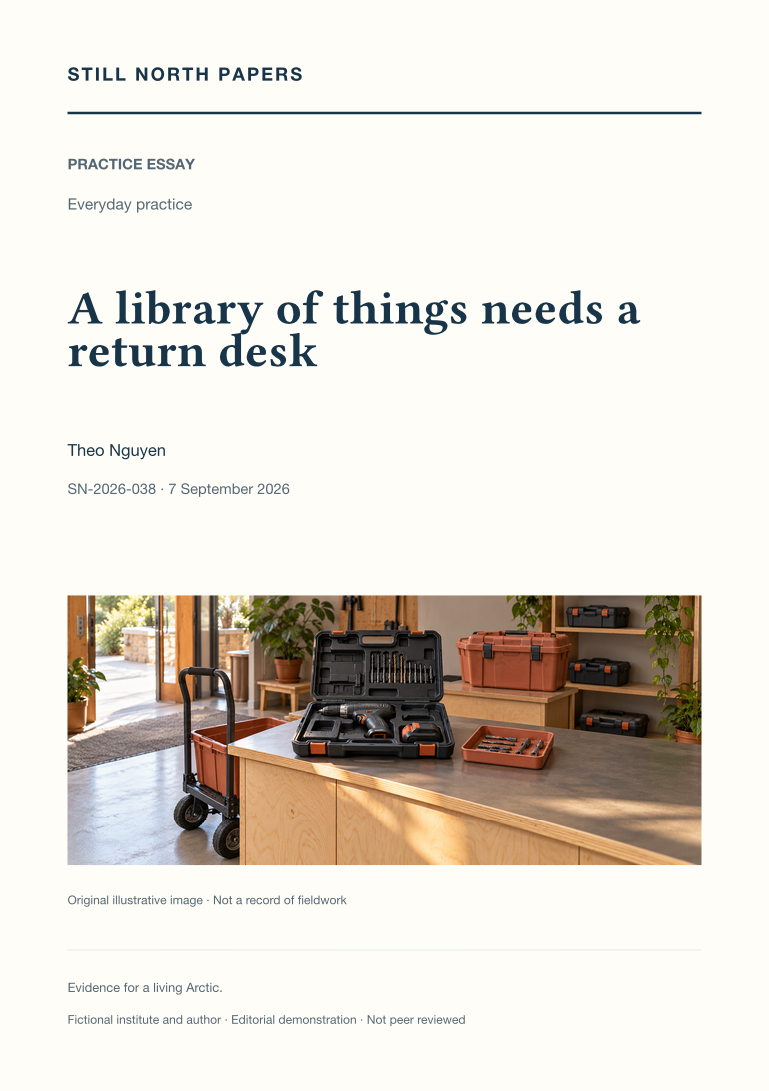
An equipment library succeeds through dependable access, not the size of its donated stock. This practice essay follows the service from choosing useful items to accessible collection, competent handover, inspection, maintenance, and return. It explains why deposits, opening hours, digital-only booking, and transport can prevent a nominally available object from meeting a real need. Safety guidance informs the discussion but is not presented as a complete legal framework for community lending. Scheduling gaps, fault reporting, damage rules, privacy, and operating budgets make reliability a design responsibility. The essay also distinguishes completed loans from avoided purchases: borrowers might otherwise hire or borrow elsewhere. Modest records of use, maintenance, and barriers can improve the service without supporting an invented carbon-saving claim.
Buy less, repair more
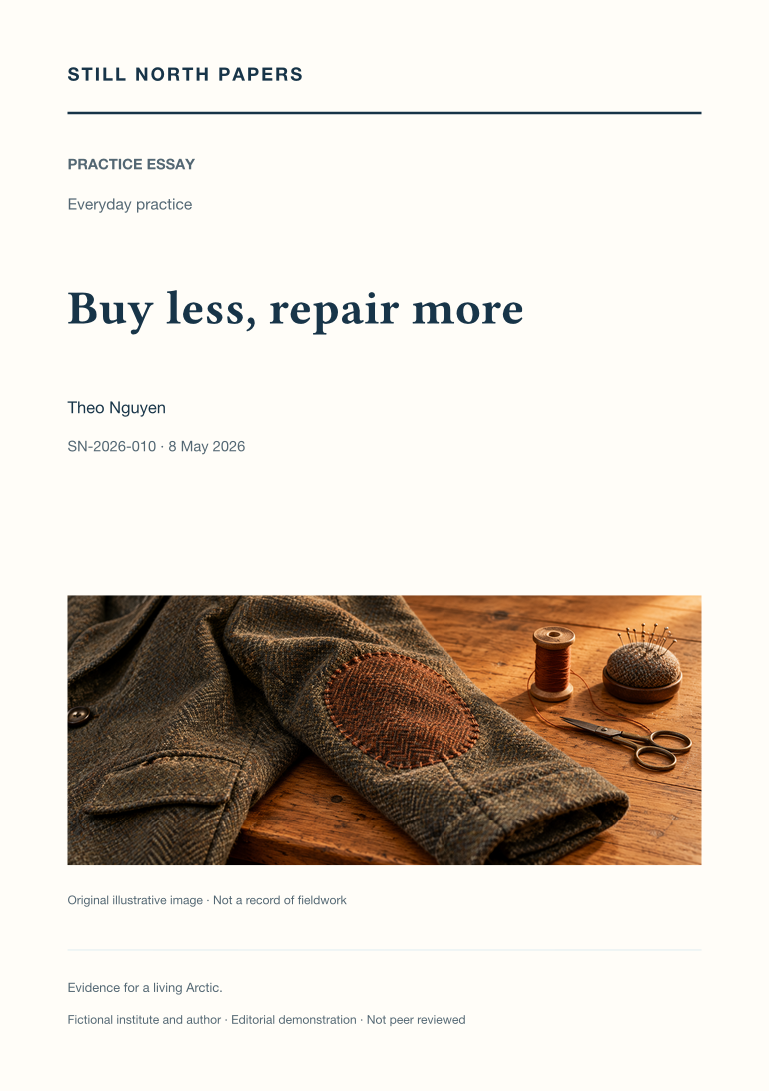
Keeping a product useful begins with identifying the function required, not assuming that every fault demands a purchase. This practice essay compares care, repair, borrowing, sharing, and justified replacement through a checklist covering safety, warranty, recalls, parts, skills, time, and likely continued service. Textile mending offers a lower-risk example, while electrical, structural, and other safety-critical work retains a clear boundary for trained help. The discussion examines rebound consumption, inaccessible product design, procurement, and the institutional conditions that permit repair at scale, using the cited IPCC demand-side assessment as context. Responsible end-of-life handling includes personal data, hazardous components, and whether a donated item is genuinely usable and wanted. No repair is presented as automatically safe, economical, or environmentally preferable in every case.