

The service inside the package: defining a fair comparison
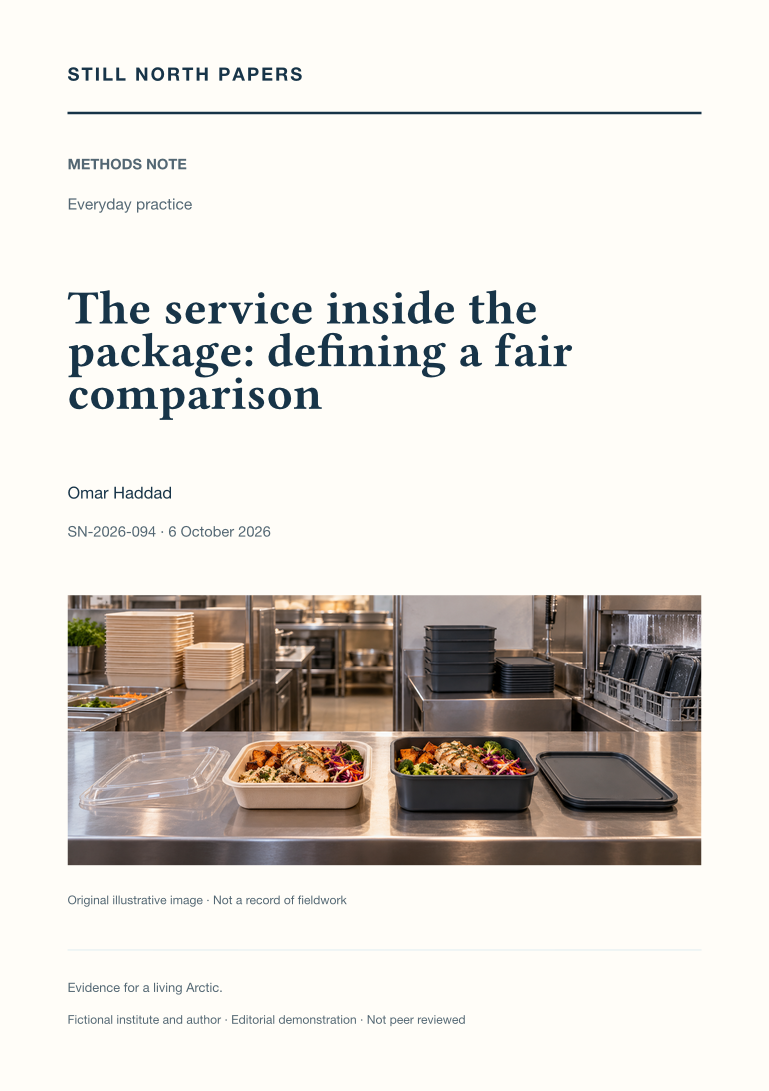
Packaging comparisons become misleading when they count empty objects rather than equivalent deliveries. This methods note develops a functional-unit procedure for a small food service, drawing on the GHG Protocol Product Standard, the European Commission’s Environmental Footprint recommendation, and the Environment Agency’s original carrier-bag assessment. A hypothetical returnable-container case distinguishes completed meals, realised reuse, delayed returns, washing, replacement lids, collection journeys, and food loss. The analysis explains why consistent boundaries and evidence of displacement matter before environmental rankings are attempted. It also keeps accessibility and food safety outside any simplistic carbon score. No packaging footprints or savings are estimated. The proposed decision record identifies which operational observations and supplier information would be needed to support a defensible local comparison.
A carbon label is a question, not a verdict
A product carbon number becomes useful only when its unit, function, boundary, and assumptions are understood. This practice essay draws on the GHG Protocol Product Standard and the Green Claims Code to explain why superficially similar labels may not support a fair numerical ranking. It examines use-stage scenarios, named comparators, assessment dates, evidence links, and the distinction between emissions and claimed compensation. A general standard alone does not guarantee product-specific comparability. For workplace purchasing, the discussion recommends seeking matching documentation rather than forcing uncertain estimates into a precise league table. Carbon remains one consideration alongside suitability, repair access, cost, and other impacts. The conclusion supports proportionate decisions with visible unknowns, not personal verdicts or an expectation that shoppers audit entire supply chains.