

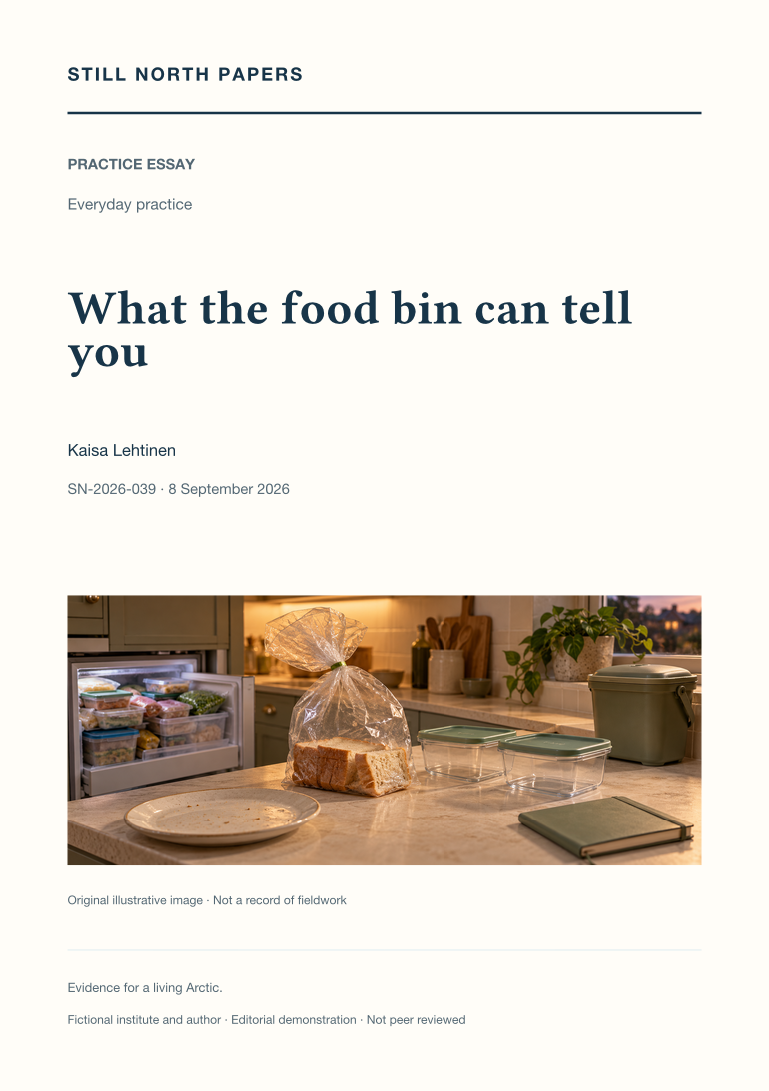
What the food bin can tell you
A small household food audit can reveal practical causes of waste without becoming a judgement of the people producing it. This practice essay distinguishes a discarded item from an explanation for its loss, using familiar cases involving pack size, disrupted plans, unidentified leftovers, and serving portions. It places any adjustment within food-safety limits, drawing on official guidance for date labels, storage, cooling, and leftovers. Accessibility, fatigue, freezer space, shopping opportunities, and usable packaging can change which response is feasible. The proposed method is deliberately modest: record enough during ordinary clearing up to identify a recurring obstacle, try an adjustment, and stop when the pattern is useful. Rough household notes are not representative climate accounting, and prevention must not override safe handling.
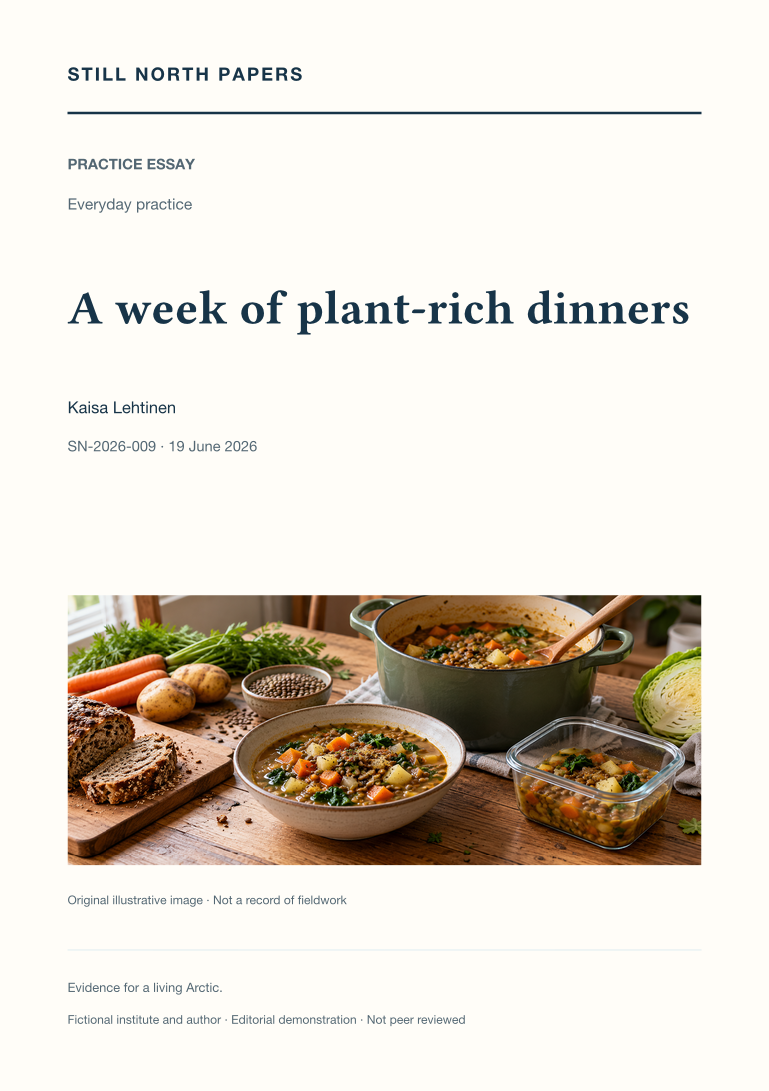
A week of plant-rich dinners
Seven flexible dinners illustrate how plant-rich eating can begin with familiar foods, available equipment, and a realistic household schedule. The essay follows cupboard checks, adaptable staples, leftovers, storage, and food-safety decisions rather than prescribing a perfect diet or estimating a measured climate benefit. It explains why usable food, preparation time, dietary needs, culture, and access matter alongside shelf price, including the practical value of canned, frozen, or prepared ingredients. Preventing edible waste takes priority over disposing of scraps, while shared meals require attention to who plans, cooks, and cleans. The cited IPCC demand-side assessment supplies wider context for food services and infrastructure. A useful outcome is a small set of affordable, satisfying meals that can be repeated, plus clearer requests of public and workplace catering.