

After permission changes in a shared dataset
Changed permission requires an accountable response even when a shared dataset cannot be recalled perfectly. This practice essay compares consent policy, Indigenous research-governance sources, Creative Commons terms, and data-citation guidance. A fictional controlled table released publicly without authorisation illustrates why an original breach, withdrawal from participation, requests to remove data, and discontinuation of a public download must remain distinct. The analysis follows copies, derivatives, backups, recipient notices, revised analyses, and persistent landing pages, separating reported actions from exposure that remains. It neither determines jurisdiction-specific legal duties nor promises universal erasure, and makes no claim to resolve a real community's authority. Its implication is proportionate provenance, legitimate decision routes, honest advance limits, and stewardship capacity that continues after publication and funding end.
Translating results without translating away uncertainty
Multilingual return of results must preserve the relationship between evidence and claim, not merely reproduce sentence structure. This practice essay compares research-governance sources with W3C accessibility guidance through a fictional seasonal-observation case in which an ambiguous denominator changes the apparent conclusion. It examines qualified translation, technical review, terminology, counts, missing records, chart explanation, confidentiality, and synchronised corrections across written and spoken formats. The discussion distinguishes accessibility from translation quality and separates review roles from endorsement. No actual translations, community consultations, or reader evaluations are reported. The essay rejects treating English as automatically authoritative and offers responsibilities for outside institutions without prescribing a universal Indigenous format. Its central implication is to resource multilingual return as part of evidential integrity throughout a project's lifetime.
A data licence cannot grant consent
A public licence does not summarise every permission governing research material. This practice essay compares Creative Commons Attribution 4.0 legal terms with the National Inuit Strategy on Research, TCPS 2 Chapter 9, and the CARE Principles. A fictional archive containing instrument measurements, place descriptions, and interview excerpts illustrates why possession, copyright authority, individual consent, collective governance, and repository access must remain distinct. The analysis examines irrevocable public grants, incompatible downstream restrictions, attribution without endorsement, and material excluded from a blanket licence. It provides neither legal advice nor a universal Indigenous permission process, and makes no claim of community approval. Clearer separation of objects and authorities can support legitimate reuse while avoiding promises that a repository is not entitled or able to make.
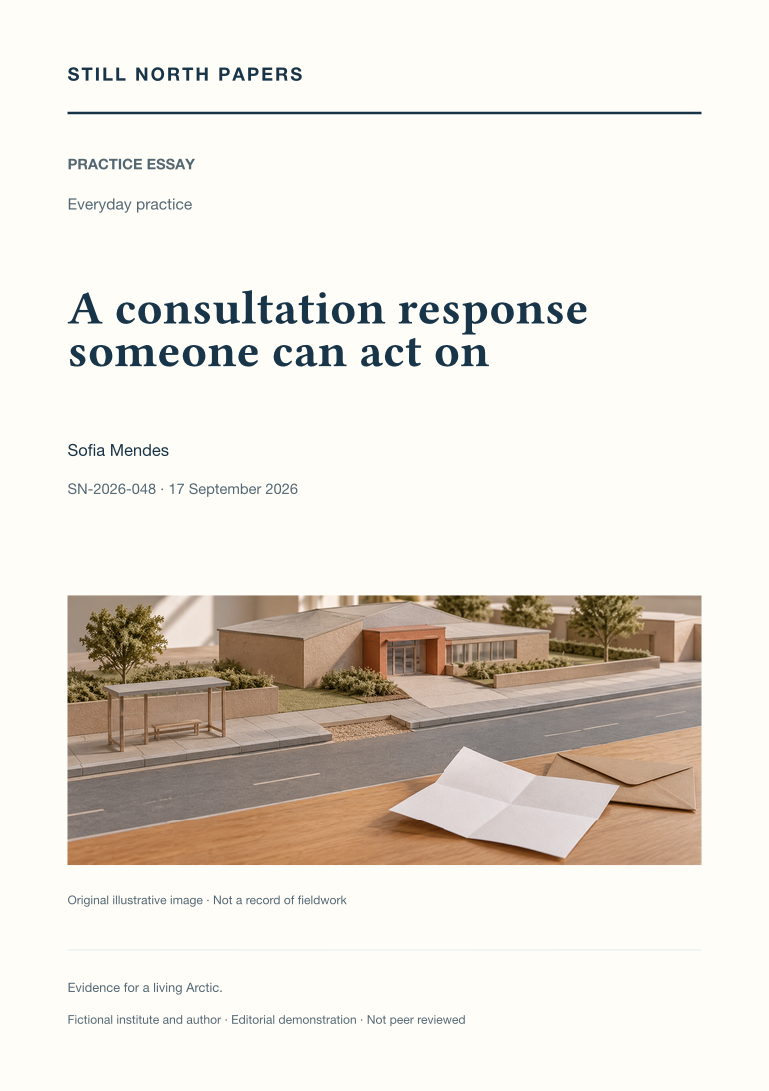
A consultation response someone can act on
A useful consultation response connects relevant knowledge to a decision that remains open. This practice essay explains how to locate the proposal version, responsible body, submission rules, and actual scope before concentrating on the part that affects the respondent. A hypothetical community-building entrance illustrates how a point can identify a drawing, describe an effect, state its evidential basis, and request a specific assessment or amendment. Cabinet Office principles provide context, not a universal rulebook for local processes. The discussion also covers authorised representation, publication notices, privacy, accessible submission routes, and honest treatment of group disagreement. Keeping the final response and acknowledgement enables later comparison with the decision record. The aim is an answerable request, not an invented expert identity or a claim that consultation necessarily operates as a vote.
Keep the question small when you disagree
Climate disagreements become more tractable when observations, explanations, and proposed responses are treated as distinct questions. This practice essay offers a source-reading approach rather than a promise of persuasion. It recommends agreeing a narrow claim, checking original chart definitions, and comparing geographical coverage, periods, units, and baselines before treating two graphics as contradictory. Royal Society material supplies the distinction between established physical understanding and remaining questions about regional effects, feedbacks, and future emissions. Personal experience can illuminate local impacts without measuring a global trend, while global evidence cannot resolve every access concern. The discussion keeps fairness and policy trade-offs visible, acknowledges boundaries around unsafe exchanges, and concludes that a careful shared question can improve one decision without requiring agreement on everything.
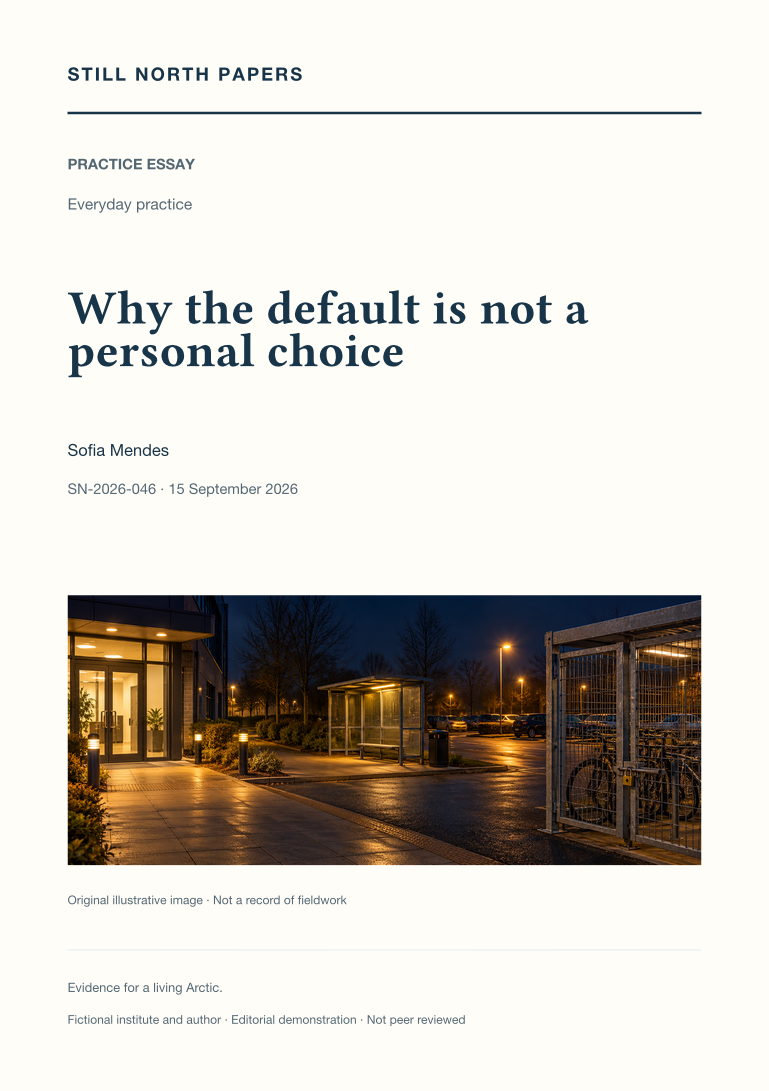
Why the default is not a personal choice
A lower-impact option is not a genuine choice if its surrounding services make it unusable. Beginning with two hypothetical late-shift journeys, this practice essay uses the IPCC's service-based account of demand to distinguish a need from the object or fuel currently meeting it. Schedules, infrastructure, expenses rules, and access arrangements can establish a default before an individual acts. A short friction map identifies the need, available options, obstacle, and institution able to change it. The discussion stresses private exception routes and attention to who bears extra time or cost. It also separates service uptake from demonstrated emissions reductions. Its conclusion places individual experience and institutional change together, directing requests towards the specific arrangements that responsible organisations can actually alter.
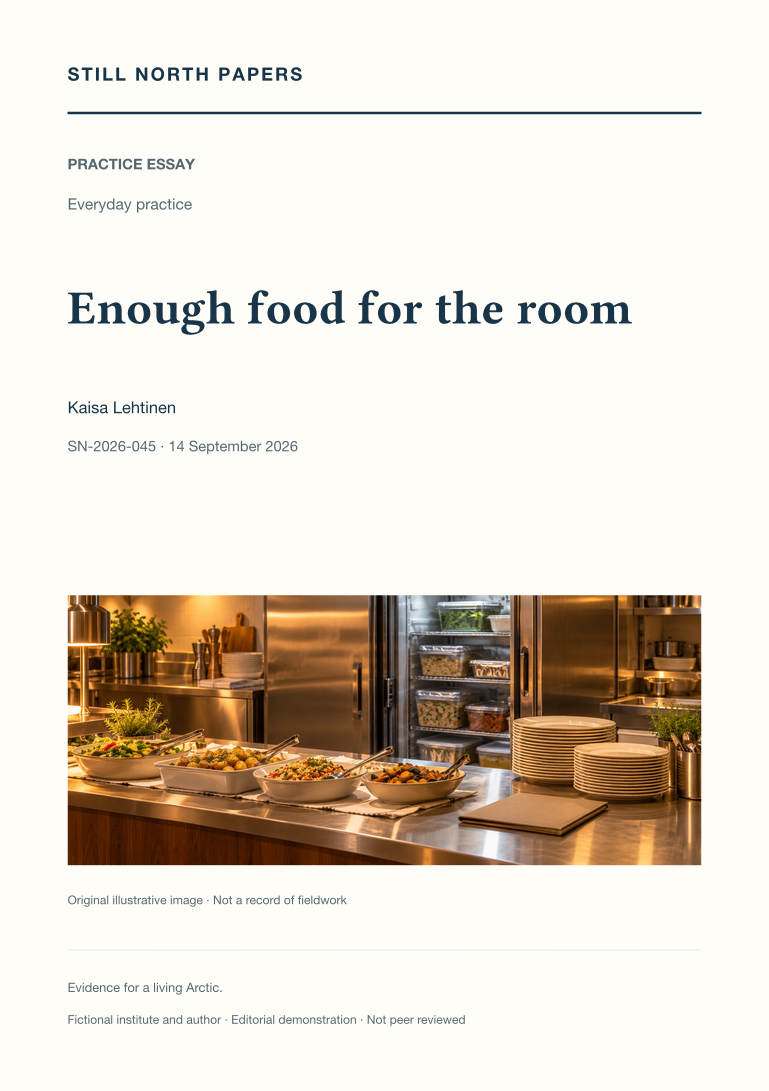
Enough food for the room
Community catering can provide enough food without treating an overflowing display as the measure of generosity. This practice essay begins with a hypothetical workshop to distinguish a promised meal from refreshments and an attendance range from a single forecast. It connects dietary information, flexible portions, refrigeration, competent helpers, and available equipment before proposing a menu. Official community-event guidance anchors safety and allergen responsibilities while leaving jurisdiction-specific advice to the relevant authority. Planned reserves and controlled replenishment differ from food left on display, and surplus categories need different handling at the end. The discussion concludes that quantities, safe redistribution, record-keeping, and clearing-up labour should be planned together. Avoiding waste cannot justify uncertain food, inadequate portions, or an unsafe workload for volunteers.
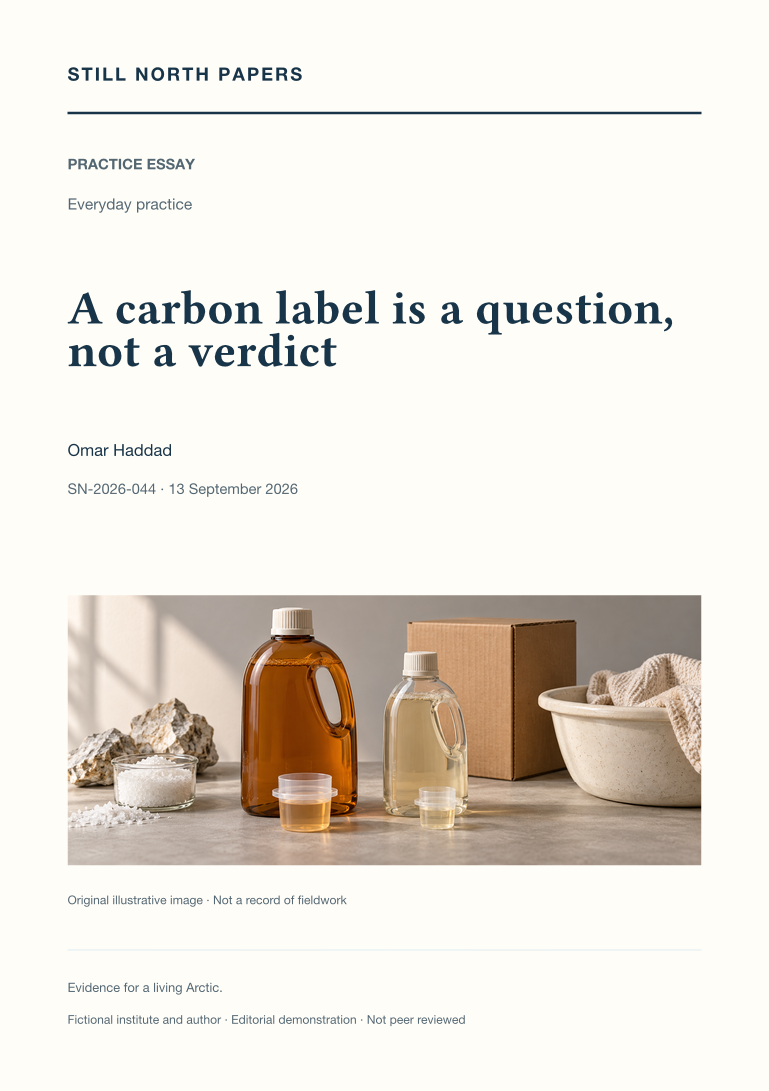
A carbon label is a question, not a verdict
A product carbon number becomes useful only when its unit, function, boundary, and assumptions are understood. This practice essay draws on the GHG Protocol Product Standard and the Green Claims Code to explain why superficially similar labels may not support a fair numerical ranking. It examines use-stage scenarios, named comparators, assessment dates, evidence links, and the distinction between emissions and claimed compensation. A general standard alone does not guarantee product-specific comparability. For workplace purchasing, the discussion recommends seeking matching documentation rather than forcing uncertain estimates into a precise league table. Carbon remains one consideration alongside suitability, repair access, cost, and other impacts. The conclusion supports proportionate decisions with visible unknowns, not personal verdicts or an expectation that shoppers audit entire supply chains.
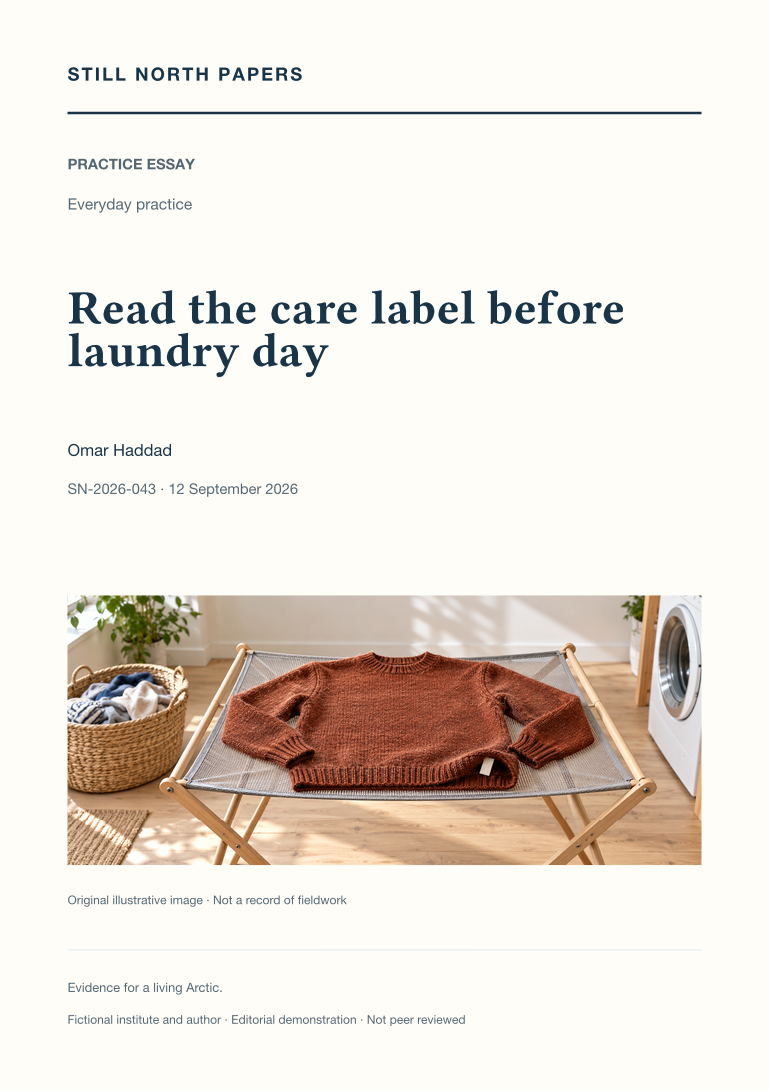
Read the care label before laundry day
Garment usefulness depends on care requirements as well as fabric condition. This practice essay uses GINETEX guidance to distinguish washing temperature, mechanical action, drying, and professional treatment, explaining why a fibre name or a cooler normal cycle cannot replace the full label. It matches cleaning to the item's use while retaining hygiene, workplace, and chemical-safety limits. Drying space, ventilation, mobility, shared machines, and household schedules affect what care is achievable; a rule suited to one home may be impossible in another. The discussion also treats cleaning demands as part of purchasing and uniform provision, rather than unpaid labour that can be assumed. Simple shared records can preserve instructions and prevent avoidable damage, without promising indefinite garment life or one universal laundry routine.
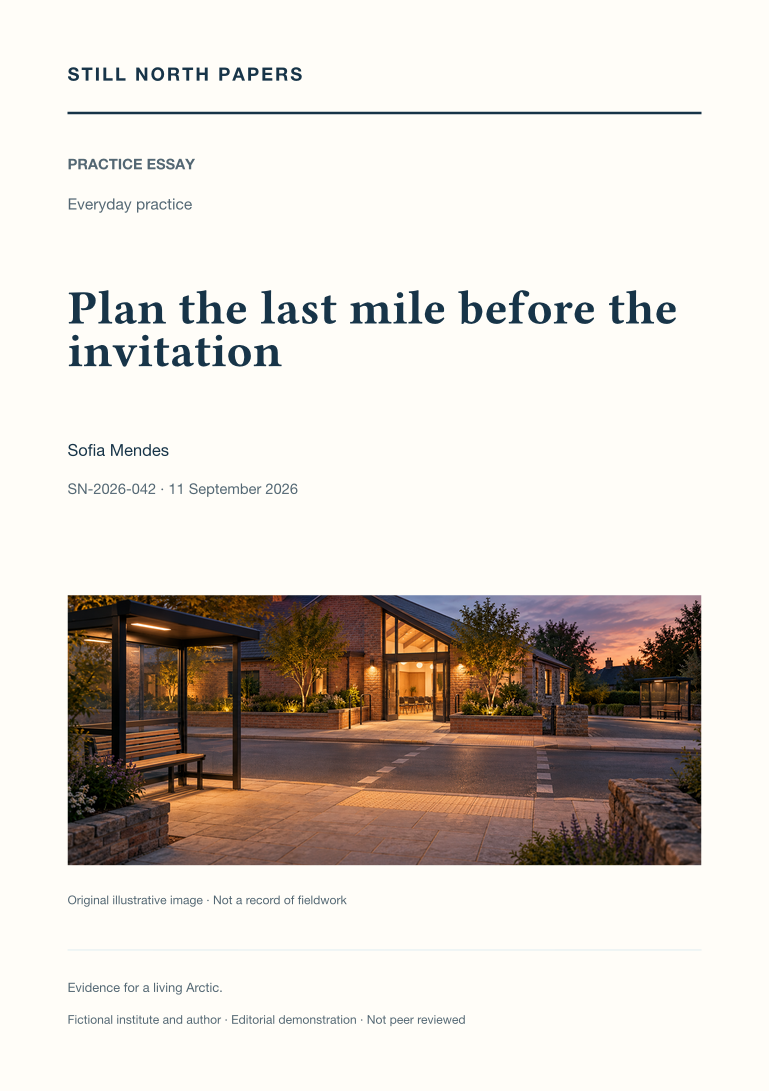
Plan the last mile before the invitation
An event's location and timetable shape who can attend and whether lower-impact travel is genuinely usable. This practice essay evaluates complete arrival and return chains rather than proximity to a station alone. It draws on event-planning guidance to connect access features, programme timing, communication support, and travel budgets. A hypothetical late finish shows why an earlier schedule, different venue, funded transport, or another participation format may matter more than a journey-planning link. Specific access information must identify both confirmed features and limitations, with arrangements for updates and private support requests. The discussion rejects guarantees about changing transport infrastructure and public judgements of attendees' travel modes. Its practical conclusion is to build access into venue selection, staffing, and funding before invitations fix the choices.
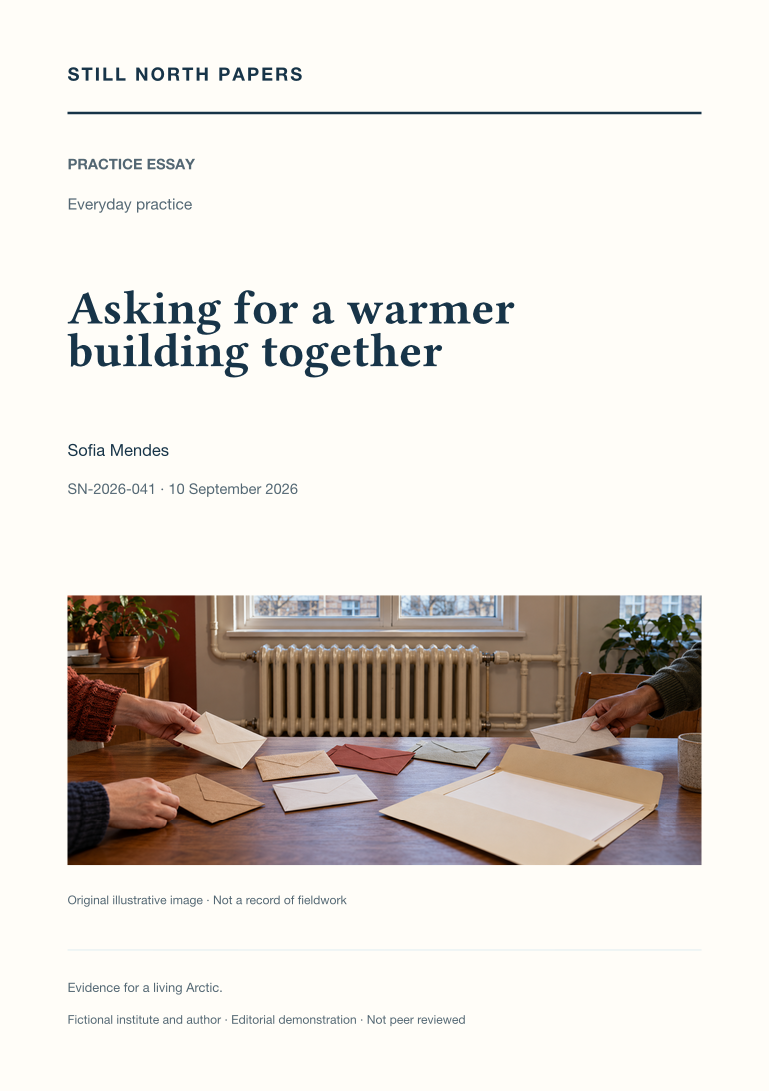
Asking for a warmer building together
Repeated heating complaints can describe a building-wide problem while remaining fragmented across separate repair reports. This practice essay explains how residents can assemble a voluntary collective request without delaying urgent repairs or exposing sensitive personal information. It distinguishes observations from diagnoses, noting the limits of household thermometers and comparisons between energy bills. A useful request names the responsible decision-maker, asks for professional investigation, and separates immediate safe service from longer-term improvements to the building. Official renting guidance provides jurisdiction-sensitive context rather than a universal legal deadline. Accessible updates, manageable coordination, and checks after promised work help sustain participation. The intended outcome is an accountable response to residents' specific problems, not a demand that tenants collect perfect evidence or personally compensate for failing infrastructure.
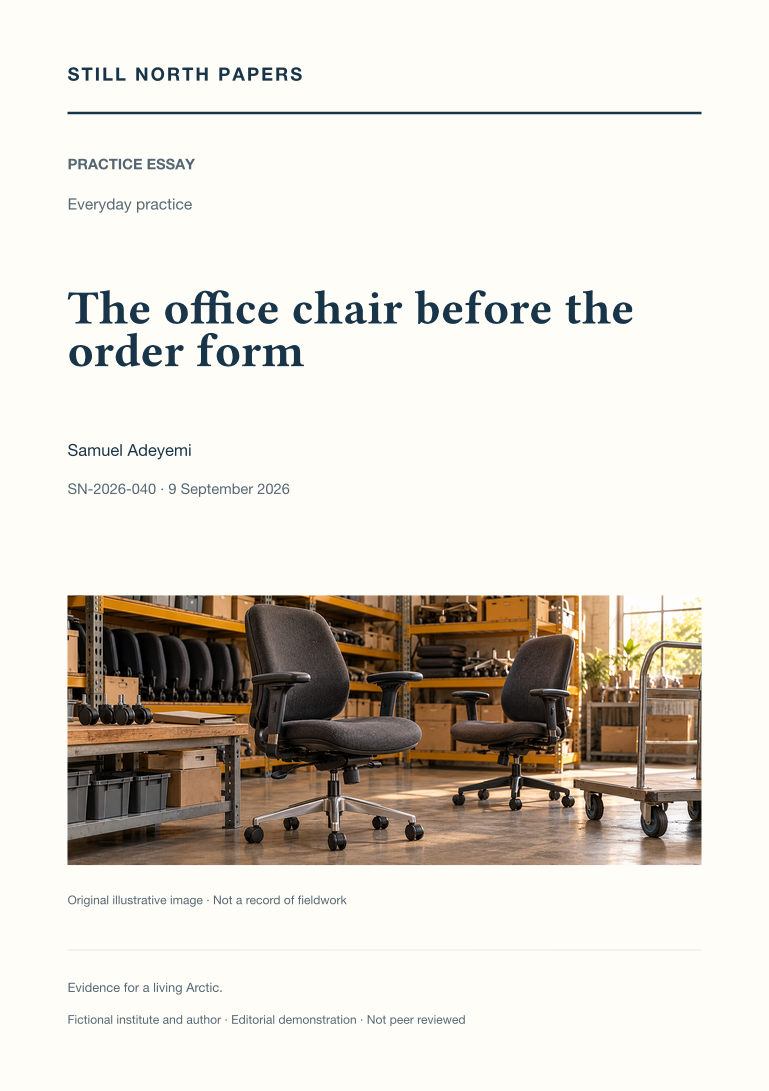
The office chair before the order form
An office-chair order offers a concrete way to connect purchasing with accessibility, existing stock, maintenance, and eventual disposal. This practice essay starts with users' requirements and competent assessment of stored furniture rather than a blanket preference for either reuse or new products. Government procurement guidance informs a shift from vague sustainability language to proportionate requirements for replaceable parts, documented materials, support, and take-back arrangements. Purchase price is considered alongside delivery, setup, servicing, and collection over a stated period, with service-life assumptions left visible. The discussion also addresses privacy, formal approval routes, and responsibility after delivery. Its practical conclusion is that supported refurbishment and suitable stock should enter the decision before approval, while safe, usable seating remains the non-negotiable service.
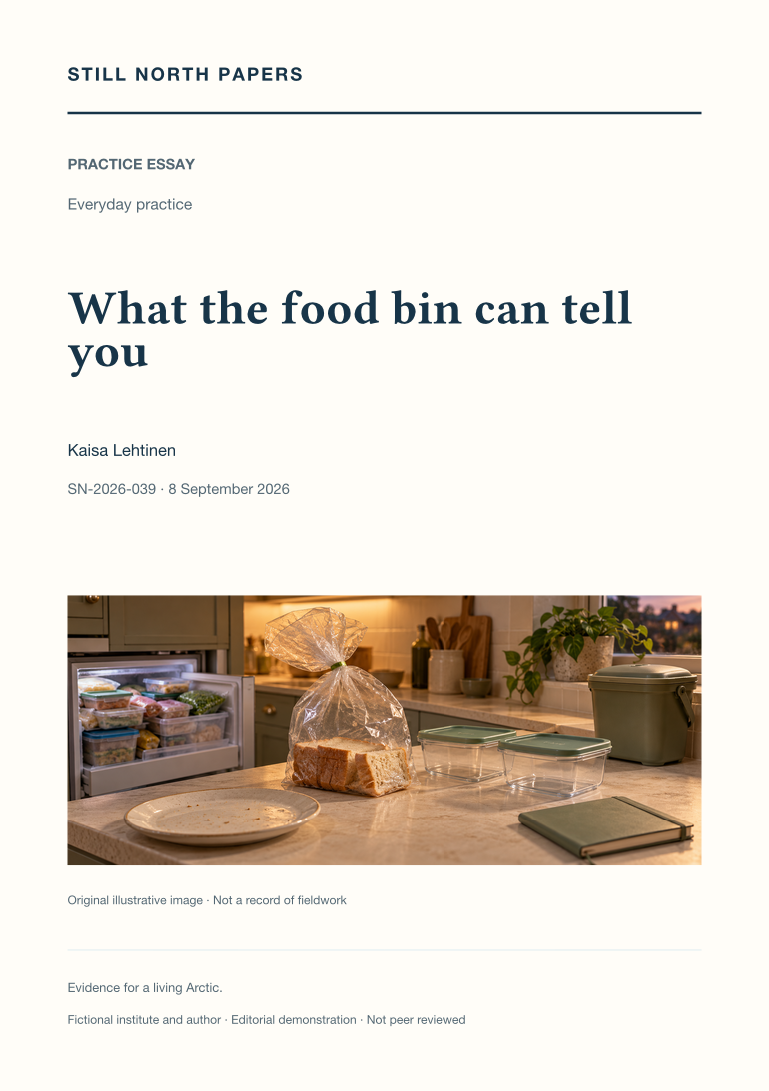
What the food bin can tell you
A small household food audit can reveal practical causes of waste without becoming a judgement of the people producing it. This practice essay distinguishes a discarded item from an explanation for its loss, using familiar cases involving pack size, disrupted plans, unidentified leftovers, and serving portions. It places any adjustment within food-safety limits, drawing on official guidance for date labels, storage, cooling, and leftovers. Accessibility, fatigue, freezer space, shopping opportunities, and usable packaging can change which response is feasible. The proposed method is deliberately modest: record enough during ordinary clearing up to identify a recurring obstacle, try an adjustment, and stop when the pattern is useful. Rough household notes are not representative climate accounting, and prevention must not override safe handling.
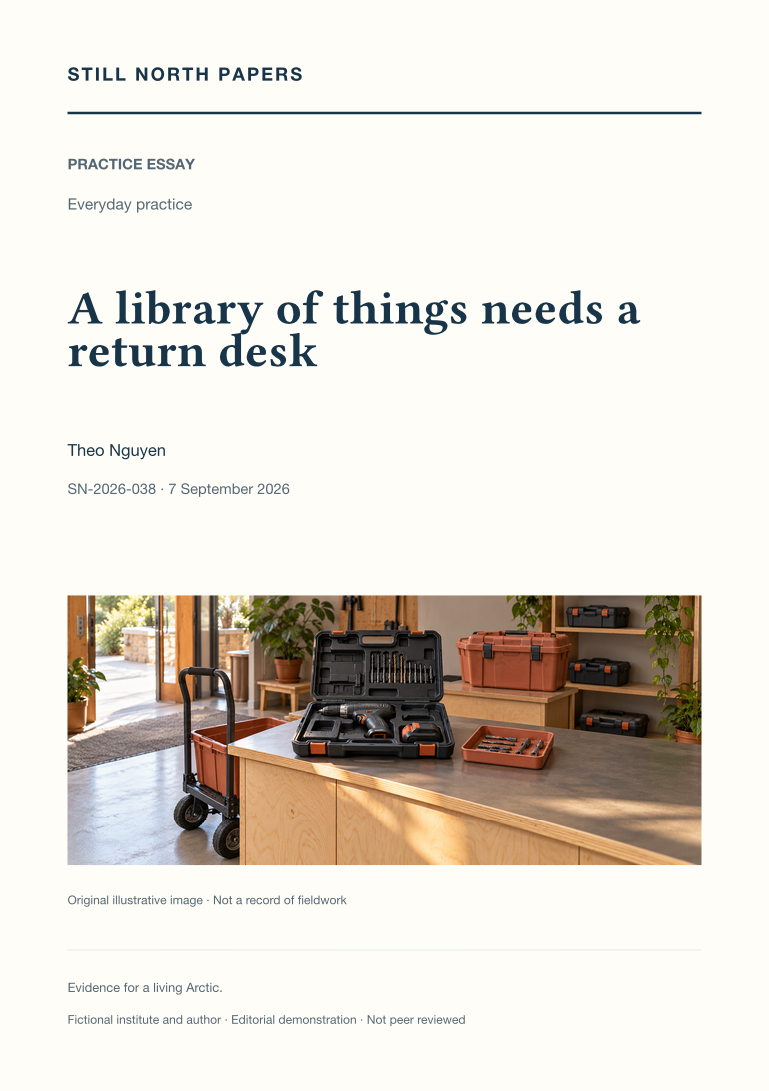
A library of things needs a return desk
An equipment library succeeds through dependable access, not the size of its donated stock. This practice essay follows the service from choosing useful items to accessible collection, competent handover, inspection, maintenance, and return. It explains why deposits, opening hours, digital-only booking, and transport can prevent a nominally available object from meeting a real need. Safety guidance informs the discussion but is not presented as a complete legal framework for community lending. Scheduling gaps, fault reporting, damage rules, privacy, and operating budgets make reliability a design responsibility. The essay also distinguishes completed loans from avoided purchases: borrowers might otherwise hire or borrow elsewhere. Modest records of use, maintenance, and barriers can improve the service without supporting an invented carbon-saving claim.
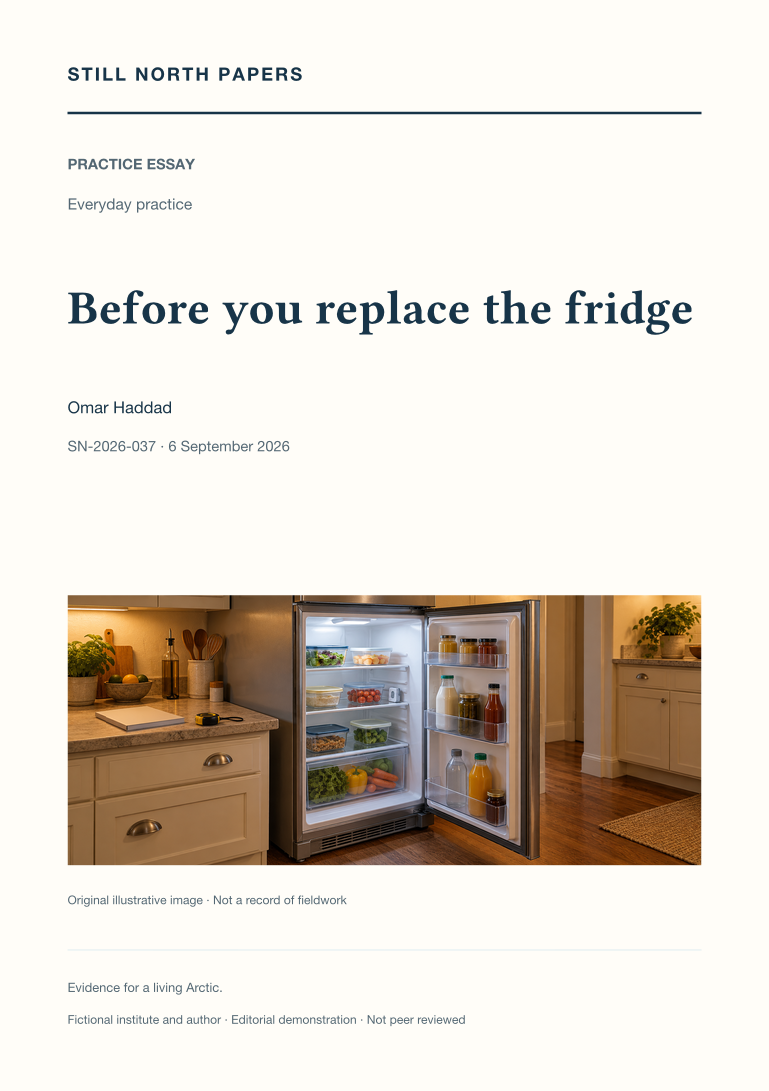
Before you replace the fridge
A refrigerator replacement decision should begin with safe, dependable cold storage rather than a new efficiency label. This practice essay separates diagnosis, household requirements, running costs, and life-cycle evidence. It uses official food-safety guidance to anchor the immediate need, then considers usable capacity, accessibility, installation space, and support for repairs. Energy labels are useful only when their schemes and test bases are comparable, while a short meter reading and a standard annual figure carry different limitations. The discussion brings delivery, finance, servicing, and disposal into the comparison without claiming a universal environmental replacement age. Keeping, servicing, and replacing can each be reasonable outcomes. Ownership and permission also matter, especially where a tenant must seek action from the responsible appliance owner.
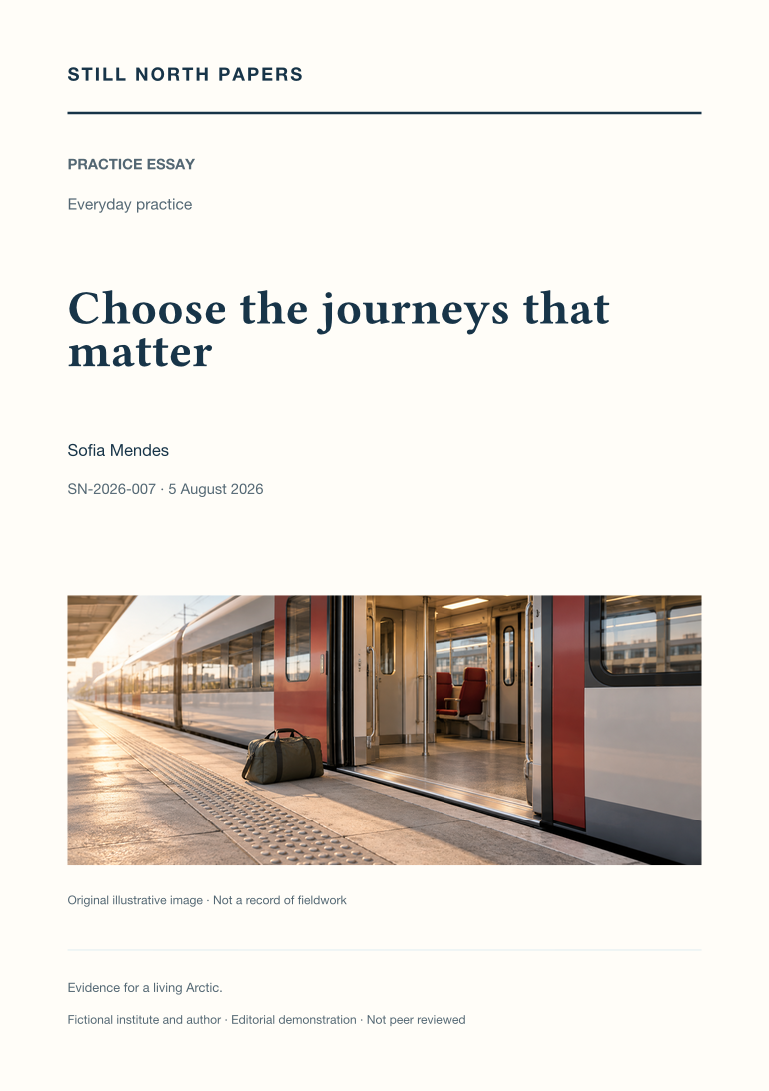
Choose the journeys that matter
The avoid, shift, and improve sequence is applied to the purpose of a journey rather than to a competition between transport identities. Drawing on the cited IPCC demand-side assessment, this practice essay considers when remote participation, combined errands, rail, public transport, walking, cycling, or shared vehicles can genuinely meet a need. Its comparison keeps disability, care, safety, price, equipment, and timetable constraints visible. Planning lead time and workplace policy emerge as conditions that shape several travellers' choices, not merely individual booking preferences. Where travel remains necessary, the essay favours reducing avoidable legs and poor coordination without claiming that offsets cancel consequences. It closes with a route-specific decision process and a request to record institutional barriers that could be changed before the next trip.
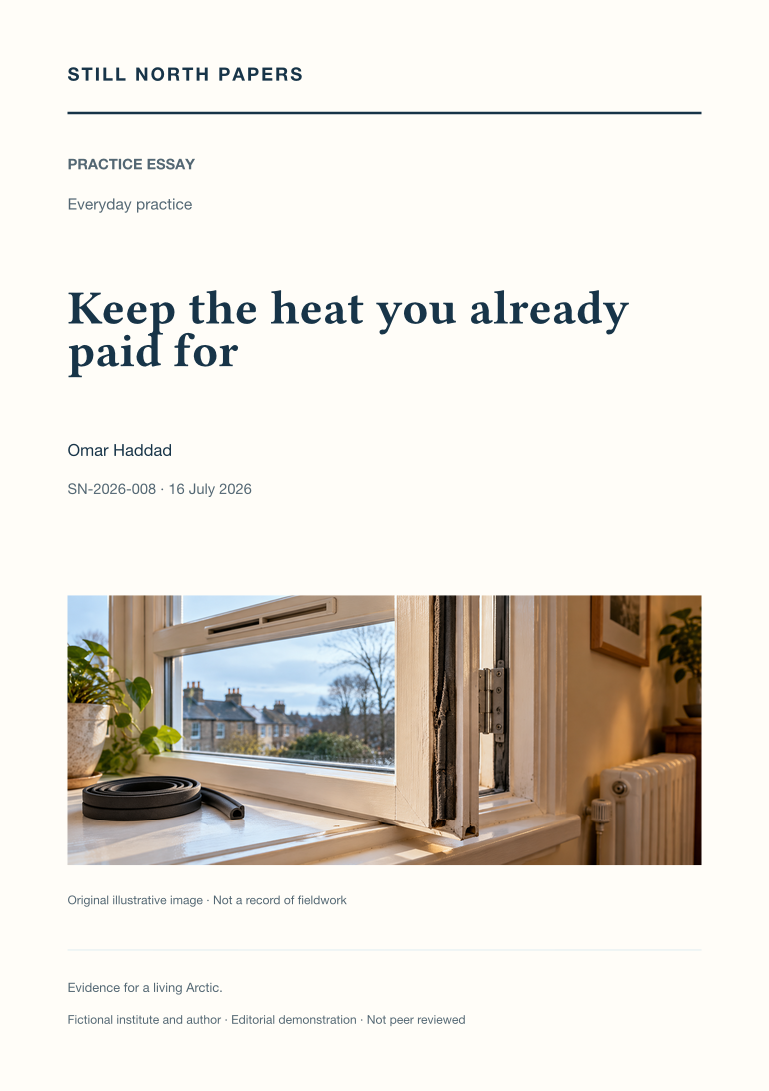
Keep the heat you already paid for
Comfort, health, and indoor air quality frame this practice essay on reducing avoidable household heat loss. It distinguishes safe checks of controls, blocked radiators, and failed seals from work requiring qualified advice, and warns against obstructing designed ventilation or combustion-air routes. Temporary draught measures are considered alongside insulation, maintenance, moisture, and the sequencing of larger building improvements. Renters' documentation and requests for dated responses remain distinct from an owner's responsibility for the fabric and systems. The cited IPCC assessment connects household options with standards, finance, skilled installation, and public support. Simple readings can help assess comfort under comparable conditions, but one day cannot justify a savings claim. The practical outcome is one safe immediate check paired with one structural request.
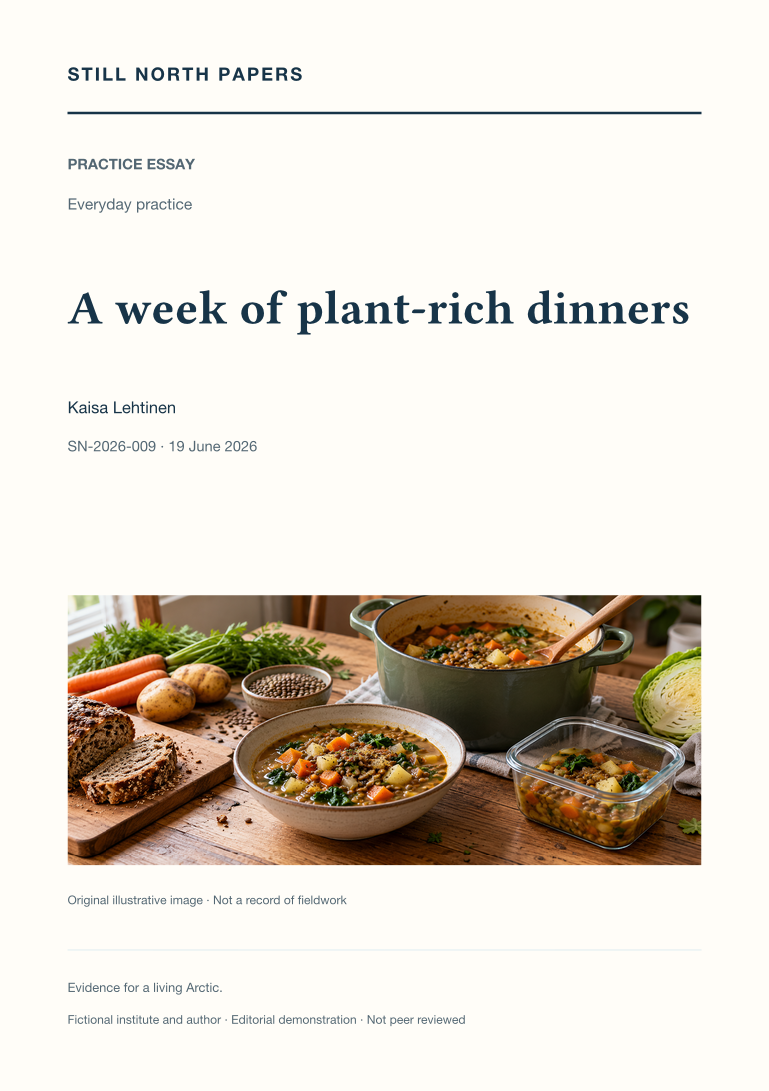
A week of plant-rich dinners
Seven flexible dinners illustrate how plant-rich eating can begin with familiar foods, available equipment, and a realistic household schedule. The essay follows cupboard checks, adaptable staples, leftovers, storage, and food-safety decisions rather than prescribing a perfect diet or estimating a measured climate benefit. It explains why usable food, preparation time, dietary needs, culture, and access matter alongside shelf price, including the practical value of canned, frozen, or prepared ingredients. Preventing edible waste takes priority over disposing of scraps, while shared meals require attention to who plans, cooks, and cleans. The cited IPCC demand-side assessment supplies wider context for food services and infrastructure. A useful outcome is a small set of affordable, satisfying meals that can be repeated, plus clearer requests of public and workplace catering.
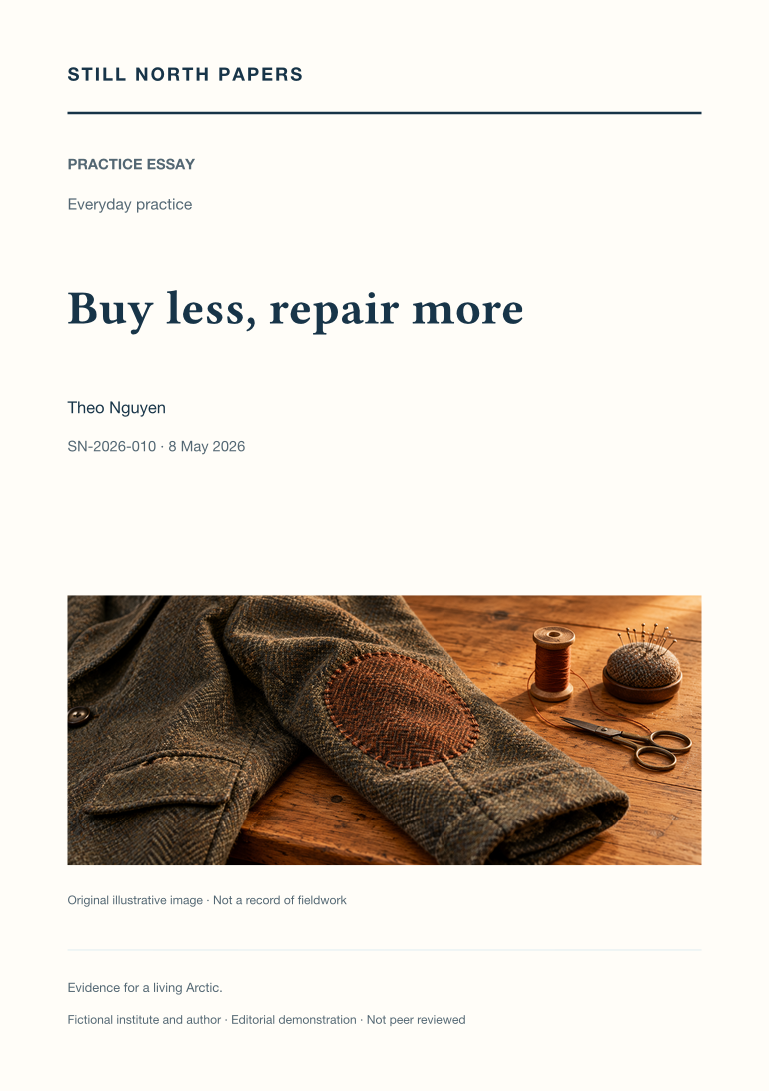
Buy less, repair more
Keeping a product useful begins with identifying the function required, not assuming that every fault demands a purchase. This practice essay compares care, repair, borrowing, sharing, and justified replacement through a checklist covering safety, warranty, recalls, parts, skills, time, and likely continued service. Textile mending offers a lower-risk example, while electrical, structural, and other safety-critical work retains a clear boundary for trained help. The discussion examines rebound consumption, inaccessible product design, procurement, and the institutional conditions that permit repair at scale, using the cited IPCC demand-side assessment as context. Responsible end-of-life handling includes personal data, hazardous components, and whether a donated item is genuinely usable and wanted. No repair is presented as automatically safe, economical, or environmentally preferable in every case.
Move your money and your voice
Financial choices and public participation are examined through the decision rights of pensions, banks, employers, suppliers, and public authorities. Rather than ranking institutions with simple climate labels, the essay asks who sets policy, which evidence is public, how exceptions operate, and what follows missed targets. It separates exclusion, engagement, switching, and campaigning by their stated goals and warns that meetings, labels, or customer influence alone do not demonstrate impact. Financial risk, fees, access, and personal circumstances remain outside generic climate advice. Drawing on the cited IPCC assessments for wider context, the practical method is to identify a review date, submit a specific request, and preserve the response. Listening to affected people and maintaining a proportionate public record make follow-up more accountable.