

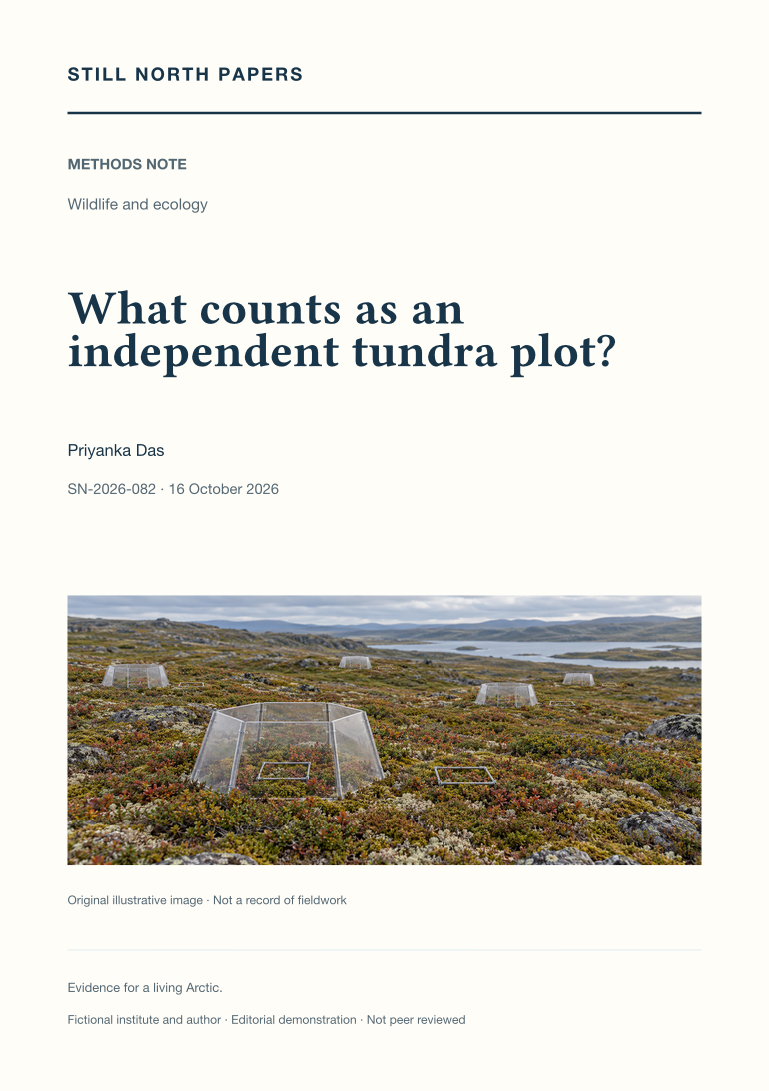
What counts as an independent tundra plot?
Large numbers of tundra measurements need not provide large numbers of independent treatment tests. This methods note synthesises experimental-design principles, International Tundra Experiment guidance, and clustered spatial-sampling methods. It distinguishes measurement, quadrat, plot, block, and site, and separates spatial autocorrelation from the more fundamental problem of unreplicated treatment assignment. Fictional designs contrast intensive subsampling of one treated patch with replicated paired blocks, showing which level supports the treatment estimate. The discussion considers blocking, environmental side effects, hierarchical analysis, design-respecting resampling, regional generalisation, and the allocation of effort between breadth and detail. It offers no universal spacing or minimum replicate count. Its conclusion is a reporting practice that states sample sizes at each consequential level and matches every inferential claim to the independence the actual design supports.
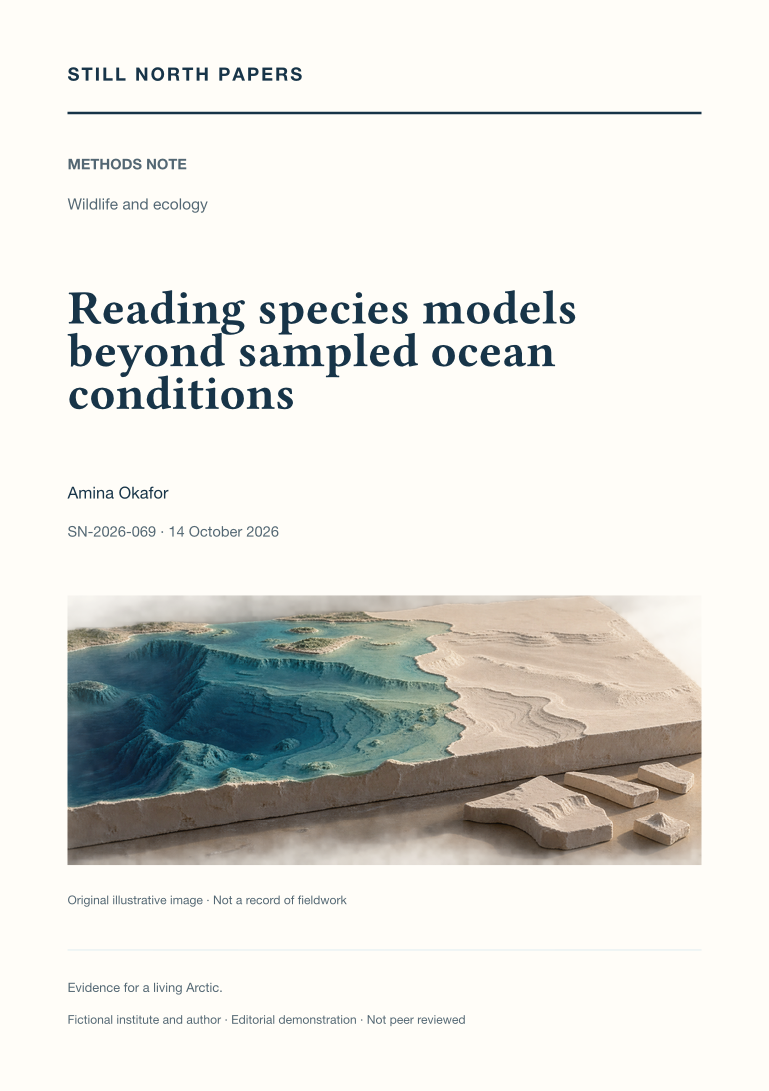
Reading species models beyond sampled ocean conditions
A complete species-distribution map can conceal large gaps in environmental support. This methods note uses published environmental-novelty, transferability, and structured-validation research to distinguish interpolation from extrapolation in ocean applications. A hypothetical temperature-salinity example separates a new predictor range from a novel combination that lies within every individual range. Further decision cases examine structural disagreement beyond training conditions, clamping, observation bias, and validation splits matched to intended deployment. No real species model is fitted or range shift predicted, and terrestrial or freshwater case-study results are not imported as marine performance rankings. The practical output is a prediction accompanied by its evidence boundary, uncertainty, and sensitivity, making explicit where additional surveys would be more informative than an unqualified probability surface.
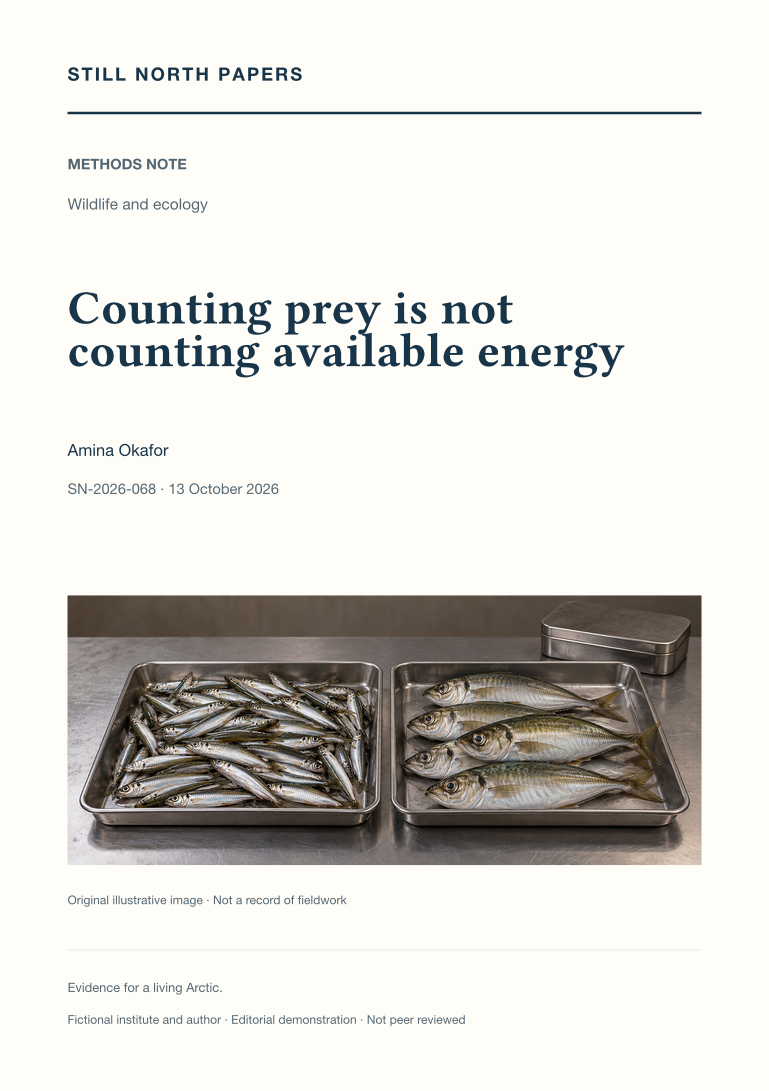
Counting prey is not counting available energy
Prey counts, biomass, potential energy, and predator benefit need not change in the same direction. This methods note combines forage-fish composition measurements, comparative cetacean evidence, and an ontogenetic consumption analysis to clarify the conversion among those quantities. Invented samples demonstrate a forty-percent decline in count alongside an eighty-percent increase in calculated energy, while additional examples expose wet-versus-dry-mass errors and conditional assimilation assumptions. The cited studies span subarctic and other marine systems; their fitted values are not treated as Arctic constants. The note does not estimate actual ingestion or predator fitness. It argues for retaining counts and biomass alongside energetic conversions, then asking whether a specified consumer can capture the relevant prey, at an appropriate season and life stage, for a useful net return.
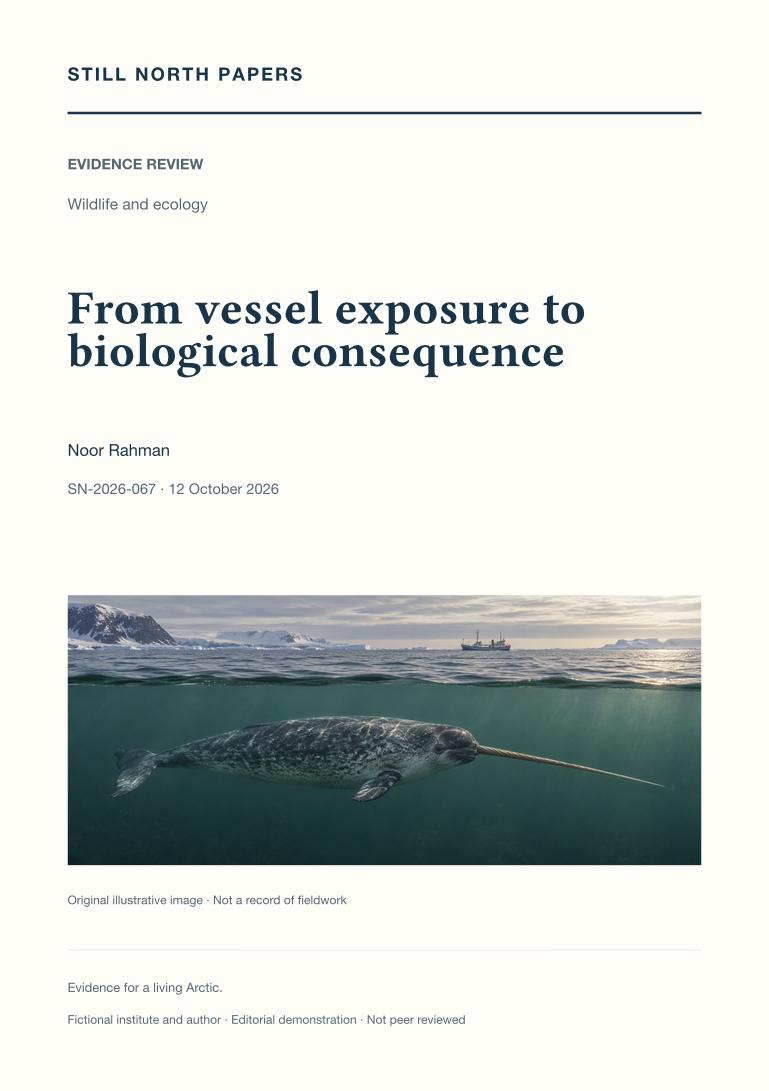
From vessel exposure to biological consequence
Traffic overlap, received sound, individual response, and population consequence describe different stages of an impact assessment. This evidence review compares two narwhal exposure studies with the Population Consequences of Disturbance framework to identify the evidence connecting those stages. It preserves the studies' small exposed samples, male or adult representation, and concurrent sound sources rather than converting their results into universal distance rules. Hypothetical comparisons show why identical animal-hours can distribute exposure differently and why a lower sound level over a longer passage need not reduce integrated exposure. No actual route impact or safe buffer is estimated. The review supports proportionate precaution while distinguishing measured responses, energetic assumptions, demographic inference, and unresolved mechanisms that additional observations would need to constrain.
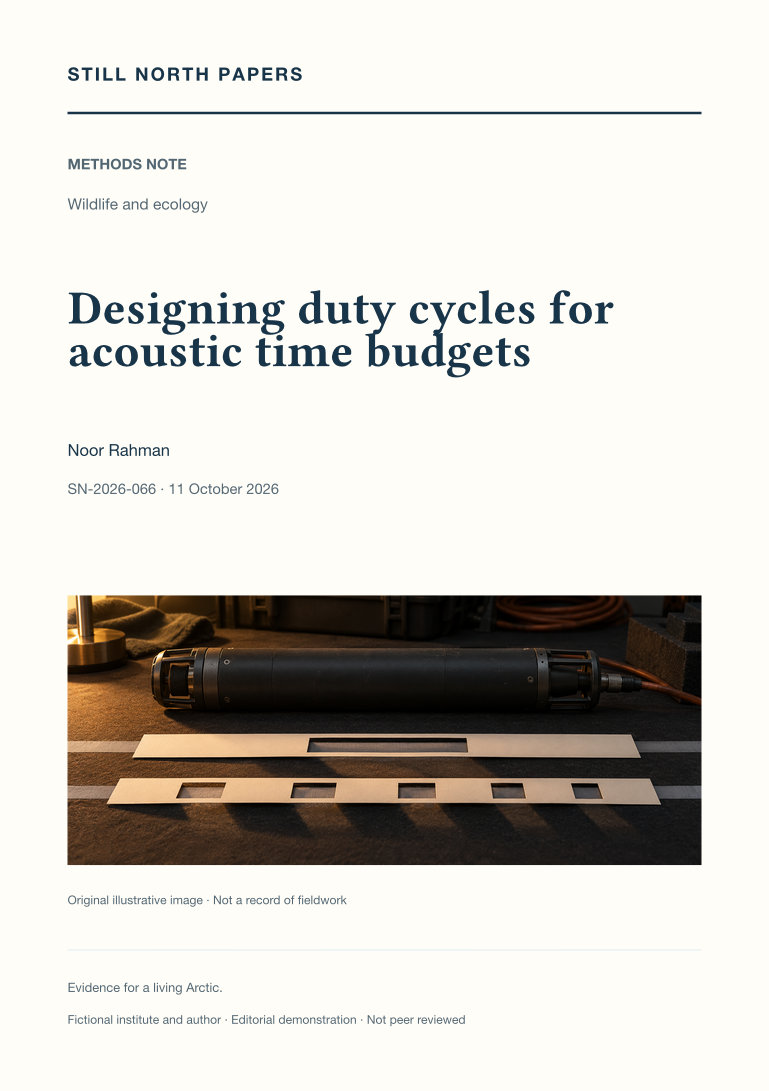
Designing duty cycles for acoustic time budgets
Equal recording effort does not imply equal information about acoustic encounters or their durations. This methods note synthesises published subsampling experiments and diel acoustic research to connect recording schedules with clearly defined time-budget metrics. A hypothetical ten-percent duty-cycle comparison shows that frequent short windows can increase the probability of encountering a brief bout while leaving expected recorded bout time unchanged. The analysis distinguishes daily presence, sampled audible time, call counts, and censored encounter lengths, then examines schedule synchronisation, biological timing, and continuous pilot records. It provides no universal correction factor and does not equate acoustic activity with animal abundance or feeding time. Its practical recommendation is to evaluate the intended metric under candidate schedules rather than selecting a recording percentage alone.
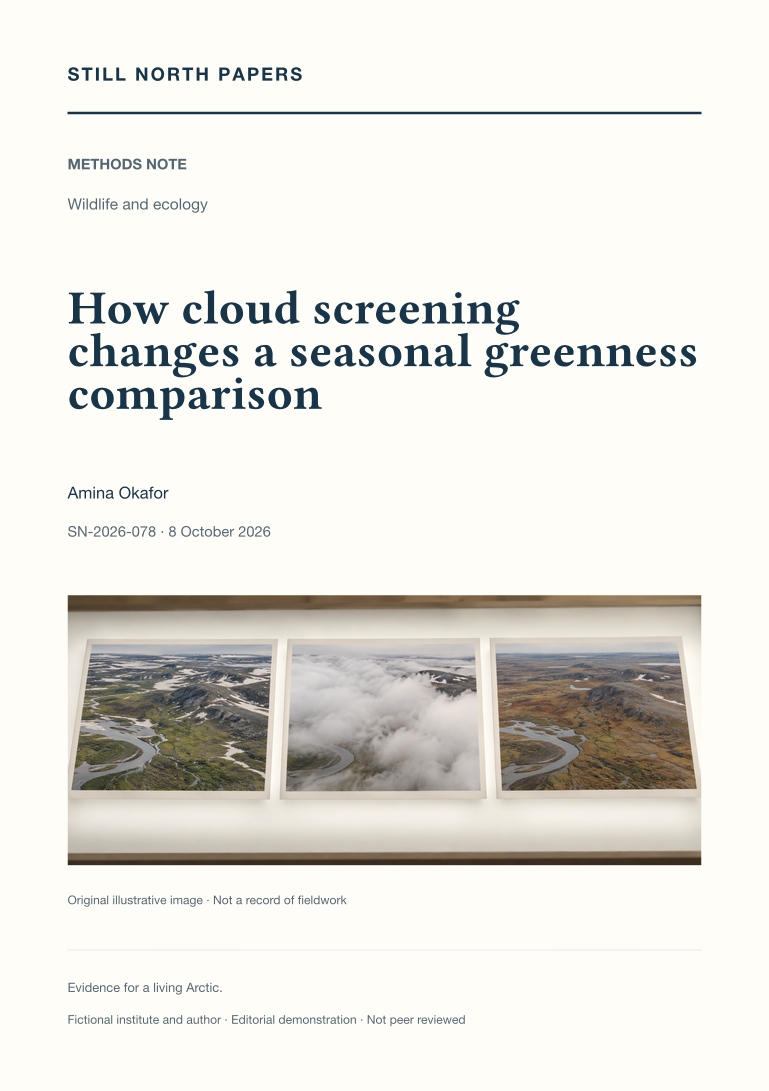
How cloud screening changes a seasonal greenness comparison
Seasonal vegetation composites summarise retained observations, not an equally observed season. This methods note synthesises MODIS compositing guidance, Landsat quality-band documentation, and NOAA tundra-greenness methods to examine the interaction between cloud screening and ecological comparison. A fictional pixel history shows how an unseen peak can lower both observed maximum and available-observation mean without any underlying vegetation change. The analysis distinguishes seasonal statistics, selected observation dates, quality thresholds, reconstruction, changing spatial footprints, and cross-sensor support. It proposes coverage diagnostics and sensitivity comparisons that remain tied to the chosen question. No imagery is reprocessed and no published Arctic trend is re-estimated. The conclusion is that greenness results become more interpretable when observation timing, masks, and fitted values accompany the statistic rather than disappearing inside a seamless map.
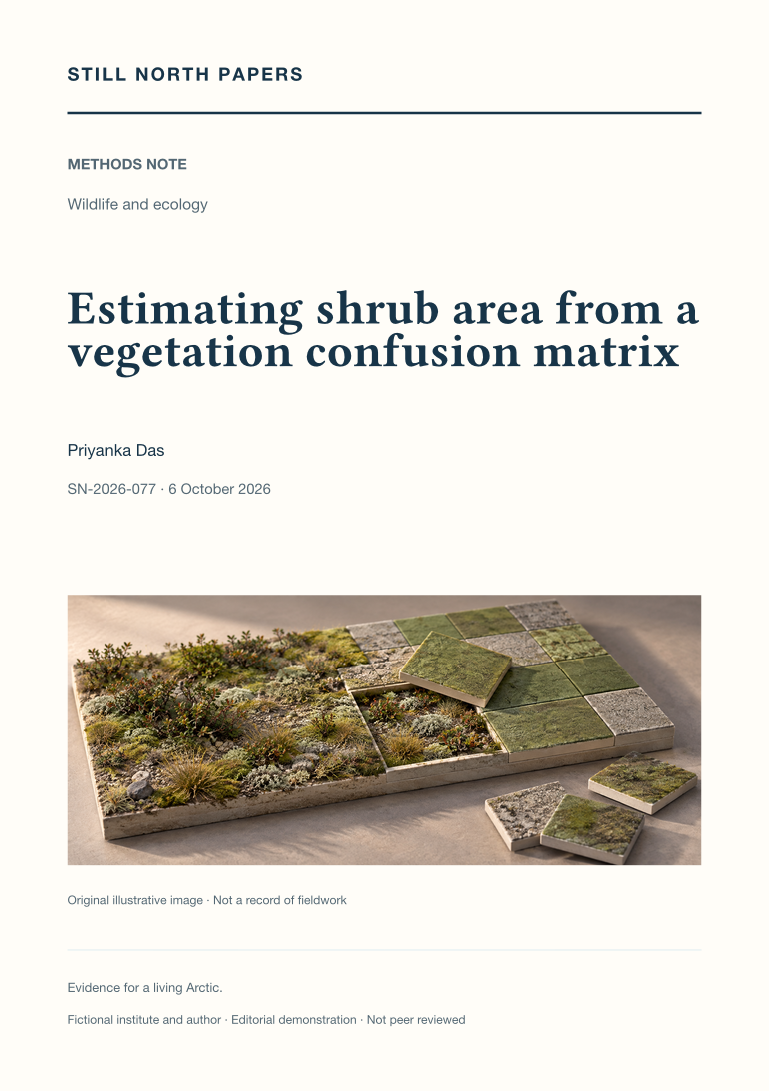
Estimating shrub area from a vegetation confusion matrix
Mapped shrub area and estimated shrub area are different quantities when classification errors are asymmetric. This methods note synthesises area-assessment guidance, Arctic vegetation-map documentation, and image-quality information. It separates class definitions, spatial support, sampling design, and reference interpretation before introducing a fictional stratified confusion matrix. The worked calculation shows how an apparently accurate map can omit a substantial share of shrub vegetation and how design weights alter area and accuracy estimates. The note addresses rare classes, clustered validation, uncertain reference labels, positional error, and change-map interpretation. It does not evaluate an actual Arctic map or produce corrected pixels. Its reporting implication is to retain mapped totals, sample-based area estimates, weighted error matrices, and uncertainty separately, so users can distinguish a regional area claim from confidence in any individual location.
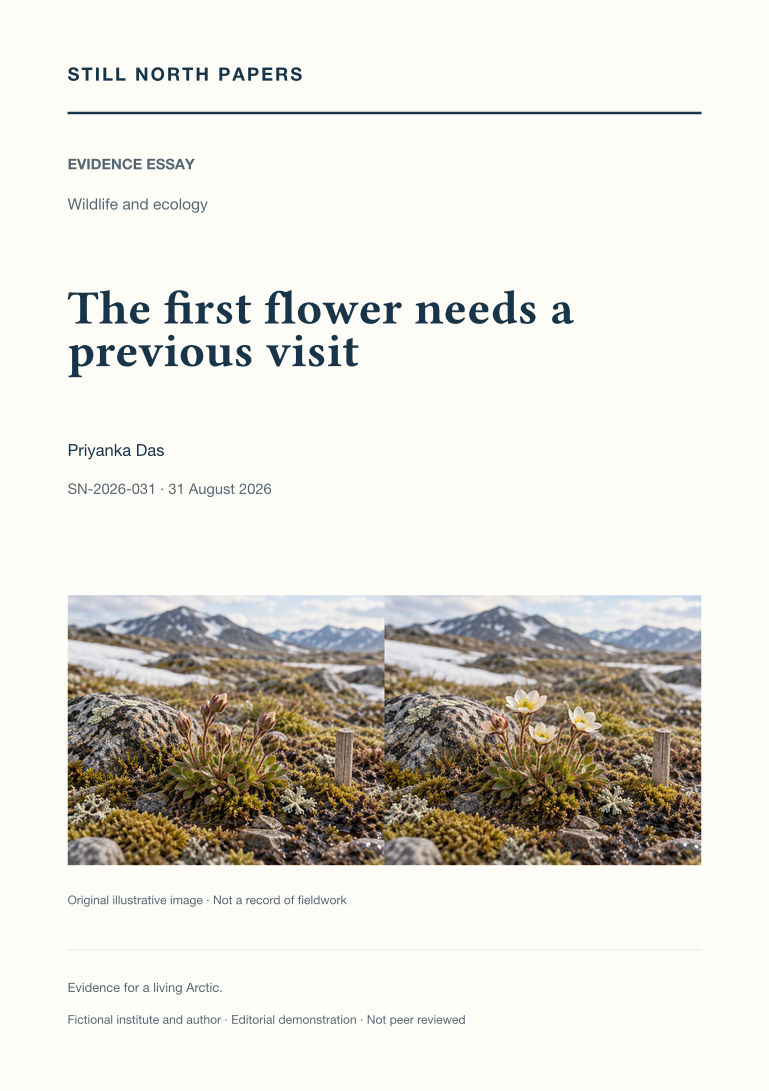
The first flower needs a previous visit
A first flowering detection identifies a visit, not necessarily the day flowering began. This essay explains how repeated positive, negative, and uncertain observations bound onset, using an explicitly illustrative sequence rather than a field result. It distinguishes a consistently monitored plant or patch from an expanding search area, and separates first flowering, peak abundance, and duration. Snow conditions and observation frequency can affect apparent timing, so changes in detection require interpretation before they become claims of biological change. Drawing on USA National Phenology Network documentation, the discussion also shows why a proposed flower–pollinator mismatch needs adequate records of both organisms. Its practical conclusion is to preserve visit intervals, stage definitions, search effort, and missing coverage alongside the reported dates.
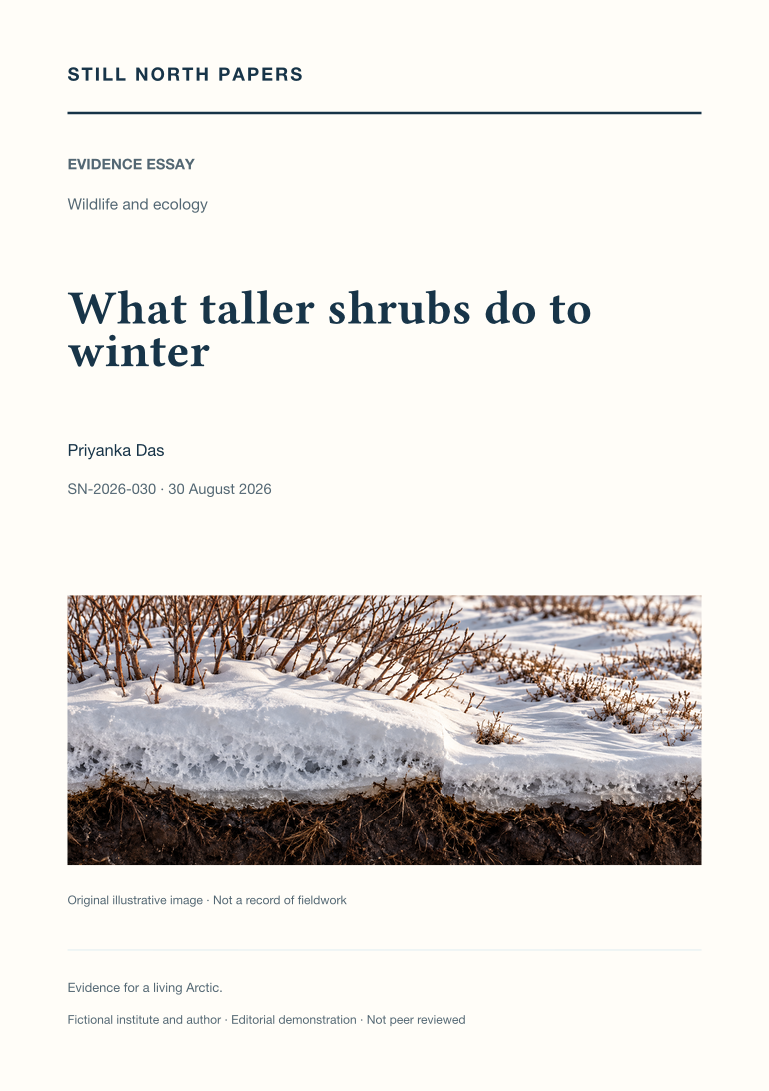
What taller shrubs do to winter
Taller tundra shrubs are followed through winter snow, spring radiation, and summer soil conditions rather than assigned one warming or cooling effect. Published Bylot Island observations show how shrub-associated snow depth, density, conductivity, and melt can change insulation in competing ways. Their winter simulations remain explicitly seasonal, not annual forecasts for Arctic permafrost. A separate Siberian vegetation comparison illustrates why lower surface albedo can coexist with a shallower active layer when soil and moisture conditions differ, without proving the effect of replacing one vegetation type with another. The essay proposes matched observations of vegetation, snow structure, soil temperature, moisture, and thaw across comparable terrain. Its implication is to retain the cold season and ground properties when interpreting a visible change in summer vegetation.
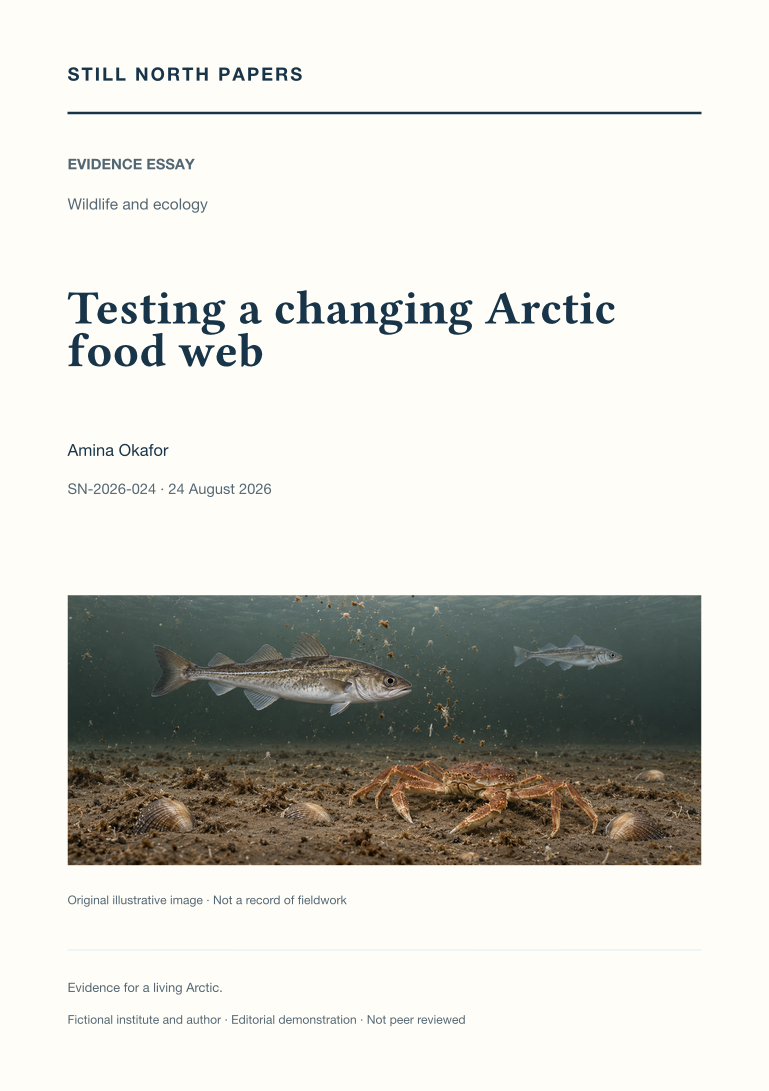
Testing a changing Arctic food web
A published synthesis of northern Bering and Chukchi Sea observations is used to distinguish borealization from pelagic-benthic decoupling. Increasing influence of southerly species does not by itself demonstrate that less food reaches the seabed. The essay follows contrasting responses among pollock, snow crab, Arctic cod, and bivalves, retaining observations that complicate a single transition narrative. It explains how models standardise heterogeneous surveys into population indices without turning them into complete censuses. An exceptional initial year, sparse records, variability, and the distinction between an interval of warming and a full-period trend sharpen interpretation. The accompanying productivity discussion rejects a universal ecological benefit from greater algal production. Conclusions remain bounded by sampled regions and years, while consequences for harvesting and access require separate, locally governed evidence.
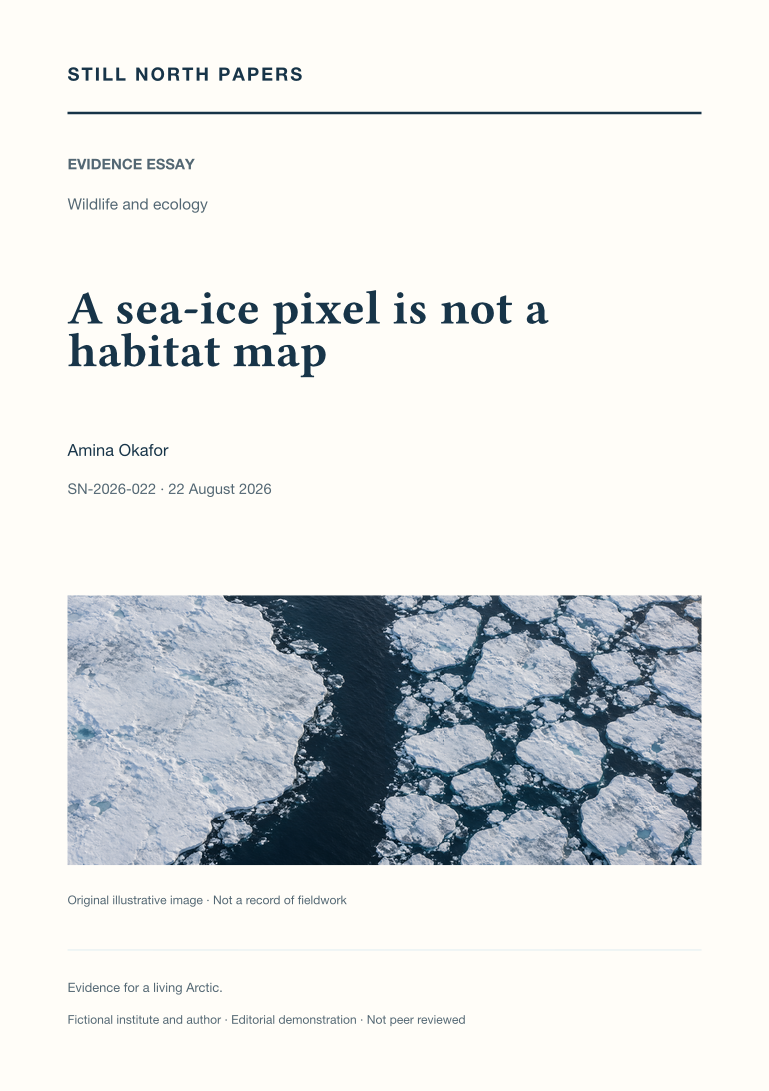
A sea-ice pixel is not a habitat map
Sea-ice concentration becomes an ecological question only when connected to the geometry and function of habitat. Two hypothetical cells with the same ice percentage illustrate differences in floe arrangement, connected water, edge, and exposure. The essay then adds seabed depth, prey access, seasonal persistence, and the limits of coarse satellite cells, drawing on NSIDC explanations and USGS polar-bear habitat research. Compatible observation dates matter because drift can rearrange the surface, while an animal's mapped movement can include movement of the ice beneath it. Occupancy is not treated as proof of preference, successful feeding, or fitness. A layered interpretation therefore starts with the measured ice variable, identifies the proposed habitat mechanism, and tests it with appropriate biological evidence rather than decorative map overlays.
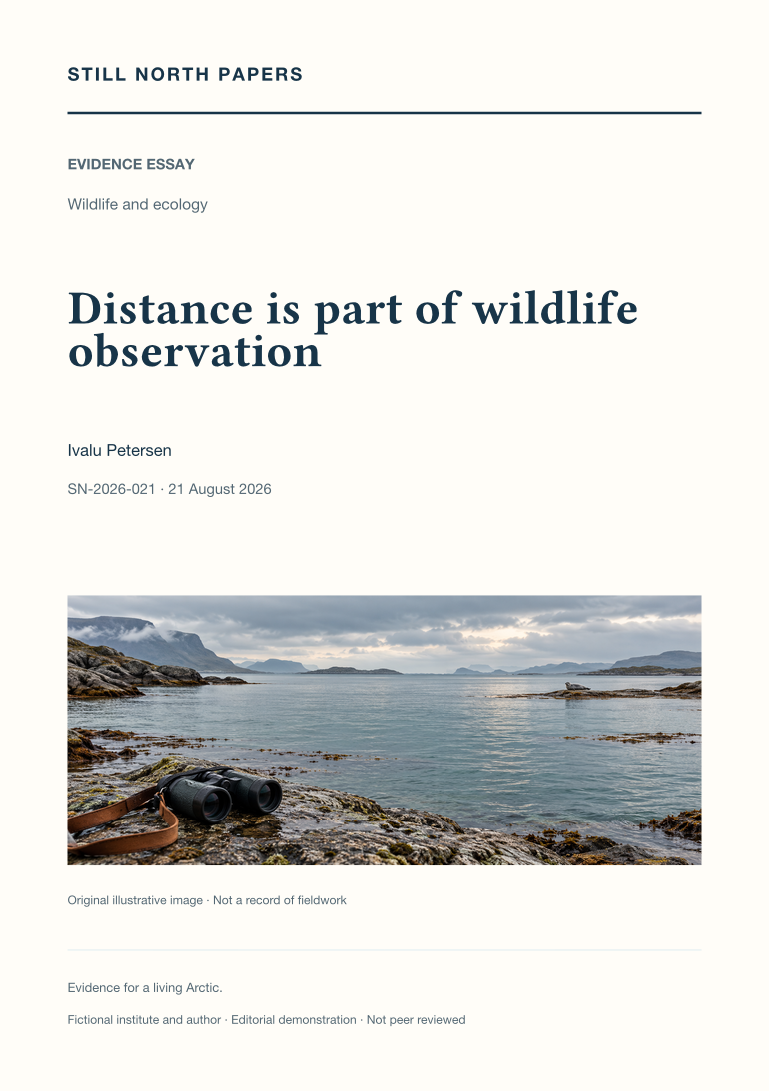
Distance is part of wildlife observation
Wildlife observation is assessed through the choices that precede a photograph, not the closeness or apparent calm of its subject. Using NOAA marine-life viewing guidance, the essay explains why an absent visible response does not prove no disturbance and why a minimum distance is not a target. A hypothetical comparison contrasts distant viewing with repeated pursuit that could produce a similarly framed image. Duration, crowding, access routes, young animals, vessel sound, and current local requirements all affect the encounter. Public viewing remains distinct from permitted research, and sensitive locations may require restricted sharing. The piece provides no universal distance or safety protocol. Its practical implication is to document a respectful method, accept leaving without an image, and never treat a generated scene as evidence of compliant fieldwork.
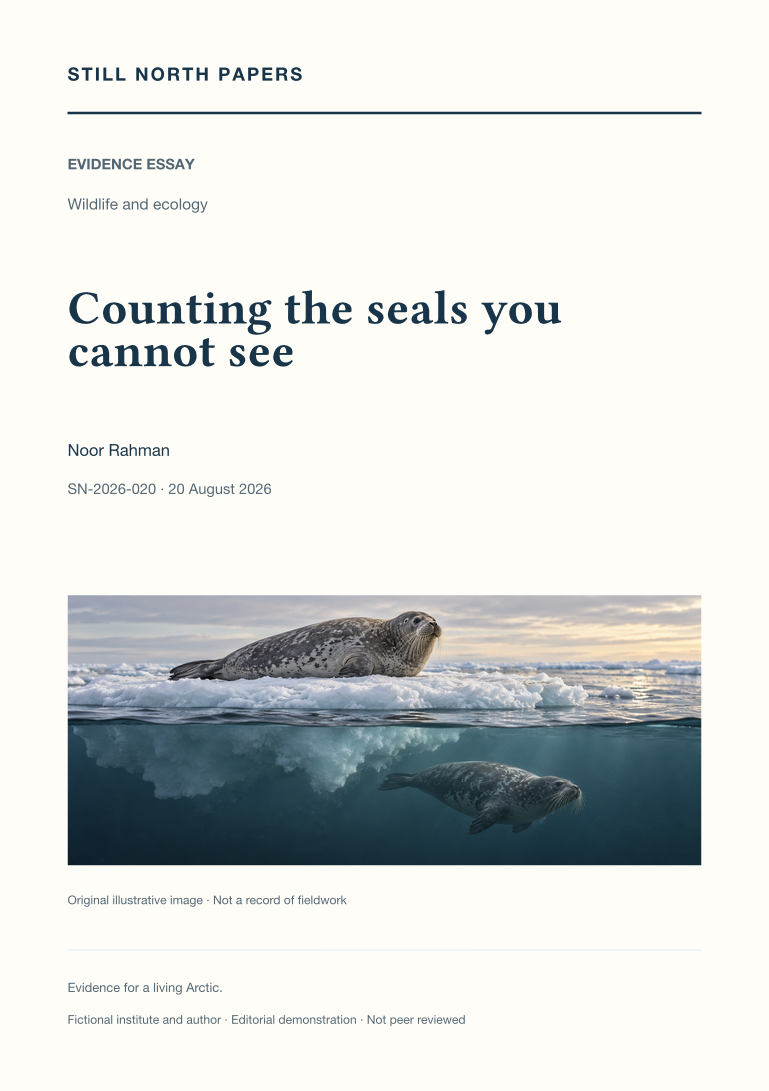
Counting the seals you cannot see
Aerial seal counts are interpreted by separating availability to a survey from recognition of an animal that is available. The essay discusses published biologger research on bearded, ribbon, and spotted seals, showing why haul-out timing, weather, season, and demographic group affect the visible fraction. A deliberately invented calculation demonstrates that the same count can imply different totals under different availability assumptions, without proposing correction factors for real surveys. Ringed seals require additional treatment because snow lairs can conceal animals that are already out of the water. The discussion also considers tagging selection, device lifetime, temporal dependence, coverage, and identification error. Better population inference needs representative evidence and propagated uncertainty, while personal observations should retain effort and conditions without approaching wildlife to complete a count.
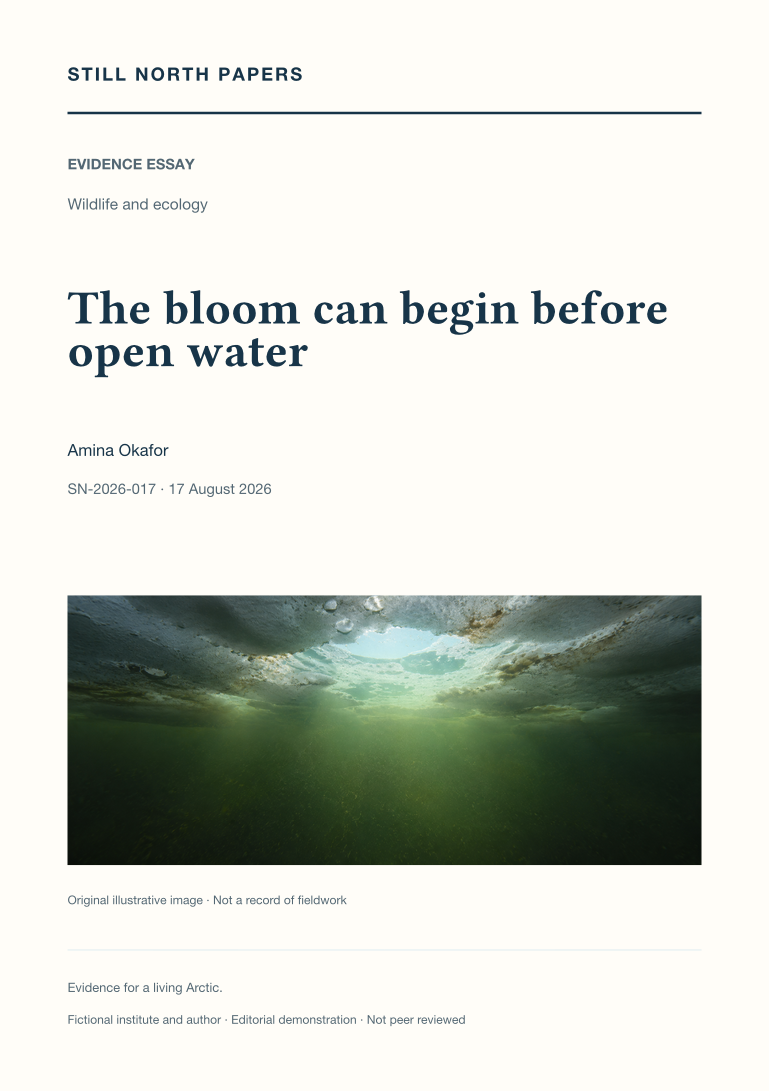
The bloom can begin before open water
An ice-covered blank in an ocean-colour product does not establish an absence of phytoplankton growth. Drawing on the cited under-ice bloom review and NOAA productivity assessment, the essay follows light through snow, ice, and melt ponds, then examines nutrient supply, stratification, and mixing. Ice algae and water-column phytoplankton remain distinct sources within the food web. Hypothetical bloom calendars show how equal seasonal production can offer different feeding opportunities without demonstrating a real mismatch. The account also separates chlorophyll concentration from production rate and identifies the seasonal and ice-concentration boundaries of the satellite calculation. A stronger interpretation combines under-ice measurements and consumer observations with regional imagery, preserves missing-data meaning, and tests ecological consequences rather than assuming that more production benefits every organism.
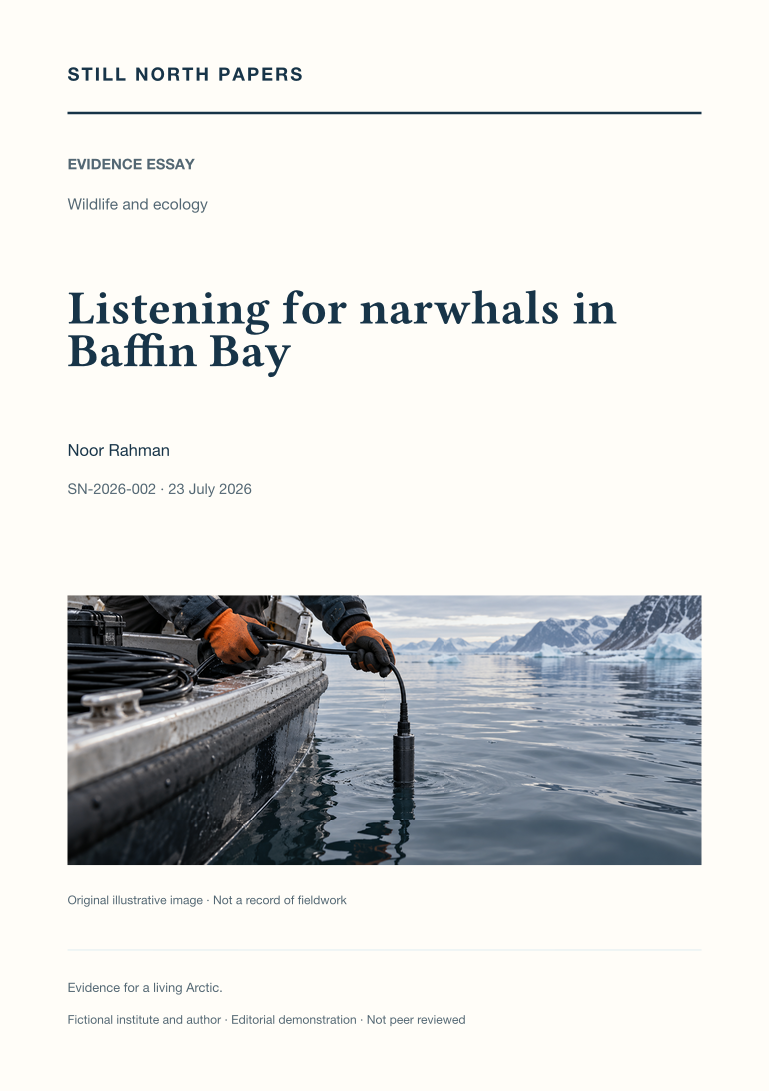
Listening for narwhals in Baffin Bay
An illustrative hydrophone deployment in Baffin Bay provides a practical account of the information needed to interpret underwater recordings. The essay follows calibration, clocks, depth, geometry, vessel activity, and handling noise from preparation through classification. It explains why a plausible narwhal signal can remain uncertain, why masking can prevent detection, and why a recording without confirmed calls cannot establish animal absence. Published evidence on changing ocean structure supplies context without allowing one deployment to attribute regional ecological change. The discussion extends to sensitive locations, inadvertently recorded voices, access agreements, and the processing history of representative clips. Its central implication is that a reusable acoustic file preserves uncertainty and governance alongside the sound, rather than presenting an attractive recording as a census or a documented expedition.
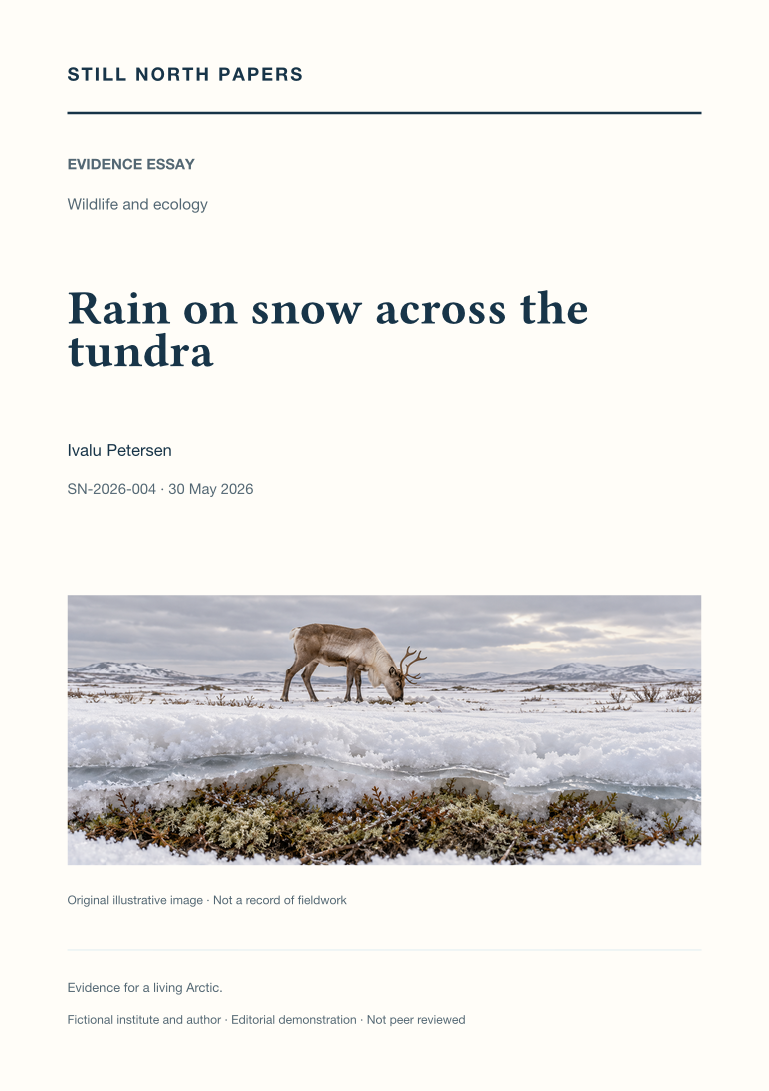
Rain on snow across the tundra
Rain-on-snow is examined as a sequence of precipitation, refreezing, and changing access to forage, not as a uniform Arctic event. The essay distinguishes a weather-station total from the hardness, position, extent, and persistence of the crust encountered by reindeer or caribou. Animal consequences depend on alternative forage, movement routes, herd condition, timing, and later weather, so an illustrative sighting cannot establish their severity. It sets out the contextual observations needed to connect snow structure with those consequences and gives community knowledge an explicit governance setting. A further distinction separates urgent local responses from claims about long-term frequency or intensity. Comparable definitions, coverage, and sustained observations are necessary before station, satellite, model, or field records can support a trend.
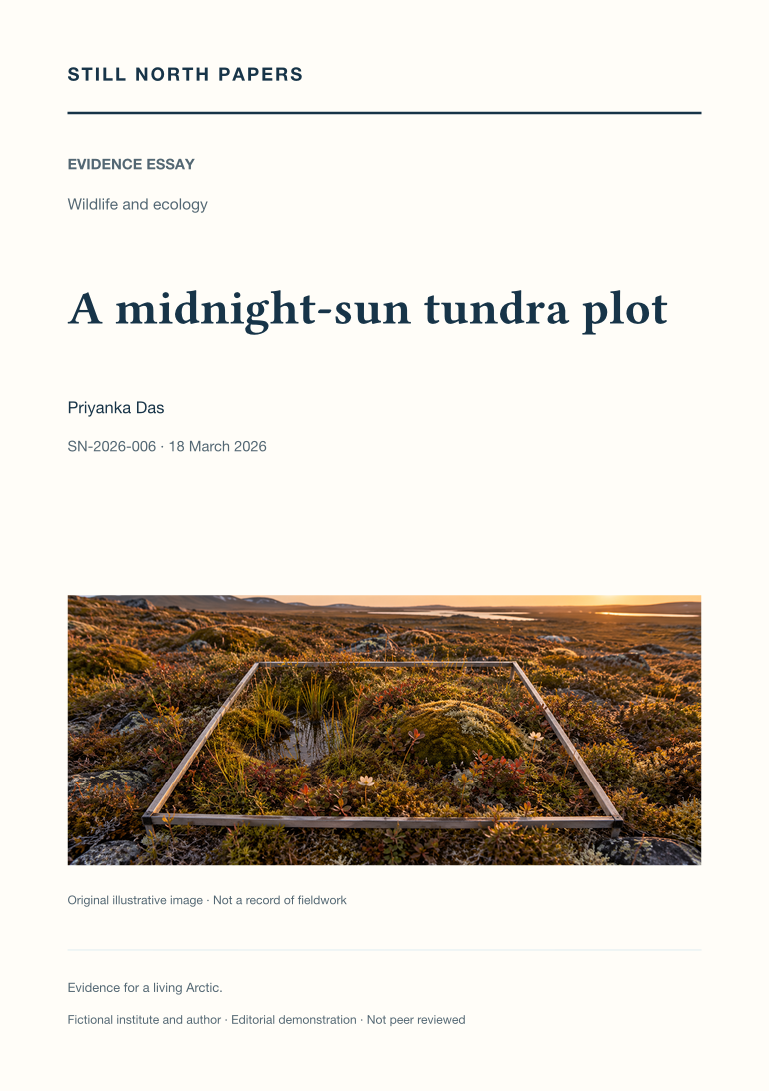
A midnight-sun tundra plot
An illustrative tundra monitoring day links the detail inside a small sampling frame with the broader view of satellite greenness. The essay explains how fixed photographs, observer training, access routes, species records, moisture, and disturbance affect comparisons through time. It places the published regional greenness assessment in context without treating a greener signal as proof of ecological improvement or attributing it to fictional plot observations. Plant development, insects, and migratory birds introduce the additional records required to test seasonal mismatch, while timed watches show why a non-detection depends on effort and conditions. The account argues for retaining microtopography, local variation, missing observations, and method changes. Careful repetition and complementary scales, not a tidy image or regional average alone, support ecological interpretation.