

Greenland's dark ice has more than one cause
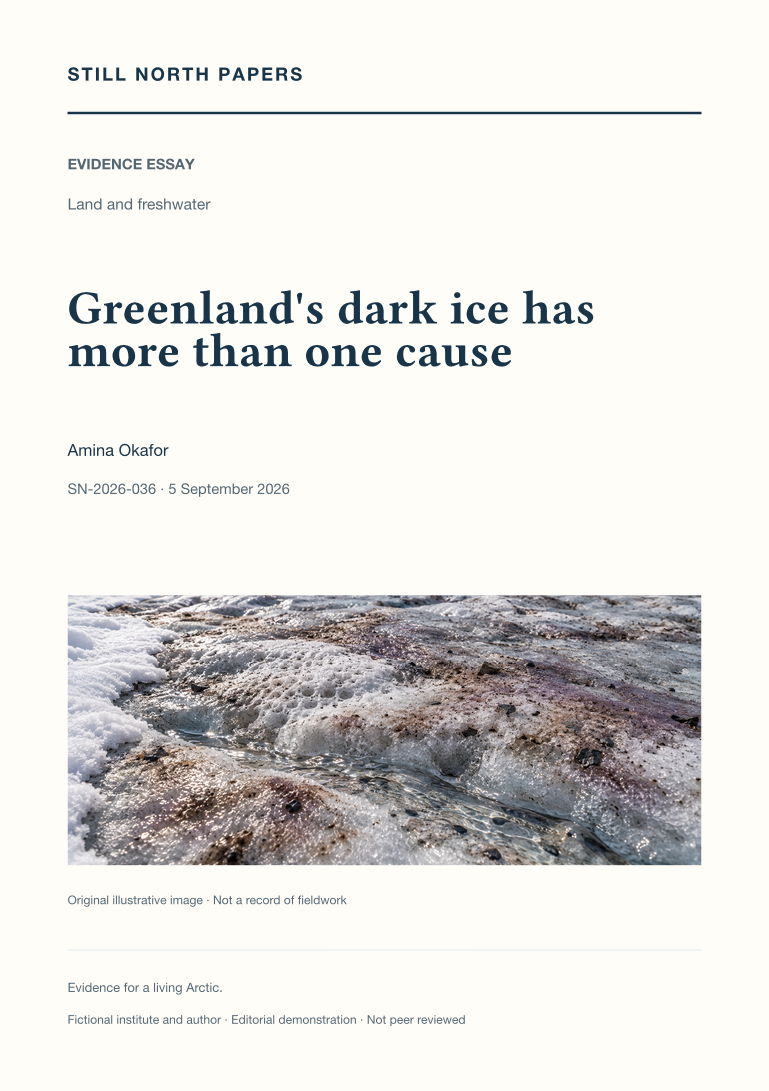
Dark Greenland ice can reflect snow retreat, light-absorbing material, glacier algae, water, and changing surface texture. This essay separates observed colour, attribution of reflectivity changes, and consequences for melt. NOAA's Greenland assessment provides seasonal context, while a western Greenland study illustrates how biological sampling, radiation measurements, and aerial observations constrain the contribution of algae alongside the physical weathering crust. Neither source makes every dark patch biologically equivalent. The discussion explains why a satellite pixel can miss small algal patches and why a selected ground measurement may not represent the wider footprint. Its central implication is methodological: compatible scales, timing, and illumination are needed before linking surface appearance to mechanisms or melt, and local findings cannot be expanded into an ice-sheet-wide total without further evidence.