

Greenland's dark ice has more than one cause
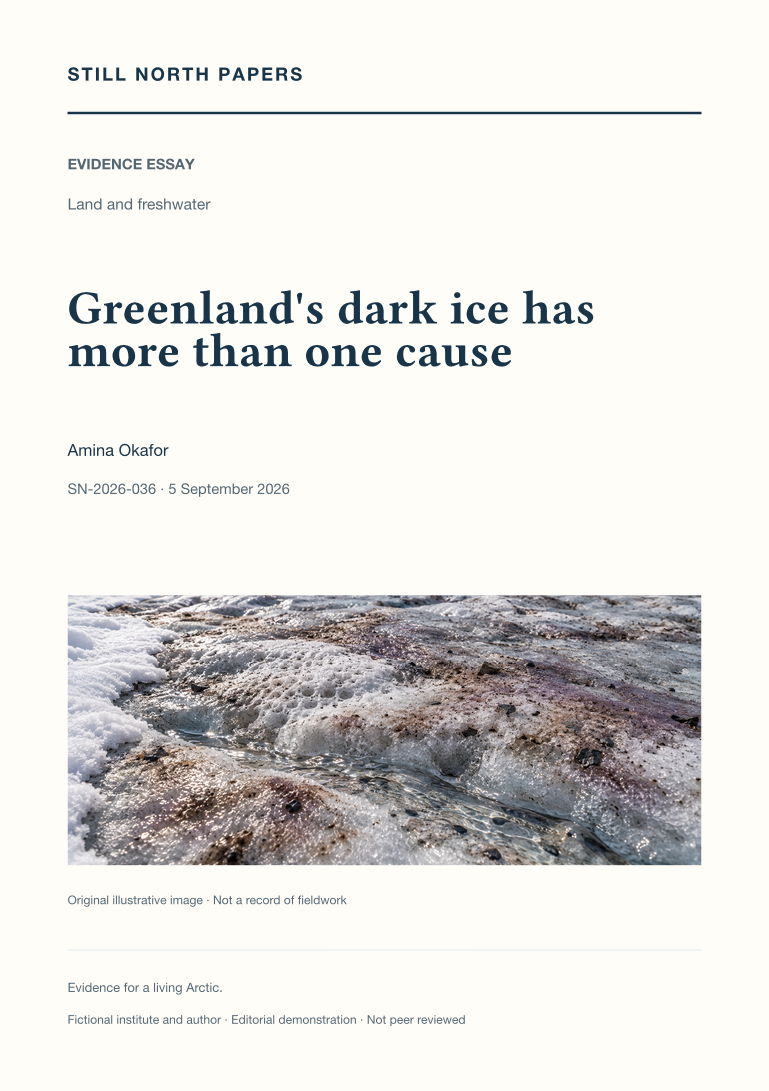
Dark Greenland ice can reflect snow retreat, light-absorbing material, glacier algae, water, and changing surface texture. This essay separates observed colour, attribution of reflectivity changes, and consequences for melt. NOAA's Greenland assessment provides seasonal context, while a western Greenland study illustrates how biological sampling, radiation measurements, and aerial observations constrain the contribution of algae alongside the physical weathering crust. Neither source makes every dark patch biologically equivalent. The discussion explains why a satellite pixel can miss small algal patches and why a selected ground measurement may not represent the wider footprint. Its central implication is methodological: compatible scales, timing, and illumination are needed before linking surface appearance to mechanisms or melt, and local findings cannot be expanded into an ice-sheet-wide total without further evidence.
A drifting instrument is not a fixed station
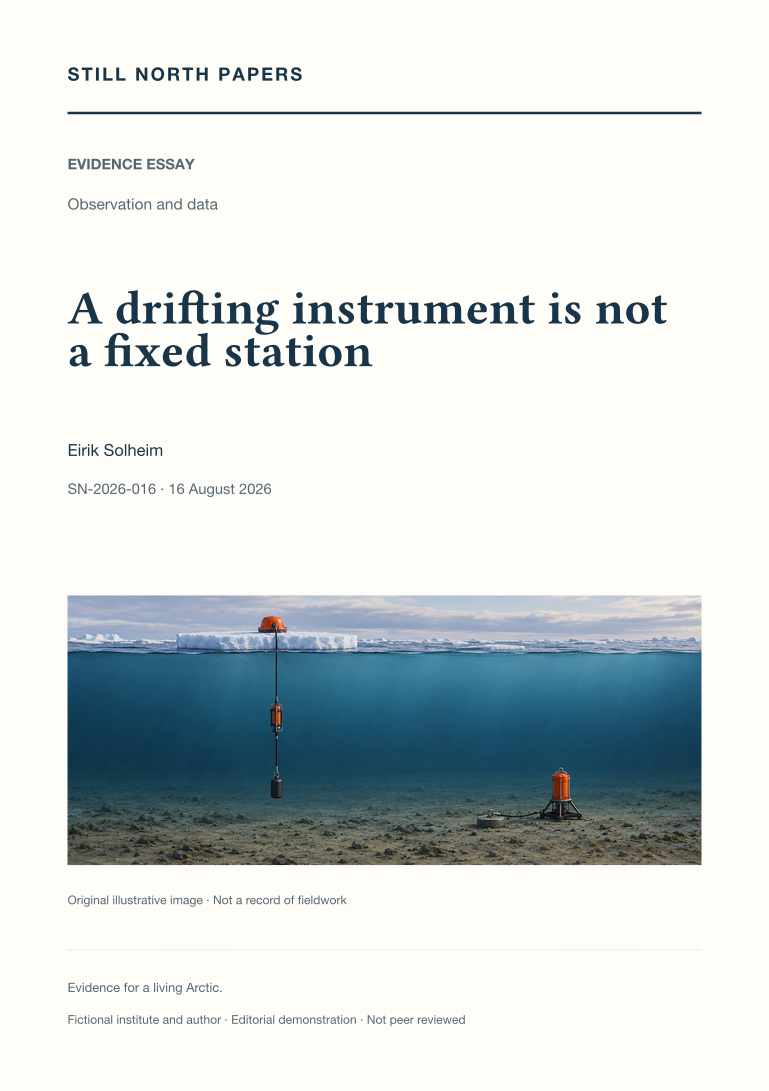
A rising temperature series from a drifting instrument can record a journey across ocean structure rather than local warming. This essay contrasts ice-tethered profilers with anchored instruments and uses an explicitly invented water-mass crossing to separate spatial variation from change through time. It also explains why a fixed mooring can record a displaced current or layer, so anchoring does not remove every interpretive ambiguity. Position, pressure, temperature, salinity, currents, and repeated profiles constrain different alternatives. Maps and depth-distance sections can reveal coverage changes hidden by monthly means, while many neighbouring profiles do not become independent basin-wide samples. Published Arctic ocean assessments provide context for combining viewpoints. The practical implication is to retain platform movement and instrument geometry as explanatory evidence, not remove them from the story.