

Designing an area-weighted tundra snow survey
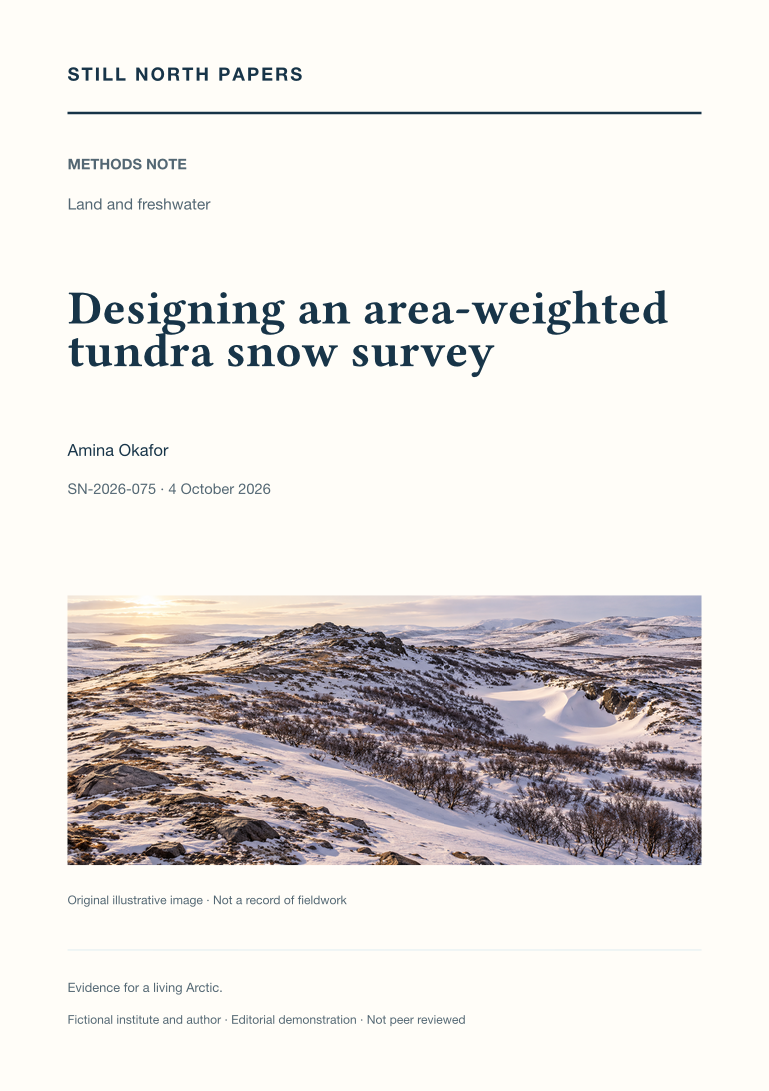
Accurate snow cores do not guarantee an area-representative catchment estimate. This methods note synthesises snow-sampling evidence, Arctic snow reporting, and uncertainty principles to examine stratification and area weighting for tundra snow water equivalent. A fictional three-stratum catchment demonstrates how equal sample allocation can overrepresent deep drifts, while a small drift area can still contribute substantially to stored water. The note distinguishes weighting from representative selection and follows sampling, map-area, spatial-dependence, and survey-timing uncertainties. It considers how the next sample can improve the target estimate rather than merely enlarge a convenient route. No operational travel advice or real snow assessment is provided. The proposed reporting account includes terrain shares, class means, selection design, missing coverage, and the date represented, without treating storage as a runoff forecast.
How much water is in that snow?
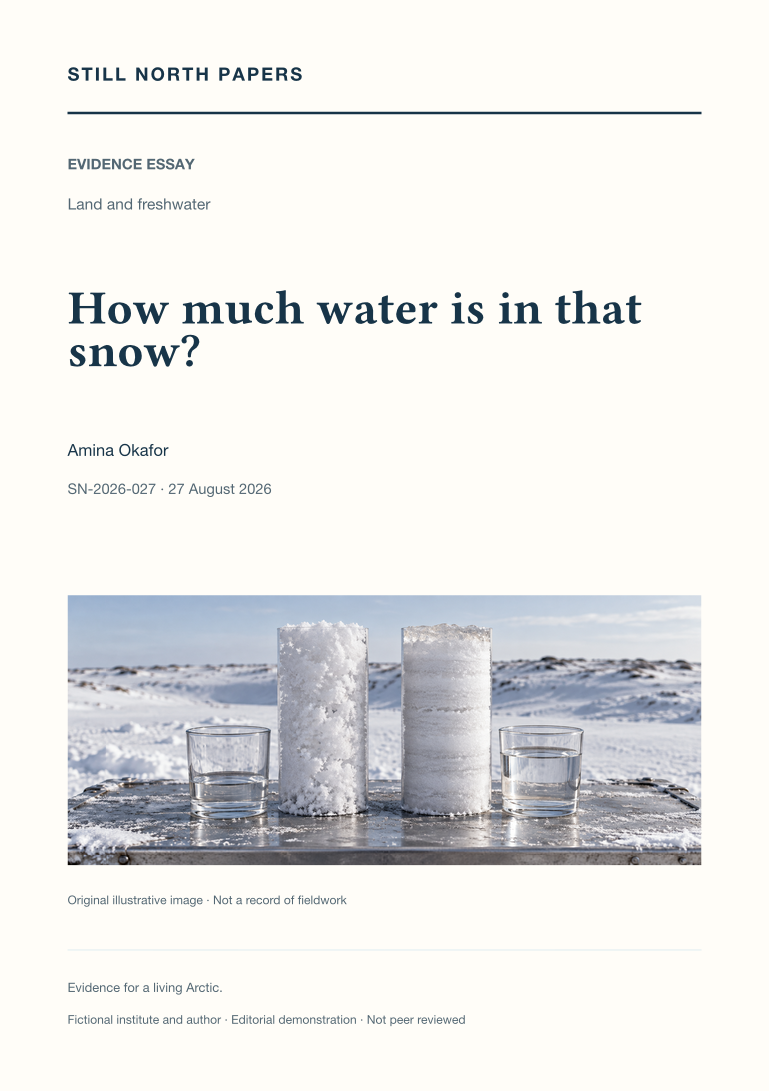
Snow water equivalent is distinguished from depth, snowfall, cover extent, and season length through two hypothetical snowpacks of equal depth but different density. Their contrasting water stores show why one fixed depth-to-water conversion can mislead. The essay examines settling, redistribution, sampling losses, hard layers, gauge undercatch, and changing regional coverage using the cited NOAA snow assessment and National Weather Service guidance. It contrasts weather-station siting with catchment surveys, where natural drifts, shrubs, hollows, and their area weights may be essential rather than inconvenient outliers. An inaccessible accumulation remains missing, not zero. Finally, stored snow water is separated from a flood forecast because release depends on weather, infiltration, refreezing, and flow paths. A useful summary names the quantity, terrain, date, and decision before comparing winters.