

Snow on sea ice has two seasons
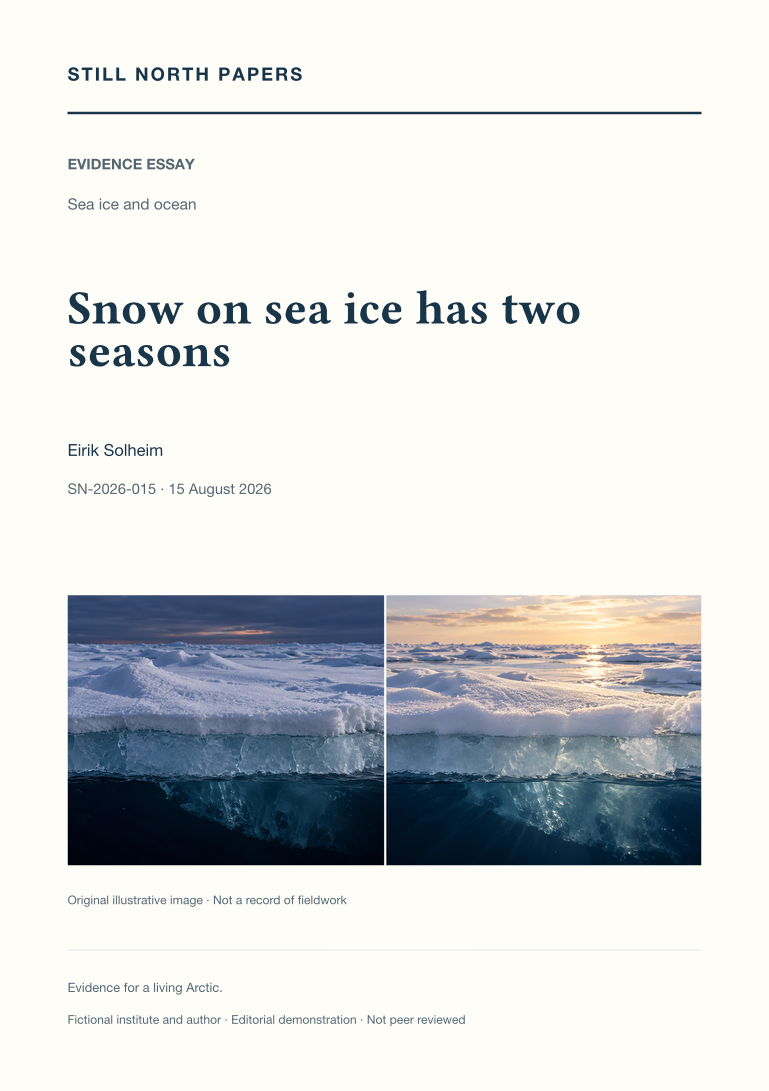
Snow on sea ice changes two seasonal energy pathways: it can restrict winter heat loss and ice growth, then reflect sunlight and delay spring melt. A controlled hypothetical comparison isolates the insulating effect without pretending to predict the fate of real floes. The essay shows why snowfall timing, depth, density, grain structure, and wind redistribution matter, and why melt onset is not equivalent to ice disappearance. It also examines the role of snow assumptions when satellite elevation is converted into ice thickness. Neither a convenient drift measurement nor a single seasonal slogan can determine the annual net effect. Useful observations connect surface type, date, weather, ice thickness, and a documented sampling route, allowing apparently opposing findings to be read as parts of one seasonal account.