

The muddiest water may not carry the most sediment
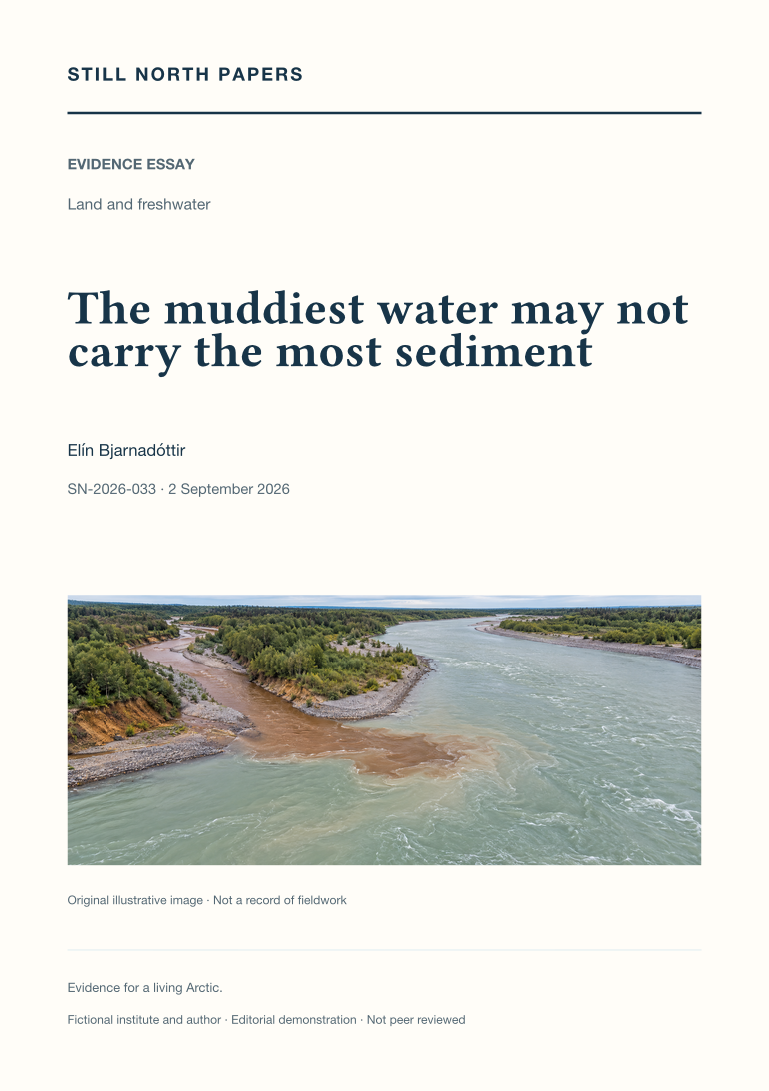
Muddy appearance describes neither the full quantity of sediment transported nor its ecological consequences. This essay distinguishes suspended-sediment concentration, instantaneous mass flux, and load accumulated over time, using a hypothetical comparison in which the clearer stream transports more material. It examines event timing, changing sediment supply, and differences between rising and falling flows that can undermine a single concentration–discharge relationship. A published USGS river investigation supplies a methodological example, not an Arctic estimate. The discussion also explains why turbidity requires locally supported conversion relationships and why sampling position matters. Its practical recommendation is to retain discharge, sampling time, representative methods, and estimation periods with sediment results, while keeping transport separate from claims about contamination, drinking-water suitability, or ecological damage.