

The first flower needs a previous visit
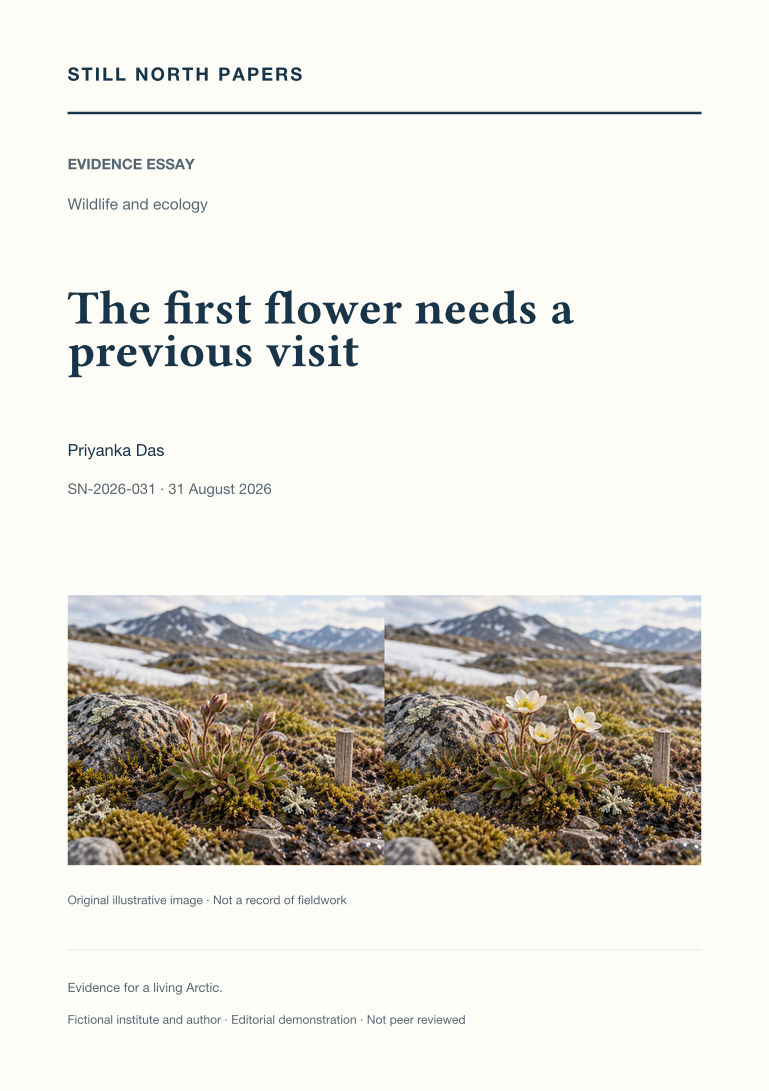
A first flowering detection identifies a visit, not necessarily the day flowering began. This essay explains how repeated positive, negative, and uncertain observations bound onset, using an explicitly illustrative sequence rather than a field result. It distinguishes a consistently monitored plant or patch from an expanding search area, and separates first flowering, peak abundance, and duration. Snow conditions and observation frequency can affect apparent timing, so changes in detection require interpretation before they become claims of biological change. Drawing on USA National Phenology Network documentation, the discussion also shows why a proposed flower–pollinator mismatch needs adequate records of both organisms. Its practical conclusion is to preserve visit intervals, stage definitions, search effort, and missing coverage alongside the reported dates.
A midnight-sun tundra plot
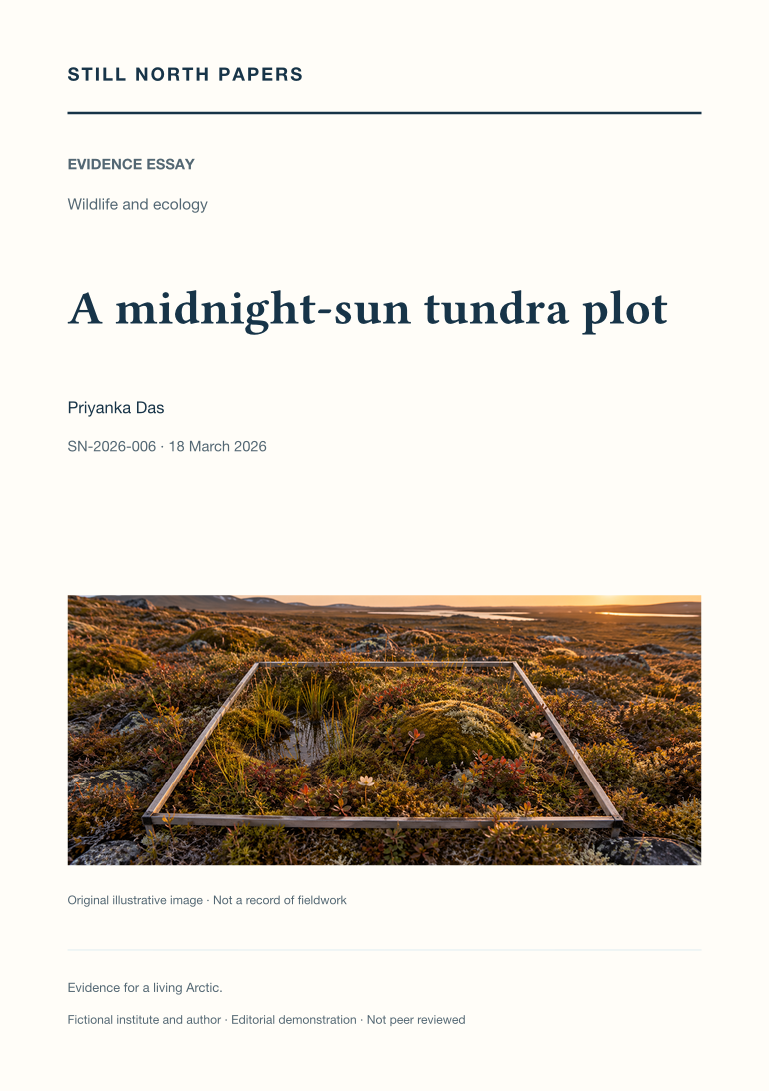
An illustrative tundra monitoring day links the detail inside a small sampling frame with the broader view of satellite greenness. The essay explains how fixed photographs, observer training, access routes, species records, moisture, and disturbance affect comparisons through time. It places the published regional greenness assessment in context without treating a greener signal as proof of ecological improvement or attributing it to fictional plot observations. Plant development, insects, and migratory birds introduce the additional records required to test seasonal mismatch, while timed watches show why a non-detection depends on effort and conditions. The account argues for retaining microtopography, local variation, missing observations, and method changes. Careful repetition and complementary scales, not a tidy image or regional average alone, support ecological interpretation.