

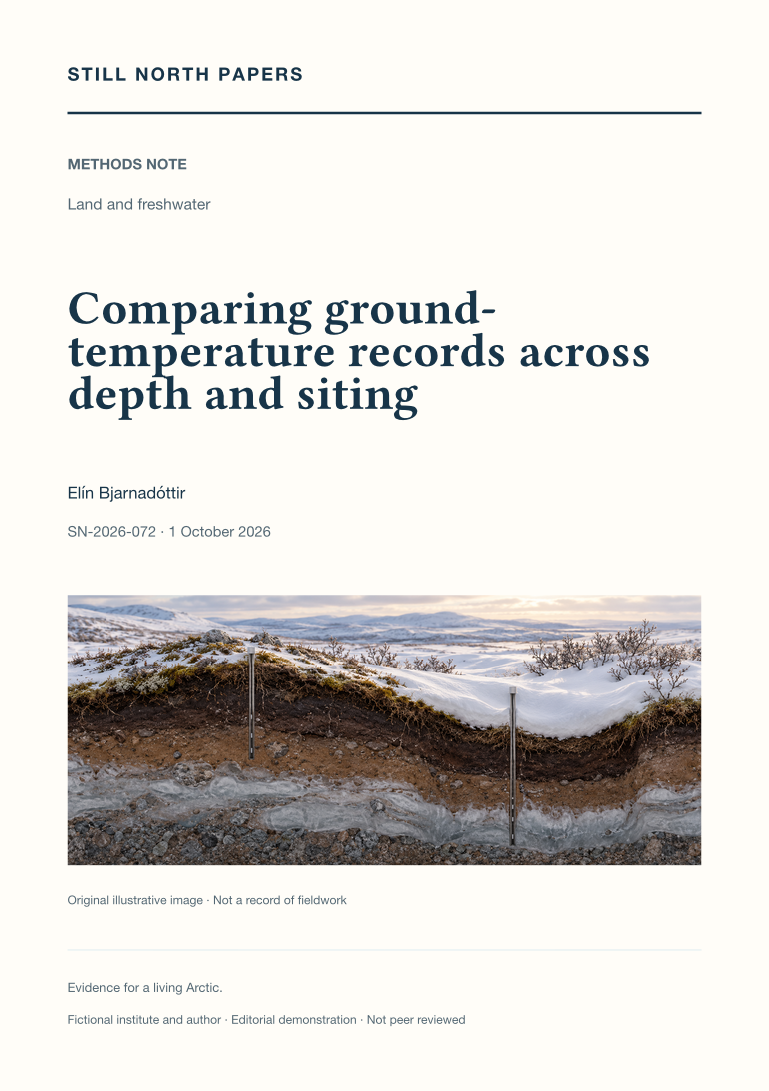
Comparing ground-temperature records across depth and siting
Ground-temperature records can acquire apparent changes when sensors move, depths change, or surface conditions differ. This methods note synthesises a documented Arctic borehole dataset, permafrost-network metadata, and measurement-uncertainty guidance to examine when records are comparable. It distinguishes instrumental transfer from relocation between environments and explains why depth changes both seasonal sensitivity and response time. Fictional worked cases show how joining two individually valid records can introduce a step, and how depth uncertainty enters a temperature budget. The note recommends preserving comparable record segments, overlap evidence, and adjustment assumptions rather than forcing visual continuity. It estimates no regional trend and provides no universal depth correction or minimum overlap. Its contribution is a practical framework for keeping continuity of meaning visible when an observing system changes.
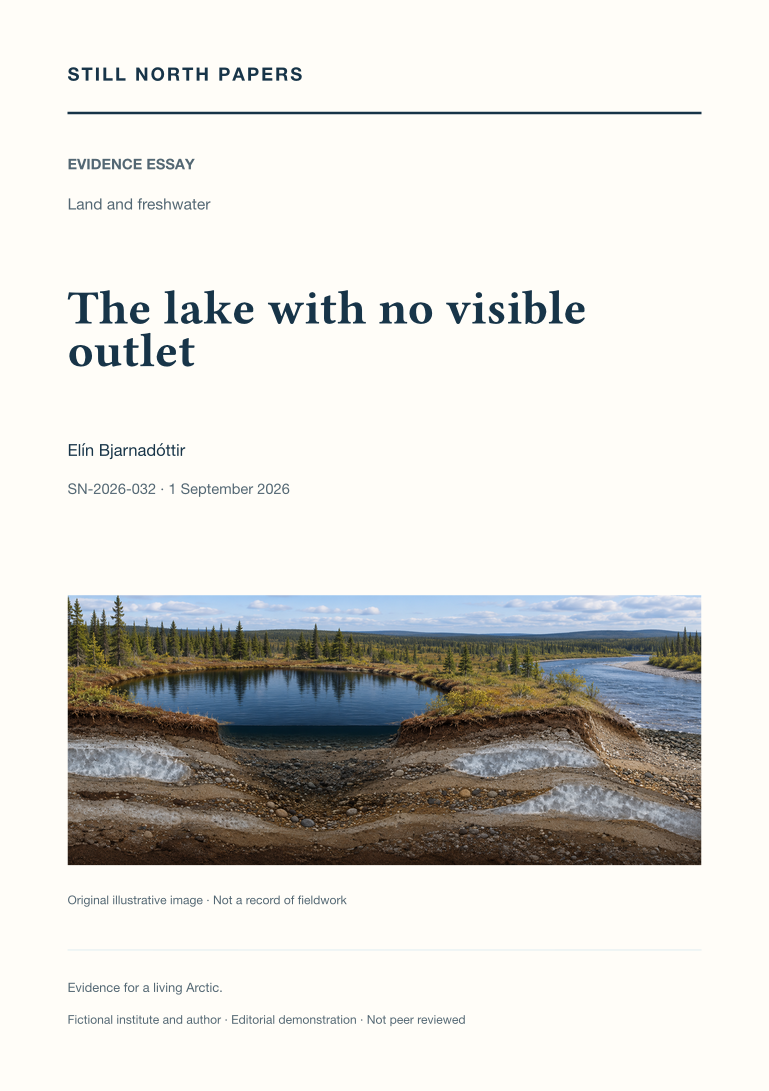
The lake with no visible outlet
A lake without a mapped surface outlet can still exchange water through seasonal floods or subsurface pathways. This essay uses published Yukon Flats research to distinguish observed lake-area change from inferred hydrological connectivity. It explains how permafrost distribution, sediment permeability, and changing water levels influence possible routes, while a shrinking shoreline can reflect several competing changes in the water balance. The account of Twelvemile Lake shows why flood recharge and longer records can alter an interpretation based on isolated images. A hypothetical comparison of neighbouring lakes illustrates the additional evidence needed to separate shared rainfall from direct exchange. The discussion concludes that connectivity must be specified by timing, direction, duration, and purpose rather than treated as a permanent line on a map.
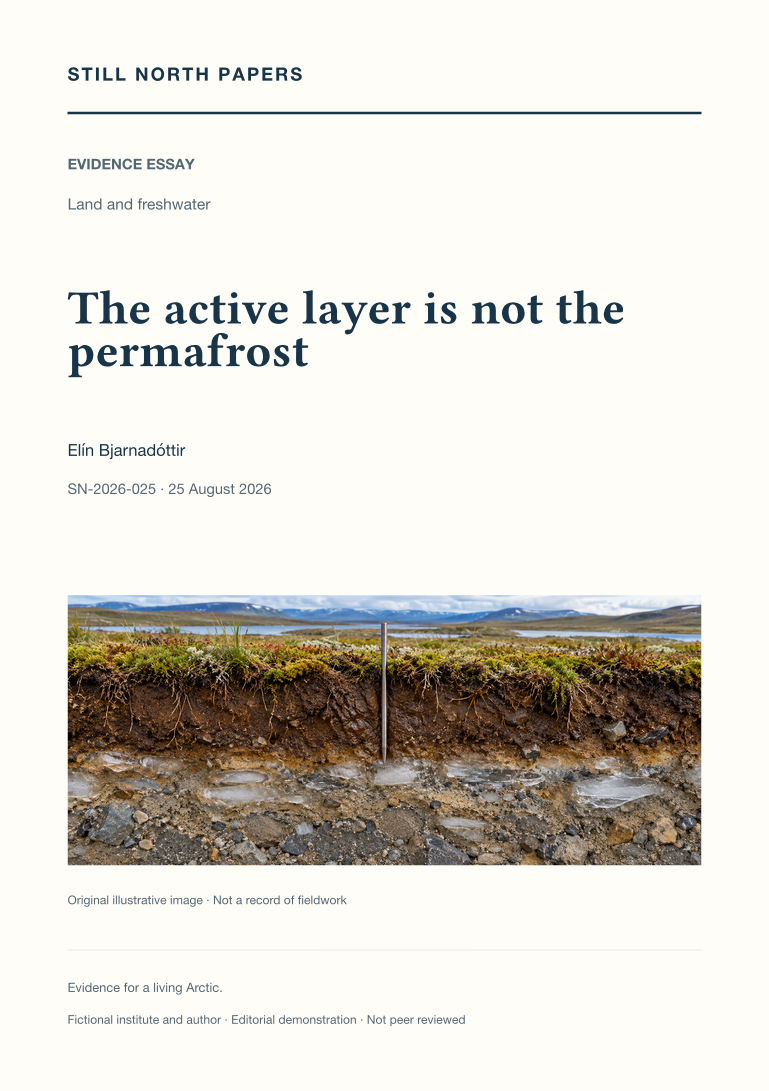
The active layer is not the permafrost
The active layer and permafrost are distinguished by their different seasonal and thermal definitions. This essay explains why thaw depth on one visit is not necessarily annual maximum active-layer thickness, and why neither measurement alone establishes the condition of deeper ground. Hypothetical sites with matching thaw depths but different temperature and ground-ice properties illustrate the limit. NSIDC definitions, the Circumpolar Active Layer Monitoring protocol, and NOAA's carbon assessment support a comparison of probing, frost tubes, and temperature records. Snow, vegetation, moisture, disturbance, and latent heat complicate simple links between air temperature and ground response. The practical reading method asks whether a claim concerns a thaw boundary, warming, ice loss, or permafrost disappearance before matching its depth, date, coverage, and method to a decision.