

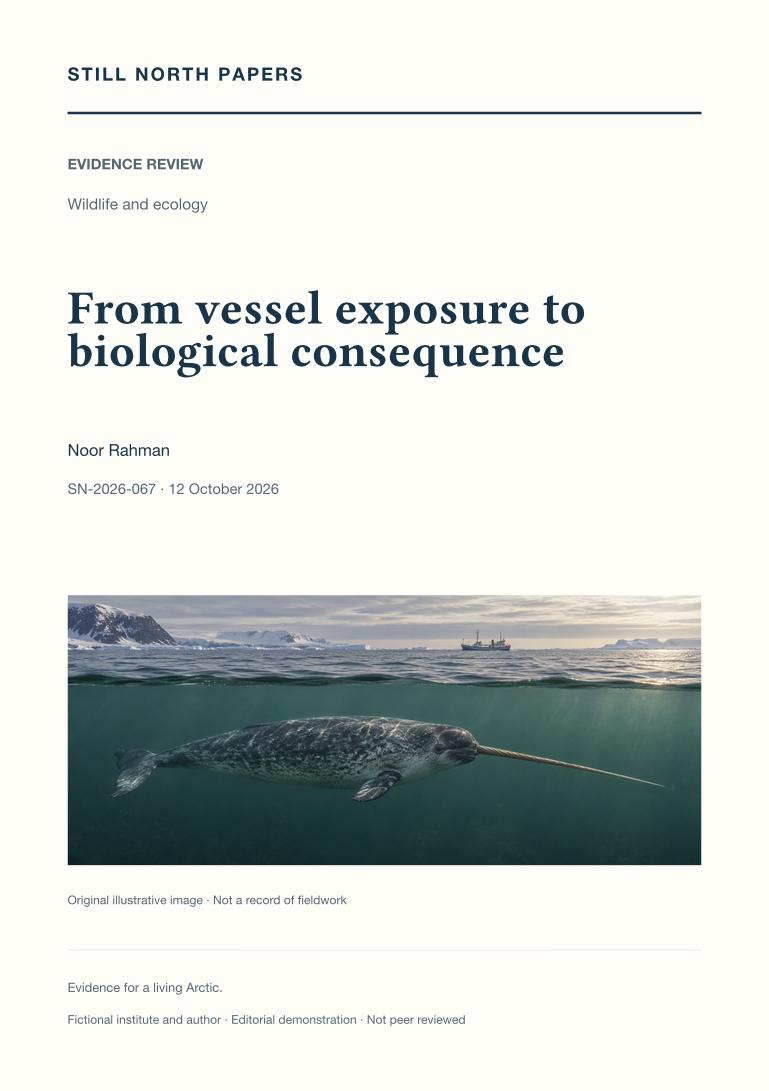
From vessel exposure to biological consequence
Traffic overlap, received sound, individual response, and population consequence describe different stages of an impact assessment. This evidence review compares two narwhal exposure studies with the Population Consequences of Disturbance framework to identify the evidence connecting those stages. It preserves the studies' small exposed samples, male or adult representation, and concurrent sound sources rather than converting their results into universal distance rules. Hypothetical comparisons show why identical animal-hours can distribute exposure differently and why a lower sound level over a longer passage need not reduce integrated exposure. No actual route impact or safe buffer is estimated. The review supports proportionate precaution while distinguishing measured responses, energetic assumptions, demographic inference, and unresolved mechanisms that additional observations would need to constrain.
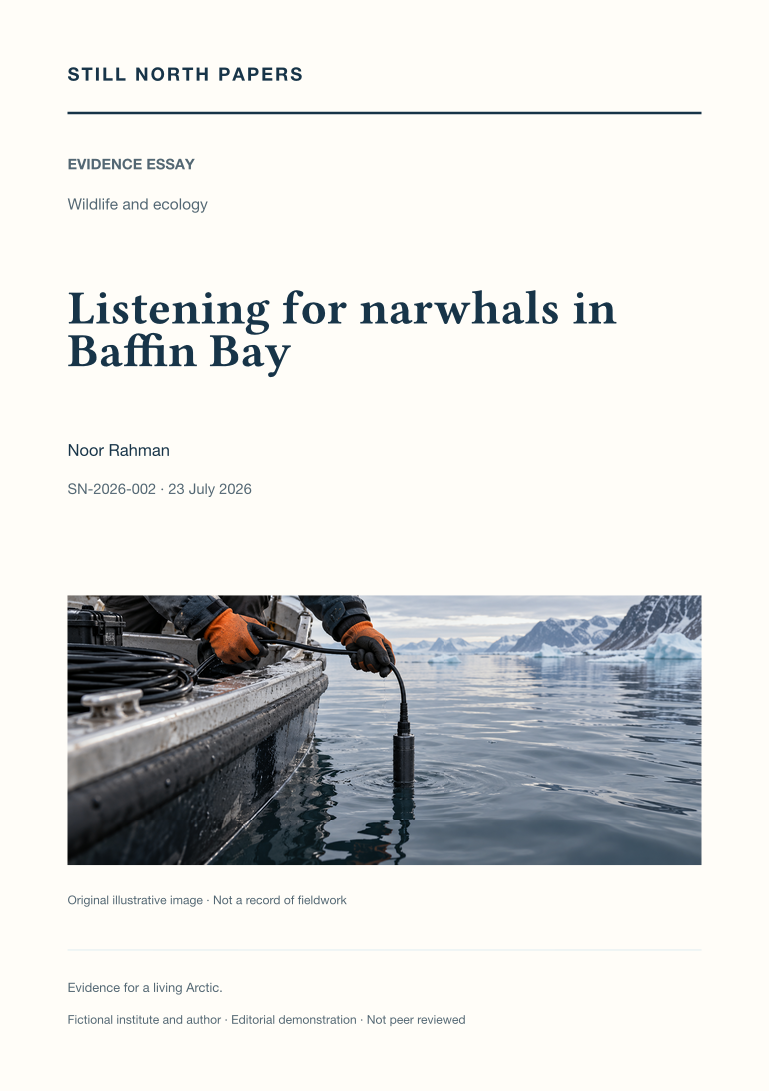
Listening for narwhals in Baffin Bay
An illustrative hydrophone deployment in Baffin Bay provides a practical account of the information needed to interpret underwater recordings. The essay follows calibration, clocks, depth, geometry, vessel activity, and handling noise from preparation through classification. It explains why a plausible narwhal signal can remain uncertain, why masking can prevent detection, and why a recording without confirmed calls cannot establish animal absence. Published evidence on changing ocean structure supplies context without allowing one deployment to attribute regional ecological change. The discussion extends to sensitive locations, inadvertently recorded voices, access agreements, and the processing history of representative clips. Its central implication is that a reusable acoustic file preserves uncertainty and governance alongside the sound, rather than presenting an attractive recording as a census or a documented expedition.