

Designing the overlap between instruments
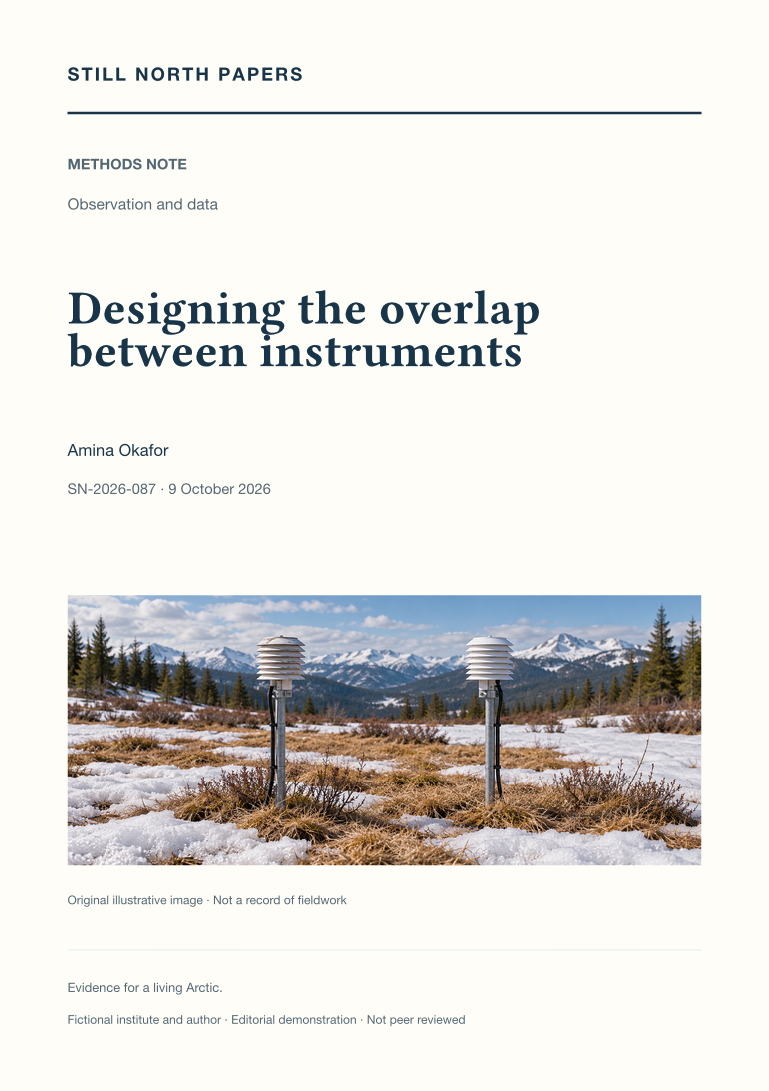
Replacing an instrument can improve measurement while disrupting a long record. This methods note synthesises GCOS change-management principles, NIST traceability policy, the JCGM uncertainty guide, and Arctic observing-network context to examine what an overlap period must establish. A fictional temperature comparison demonstrates how a small mean offset can conceal a scale-dependent difference. The analysis treats condition coverage, measurand equivalence, time alignment, correlated pairs, uncertainty in both instruments, and reversible corrections as distinct design questions. It separates calibration, numerical continuity, and validation, and explains the additional limits when simultaneous comparison was impossible. No universal overlap duration, sample count, or calibration procedure is proposed. The aim is a bounded statement of comparability supported by preserved evidence before retirement makes that evidence unobtainable.
The calibration record behind a trusted number
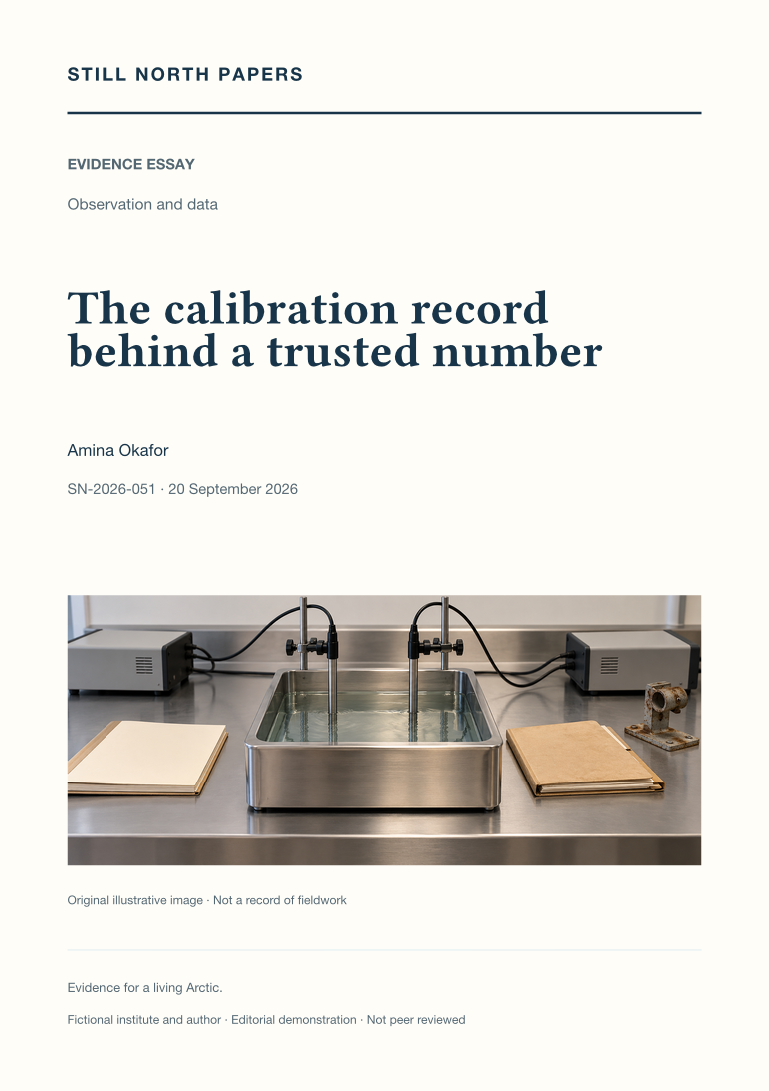
A calibration certificate characterises response under stated conditions, not the fitness of every later field value. This essay draws on NIST's traceability policy to distinguish documented reference chains from reassuring equipment labels, and calibration from adjustment. Hypothetical deployment examples show how exposure, depth, and installation can undermine representativeness even when a sensor responds correctly. Field checks, post-deployment changes, and shared biases require explicit limits rather than assumed histories of gradual drift. NOAA's observing-network assessment supplies context for transitions between instruments and the value of comparable overlap. The practical recommendation is to preserve raw values, reference details, conditions, uncertainty contributions, correction parameters, and method versions. A trusted number is one whose measurement and correction history a future researcher can reconstruct for its intended use.