

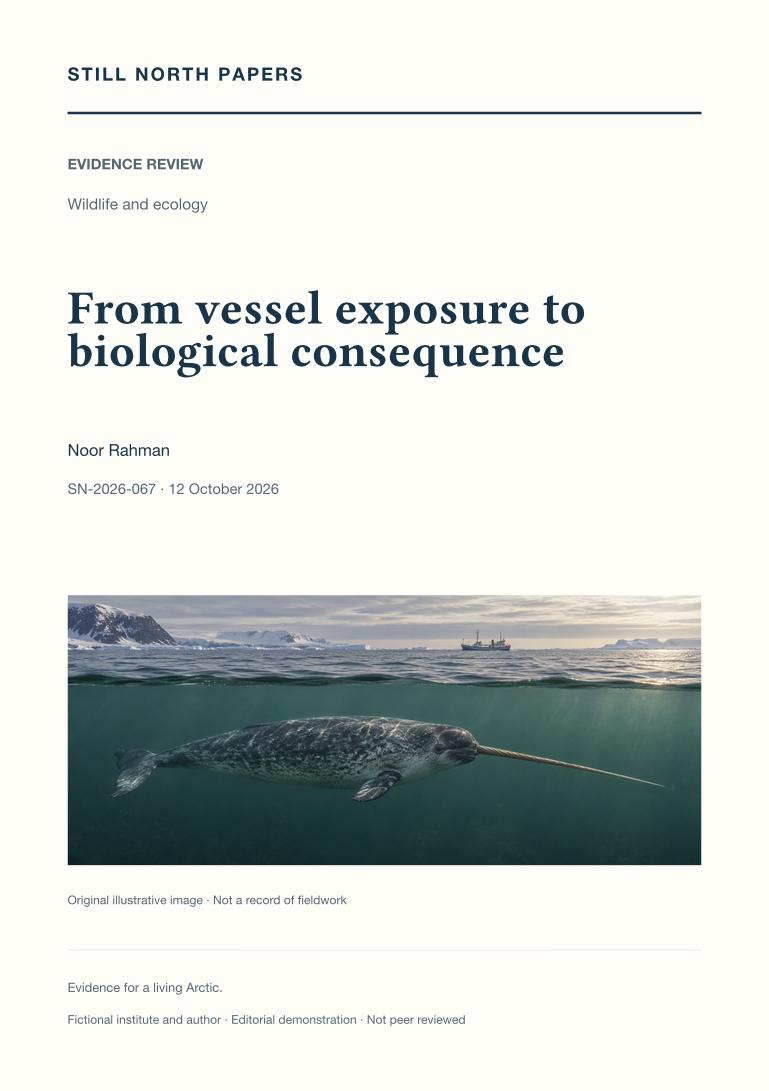
From vessel exposure to biological consequence
Traffic overlap, received sound, individual response, and population consequence describe different stages of an impact assessment. This evidence review compares two narwhal exposure studies with the Population Consequences of Disturbance framework to identify the evidence connecting those stages. It preserves the studies' small exposed samples, male or adult representation, and concurrent sound sources rather than converting their results into universal distance rules. Hypothetical comparisons show why identical animal-hours can distribute exposure differently and why a lower sound level over a longer passage need not reduce integrated exposure. No actual route impact or safe buffer is estimated. The review supports proportionate precaution while distinguishing measured responses, energetic assumptions, demographic inference, and unresolved mechanisms that additional observations would need to constrain.
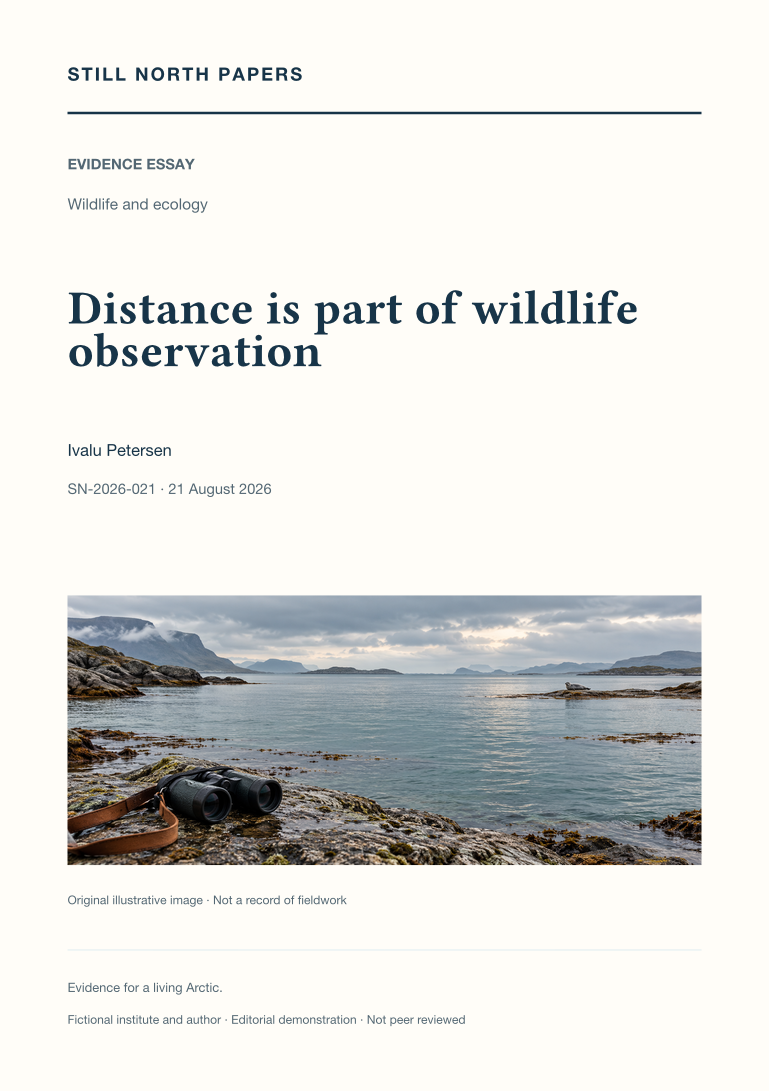
Distance is part of wildlife observation
Wildlife observation is assessed through the choices that precede a photograph, not the closeness or apparent calm of its subject. Using NOAA marine-life viewing guidance, the essay explains why an absent visible response does not prove no disturbance and why a minimum distance is not a target. A hypothetical comparison contrasts distant viewing with repeated pursuit that could produce a similarly framed image. Duration, crowding, access routes, young animals, vessel sound, and current local requirements all affect the encounter. Public viewing remains distinct from permitted research, and sensitive locations may require restricted sharing. The piece provides no universal distance or safety protocol. Its practical implication is to document a respectful method, accept leaving without an image, and never treat a generated scene as evidence of compliant fieldwork.