

Designing event sampling for annual suspended-sediment load
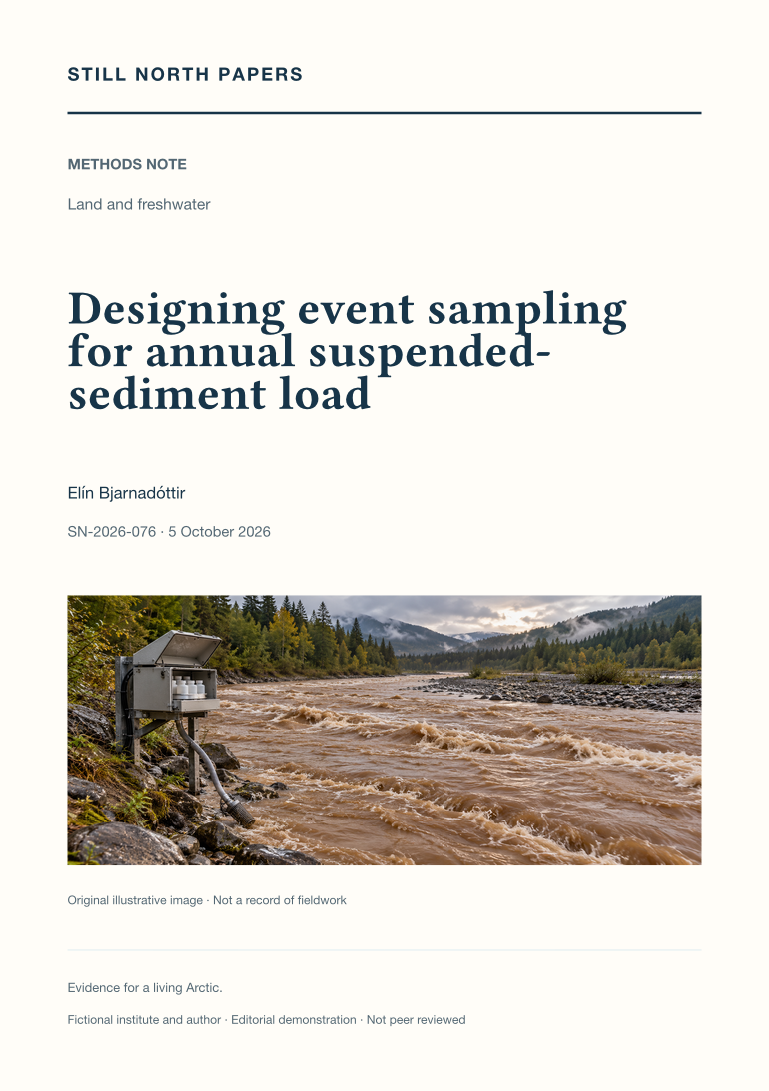
Monthly sediment sampling can span an entire year while missing its dominant transport events. This methods note uses US Geological Survey estimation guidance and an empirical river investigation to examine the design of annual suspended-load monitoring. A fictional year demonstrates how two event days can dominate the total and why continuous discharge alone cannot recover their unmeasured concentrations. The discussion considers event limbs, routine and triggered samples, cross-section representativeness, turbidity calibration, sensor failures, and validation that withholds whole events. It distinguishes model intervals from uncertainty caused by unobserved conditions and changing sediment sources. No actual river load or Arctic conversion factor is estimated. The practical recommendation is a coverage account tied to the annual result, allowing subsequent sampling to address the largest demonstrated blind spots rather than simply filling the calendar.