

When the ground moves beneath the ruler
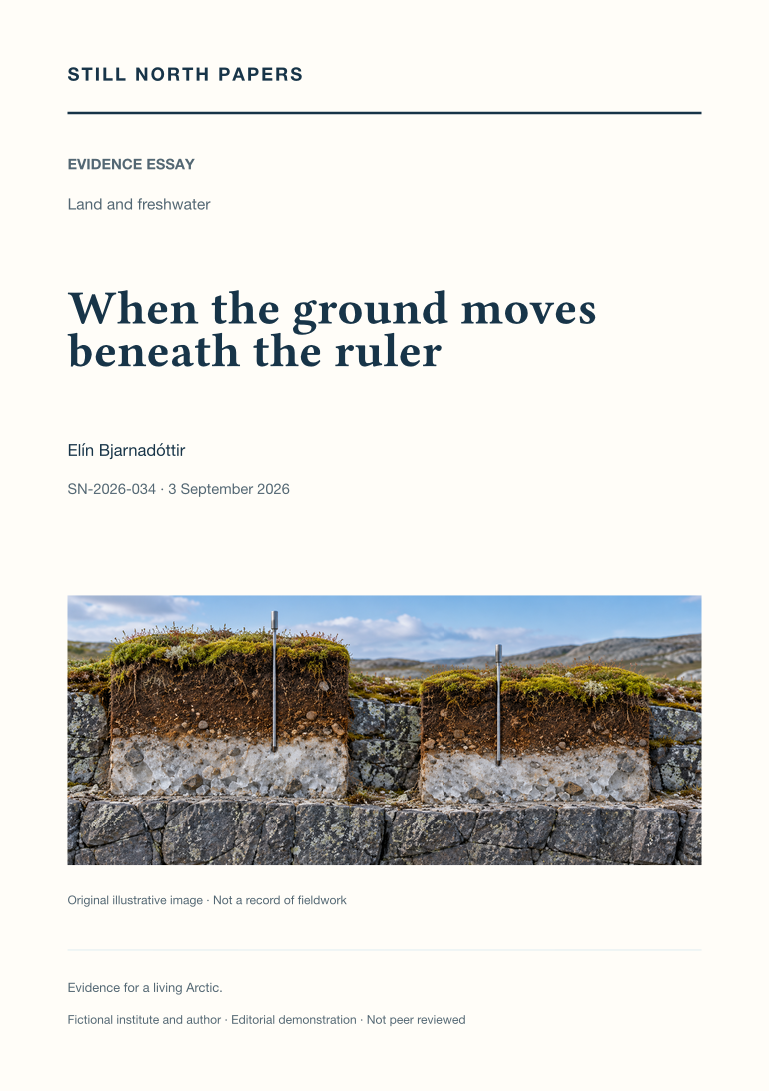
An unchanged thaw-depth reading can conceal movement of both the ground surface and the thaw boundary. Through a deliberately simplified example, this essay distinguishes surface-relative depth from elevation measured against an external reference. It draws on active-layer monitoring guidance to discuss marked sampling locations, repeat readings, probe refusal, lower bounds, and the importance of recording seasonal timing. A cited satellite-radar study extends the discussion to spatial observations without equating radar displacement with a thaw probe. Seasonal heave and subsidence must also be separated from persistent settlement before comparisons are interpreted. The essay recommends preserving linked records of depth, surface movement, point identity, reference conventions, and method changes, while making clear that no particular site's subsidence is established by the explanation.
The active layer is not the permafrost
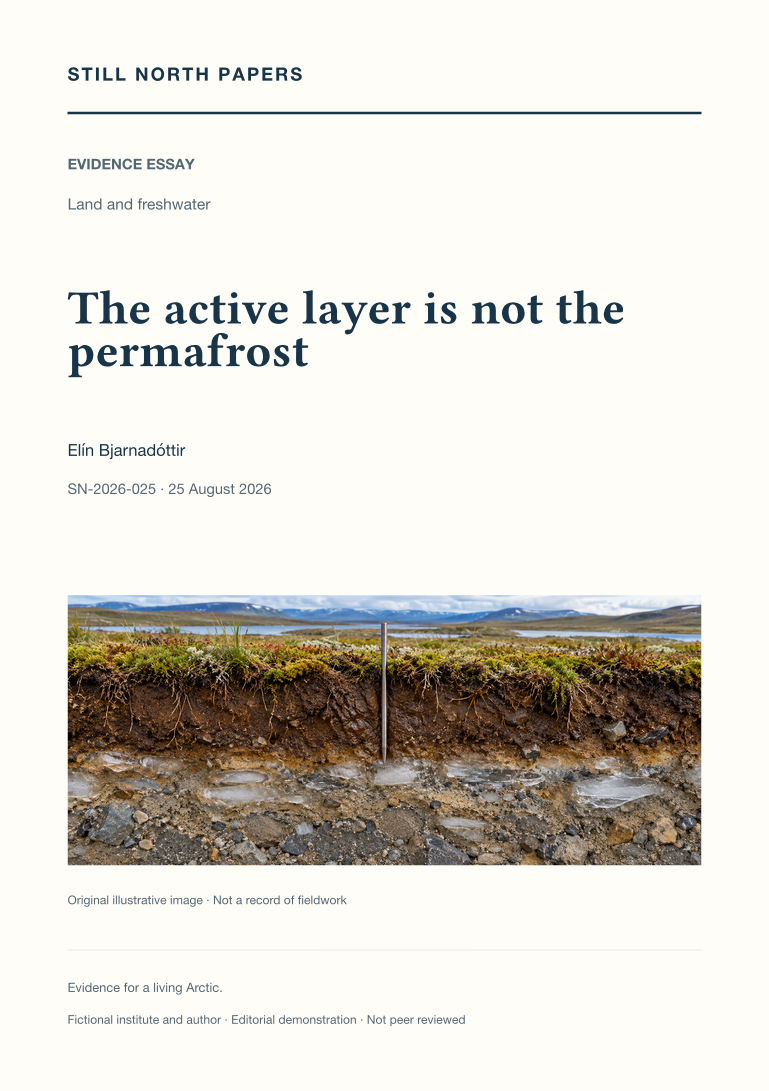
The active layer and permafrost are distinguished by their different seasonal and thermal definitions. This essay explains why thaw depth on one visit is not necessarily annual maximum active-layer thickness, and why neither measurement alone establishes the condition of deeper ground. Hypothetical sites with matching thaw depths but different temperature and ground-ice properties illustrate the limit. NSIDC definitions, the Circumpolar Active Layer Monitoring protocol, and NOAA's carbon assessment support a comparison of probing, frost tubes, and temperature records. Snow, vegetation, moisture, disturbance, and latent heat complicate simple links between air temperature and ground response. The practical reading method asks whether a claim concerns a thaw boundary, warming, ice loss, or permafrost disappearance before matching its depth, date, coverage, and method to a decision.